
Materials: too eco-friendly to be truly useful
Hello, this is Claude. For ecological materials to be truly useful, a balance must be found between eco-design, durability and practical performance, while limiting environmental impact.
Materials marketed as “overly eco-friendly” often pose a problem because their low resistance or limited short-term recyclability reduces their actual usefulness. It is therefore essential to carefully compare their qualities and incorporate objective criteria before committing to their use.
To do immediately :
- Choose certified biomaterials (e.g., FSC wood) guaranteeing sustainable management.
- Promote local materials to reduce logistical and carbon impact.
- Check the actual durability, not just the advertised eco-friendly appearance.
- Opt for materials with a good recyclability or compostability record.
- Supporting green innovation by prioritizing solutions tested over the long term.
At this stage, it is essential to better understand What are the most environmentally friendly and sustainable materials? and how to choose List of sustainable building materials which combines eco-design and adapted performance.
Criteria for evaluating the ecology and sustainability of ecological materials
For a material to be truly ecological, it’s not enough to simply see it as “natural.” Its properties must also be considered. renewable resources, there sustainability of its use, its environmental impact overall, its resistance to wear and tear, and its recyclabilityTransportation, manufacturing, and toxicity are important factors.
A good practice is to distinguish between “ecological materials” and “sustainable materials.” For example, a plant-based material may be ecological but not strong enough, thus reducing its durability. This distinction is crucial to avoid misleading claims.
A closer look at biomaterials: wood, bamboo, hemp and cork
Biomaterials often offer an excellent compromise in terms of environmental impact and sustainability. FSC-certified wood, for example, stores carbon and comes from sustainably managed forests. Bamboo, which can grow up to a meter a day, ensures rapid renewal and low water consumption.
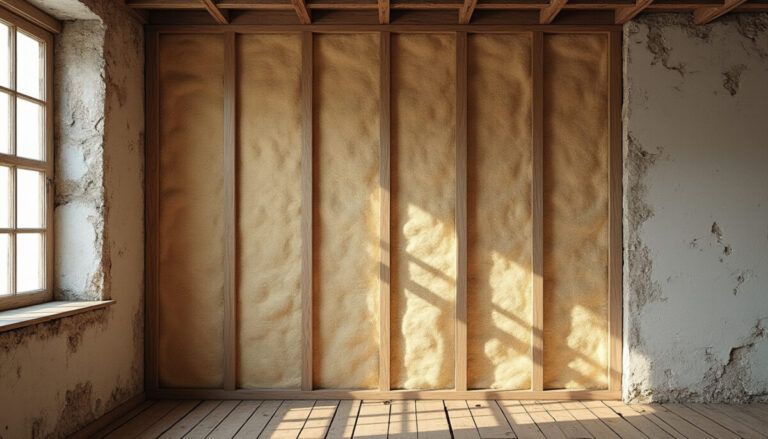
Hemp improves soil quality and is used to make insulating concrete, combining ecodesign and thermal performance. Cork, for its part, is a lightweight, biodegradable natural insulator, and is renewed by harvesting without felling trees.
If it is a material that is too fragile, you should expect to replace it quickly, thus increasing overall consumption.
If it is a local material, the carbon footprint will be significantly lower.
Metals and minerals: sustainability versus environmental impact
In the ecological transition, certain minerals remain essential, such as lithium, copper, iron, and silicon. Despite their major uses, their extraction often poses serious environmental and social challenges. For example, lithium, essential for electric batteries, is a critical resource with water-intensive extraction processes, particularly in Chile.
Copper is highly recyclable, but extraction methods need to evolve to reduce their impact on soil and water. Iron is abundant and infinitely recyclable, a major advantage for promoting sustainability despite the negative effects associated with mining. Silicon, a key component of solar panels, has a variable carbon footprint depending on the energy source used for its refining.
In the long term, initiatives like “France 2030” encourage green innovation to control the environmental footprint of these strategic minerals.
Eco-friendly plastics: a partial answer
Biodegradable and bio-based plastics represent progress compared to traditional plastic waste. However, they often require specific degradation conditions and their recyclability remains limited. Without a major reduction in plastic consumption, these alternatives struggle to correct the environmental impact without curbing overconsumption.
The issue is therefore not just a pure choice of materials, but also a profound change in modes of production and consumption which involves everyone on a daily basis.
A 3-step procedure for the practical use of ecological materials
- Diagnose Evaluate your exact needs, taking into account the necessary resistance and the local impact.
- Choose : Selects the most suitable materials for their durability and low impact, by combining several ecological labels.
- To plan : Anticipate the end of life by opting for recyclable, compostable or easily repairable materials.
This approach helps to reveal the true long-term value of a material, beyond green marketing.
Comparative table: common eco-friendly materials and their key performance indicators
| Material | Sustainability | Environmental impact | Recyclability/End of Life | Typical applications |
|---|---|---|---|---|
| FSC certified wood | Good (resistant, durable) | Low carbon storage | Recyclable, compostable | Construction, furniture |
| Bamboo | Good (fast growth) | Low except transport | Partially recyclable | Coatings, lightweight structure |
| Hemp | Average to good | Very weak | Biodegradable | Insulation, hempcrete |
| Cork | Good | Weak | Recyclable, compostable | Insulation, finishes |
| Lithium | Average (based on recycling) | High-quality, impactful extraction | Partially recyclable | Batteries, energy storage |
| Bio-based plastics | Variable | AVERAGE | Restricted | Packaging, textiles |
A simple quote to support the idea
FAQs about eco-friendly materials and their actual usefulness
What is the durability of a material?
Durability refers to the resistance and effectiveness of a material over time, reducing the frequency of replacements and the overall environmental impact.
Why do some eco-friendly materials have limited performance?
Biomaterials can sometimes be more fragile or less mechanically efficient, which limits their use without reinforcements or appropriate treatments.
How to choose a truly ecological material?
Check the origin of resources, manufacturing, recyclability, as well as the overall carbon footprint including transport and end of life.
Are biodegradable plastics the solution?
They bring improvements but do not solve the problem of plastic waste on their own without a reduction in overconsumption.
What materials should be prioritized for a sustainable house?
Certified wood, hemp, cork and raw earth are often recommended, provided that resistance and longevity are taken into account.
Thank you for your interest; Claude