Materials: wood, wadding, cork, which prevents loss
Hello, this is Claude. To avoid heat loss, cellulose wadding, wood and cork stand out as the best natural insulators thanks to their ability to limit heat loss while being ecological.
These bio-based materials are particularly well-suited for improving the energy efficiency of your home. By choosing one of these insulation materials, you contribute to better protection against the cold, while opting for sustainable and environmentally friendly solutions. A closer look at wood wool, cork and cellulose wadding And best insulating materials for timber frame houses.
Natural insulation: understanding their role in combating heat loss
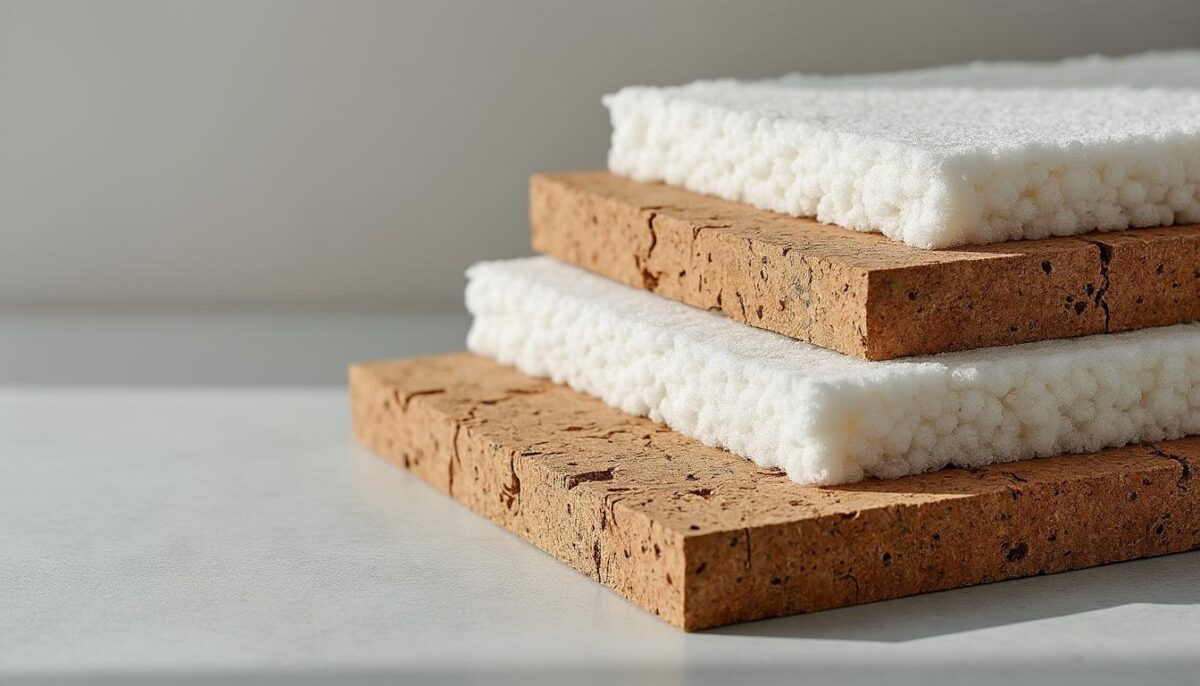
Wood, cellulose wadding, cork: these materials all have remarkable insulating properties. Cellulose wadding, made from recycled paper, is often chosen for its excellent low thermal conductivity. Wood, due to its density and cellular structure, offers effective insulation, while cork excels in its rot resistance and impermeability.
Their strength? They regulate indoor humidity, prevent drafts, and minimize thermal bridging. Why is this important? Because losing heat not only wastes energy but also increases your bill. “Effective insulation is insulation that retains heat where it needs to stay.”
To do immediately
- Check the condition of your current insulation and identify areas of heat loss.
- Prioritize the insulation of the attic, then the walls, where heat loss is most frequent.
- Opt for eco-friendly materials like cellulose wadding for better thermal regulation.
- Ensure good airtightness to maximize protection against the cold.
- Consider solutions that combine thermal performance and respect for the environment.
A clear comparison of insulating materials: wood, cellulose wadding, and cork
| Material | Thermal conductivity (λ) | Moisture resistance | Sustainability | Sound insulation | Ecological impact |
|---|---|---|---|---|---|
| Cellulose wadding | 0.038 – 0.040 W/mK | Good, absorbs and regulates moisture | Durable, may require treatment against fungi | Excellent | Very low, recycled, biodegradable |
| Wood wool | 0.038 – 0.045 W/mK | Good, natural hydro-regulator | Excellent with treatments | Very good | Low in calories, a natural and renewable product |
| Cork | 0.035 – 0.040 W/mK | Rot-proof and naturally water-repellent | Very long lasting | Dense, good sound insulation | Excellent, renewable and recyclable |
Each of these materials has its advantages depending on your building site conditions. In humid regions, cork is often preferred for its natural resistance to moisture. If you’re looking for an economical option with high performance, cellulose wadding is very effective. For versatile and healthy insulation, wood wool is often an excellent compromise.
A simple procedure for choosing and installing your eco-friendly insulation
- Step 1: Analyze your home and identify priority areas to limit heat loss.
- Step 2: Select the eco-friendly material with the best thermal efficiency suited to your environment.
- Step 3: Have your insulation installed by a professional to guarantee airtightness and long-lasting performance, while respecting current standards.
Optimize energy efficiency with natural insulation
Using materials like wood, cellulose wadding, or cork can transform the thermal comfort of your home. They effectively reduce heat loss, which lowers energy consumption and therefore your bill.
An interesting anecdote: a home insulated with cellulose wadding saw a reduction in heating bills of up to 30% in the first year after renovation. These are significant figures when you consider that insulation is often the primary area for energy savings.
Also remember to check the sealing of windows and doors, because even the best insulation can be bypassed by poorly sealed joints. This source clearly explains the problem of cold windows.This aspect should not be neglected in order to avoid discreet but significant losses.
An overview of eco-friendly materials to limit heat loss
Eco-friendly materials not only limit heat loss, but they also protect health and the environment. These natural insulators are made from renewable resources and their production consumes little energy compared to synthetic insulators.
We often think about the thermal aspect, but acoustic comfort is also an important advantage of these insulators (see more on loose-fill insulationIn addition, their ability to regulate humidity helps prevent problems such as mold.
What is the best natural insulation for a house located in a humid region?
Cork is often recommended for humid areas due to its rot-proof and naturally water-repellent nature, offering excellent resistance to moisture.
Is cellulose wadding really effective at limiting heat loss?
Yes, it offers very good thermal resistance and the ability to regulate humidity, which stabilizes the indoor temperature and limits heat loss.
Is it possible to install natural insulation like wood wool yourself?
It is possible to do so, but a professional installation guarantees the best performance and avoids thermal bridges which are often sources of heat loss.
Do eco-friendly materials stand up well over time?
With appropriate natural treatments, these insulators can last for several decades while retaining their insulating properties.
What are the costs associated with eco-friendly insulation?
These materials are sometimes more expensive to buy than synthetic insulation, but their energy efficiency and environmental impact reduce the long-term investment.
Thank you for your interest; Claude