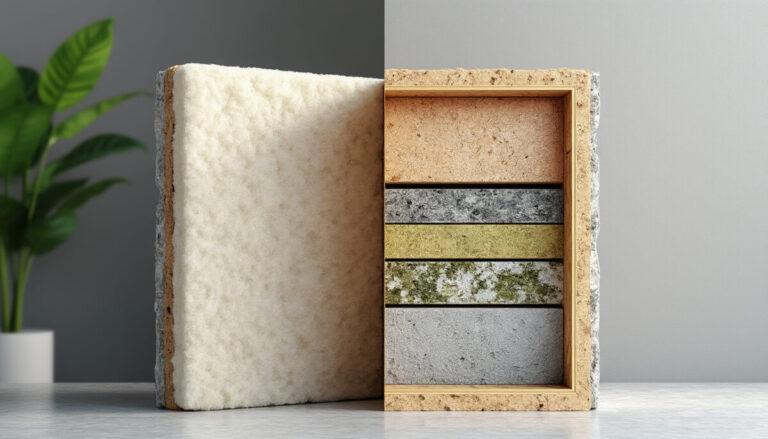

Insulation: a good idea can lead to mold
Hello, this is Claude. Insulating your home is essential for saving energy, but if you don’t pay attention to ventilation and airtightness, it can quickly lead to dampness and mold. To avoid this, you need to choose your insulating materials carefully and ensure good air circulation.
To do immediately
- Check that your house is well ventilated, especially with a suitable mechanical ventilation system or natural ventilation.
- Opt for breathable insulating materials, such as cellulose wadding or rock wool, rather than airtight synthetic insulation.
- Seals air leaks around windows and doors without blocking ventilation.
- Watch for signs of humidity: stains, odors, condensation on windows.
- Learn how to spot and treat mold at the first signs.
Building good insulation is clearly beneficial, but failing to integrate humidity management risks having problems. mold problems which damage your home and your health. For insulation that lasts, you also need to control the air quality and ventilationOtherwise, condensation and humidity will occur.
How insulation can lead to mold: the mechanisms you need to know
The problem often stems from poorly designed sealing combined with insufficient ventilation. Insulation limits heat exchange, which is beneficial, but without adequate air renewal, indoor humidity stagnates.
This moisture condenses on cold surfaces, often in poorly insulated areas or where water vapor is trapped by non-breathable materials. The result: mold growth, causing health problems such as allergies and respiratory problems.
Did you know? A well-insulated but poorly ventilated house can show signs of mold in just a few months, especially in rooms like the bathroom or kitchen.
Concrete case
Preventing moisture and condensation during insulation work
- Step 1: Choose insulating materials adapted to the climate and the nature of the building, favouring natural or breathable insulators.
- Step 2: Ensuring reliable controlled ventilation, such as a double-flow CMV that recovers heat while renewing the air.
- Step 3: Ensure good sealing against water infiltration without blocking the diffusion of water vapor to limit condensation.
This simple procedure optimizes your energy consumption while maintaining the air qualityA healthy home is a home where you can breathe well without breaking the bank on heating.
Insulation techniques to favor to prevent mold and properly protect your home
Each part of the house has its own specific characteristics:
| Area | Recommended material | Important point |
|---|---|---|
| Attic | Cellulose wadding, rock wool | Insulate without crushing and ensure ventilation |
| Walls | Breathable insulating panels, exterior insulation | Prioritize exterior insulation to avoid thermal bridges. |
| Windows | Double/triple glazing + weatherstripping | Avoid drafts, maintain airtightness |
| Ground | Under-slab panels, thick carpet | Reduce heat loss from the bottom |
| Water heater | Insulating cover | Limit heat loss |
Simple steps to improve insulation and reduce humidity
- Seal all gaps around doors and windows to prevent hot air infiltration that leads to condensation.
- Lay down thick rugs to insulate floors and reduce the feeling of cold in winter.
- Use heat reflector panels behind radiators to maximize their efficiency.
- Regularly check the ventilation and clean the air vents to prevent the accumulation of moisture.
Every little bit helps. As one expert said, “Insulation without ventilation is like opening the door to condensation.” By improving air quality, your home will thank you.
Mistakes to avoid in insulation to prevent mold growth
- Using completely waterproof materials without considering the diffusion of water vapor.
- Ignoring ventilation or reducing it after insulation, even in winter.
- Preventing natural air circulation by closing windows too tightly.
- Do not treat sensitive areas such as wall corners or attics where moisture can stagnate.
- Saving on implementation and neglecting finishing touches to achieve effective waterproofing.
If you want to delve deeper into this topic, find out how easily improve the insulation of your house without falling into these traps.
FAQs on insulation and mold prevention
Does insulation always cause mold?
No, mold mainly appears when insulation traps moisture without proper ventilation. A well-designed insulation system protects your home while maintaining healthy air quality.
How can I tell if I have a condensation problem in my house?
Visible signs include water droplets forming on windows, black stains on walls, and a musty smell.
Which insulating materials limit the risk of mold?
Natural or breathable insulation materials such as rock wool, cellulose wadding, or hemp wool allow water vapor to pass through and prevent the accumulation of moisture.
Is ventilation really necessary with good insulation?
Yes, without proper ventilation such as a double-flow CMV (Controlled Mechanical Ventilation), humidity accumulates and causes condensation and mold.
Thank you for your interest; Claude