
Materials: lime or cement, the mistake that blocks everything
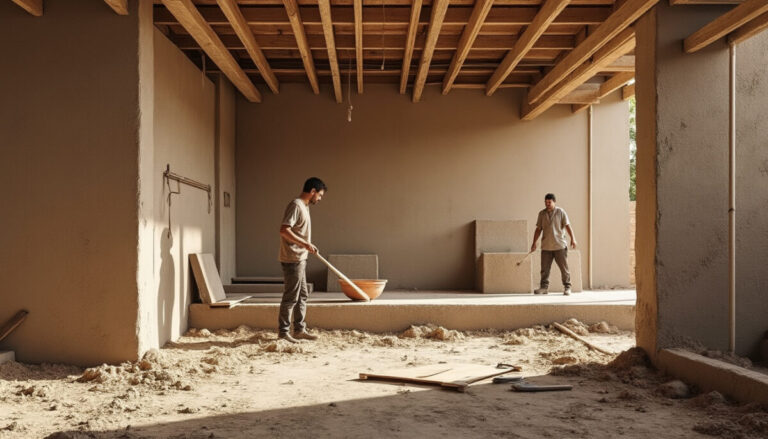
Hello, this is Claude. Choosing between lime and cement can make all the difference in a construction or renovation project, especially if the mistake lies in the proportions or compatibility with the substrate. To ensure success, you need to know the properties of each material and, above all, understand how they interact with the environment and the building structure.
To do immediately:
- Evaluate the type of support (old stone, modern concrete block or brick).
- Choose lime for old walls that need to breathe.
- Use cement for foundations, slabs and very wet areas.
- Opt for a spray machine for optimized dosing and drying.
For further information, consult the analyses on the use of lime in renovation and compare the benefits to those of cement in this clear study on the choice of coatings.
Understanding the importance of choosing between lime and cement in building materials
Cement is often valued for its strength and rapid hydration. It withstands very high compression, making it ideal for modern structures and quick on-site application. However, its rigidity poses a problem for older walls where thermal expansion or humidity can cause cracks. Lime, on the other hand, provides flexibility and vapor permeability, allowing the wall to “breathe.” It is a natural ally for preserving durability, particularly in historic and fragile buildings.
Why a dosage error jeopardizes the success of the construction project
The proportions must be precise. Too much cement in a mix intended for an old wall will trap moisture, leading to peeling and efflorescence. Too little, and adhesion will be insufficient. Lime requires a longer drying time but prevents micro-cracks thanks to its elasticity. On site, some tradespeople observe that controlling the drying and hydration processes determines the plaster’s longevity.
The technical differences that make all the difference
| Criteria | Cement coating | Lime plaster |
|---|---|---|
| Mechanical resistance | Very high (30-40 MPa) | Moderate (3-10 MPa depending on type) |
| Flexibility / Elasticity | Weak (rigid) | High (flexible) |
| Water vapor permeability | Very weak | Excellent |
| Compatible with old walls | Low, risk of trapped moisture | Excellent, promotes wall breathing |
| Drying time and hydration | Rapid (~24h initial dose) | Slow, over several months |
Choose according to the support and environmental constraints
If it’s an old stone or cob wall, lime is essential. It allows the wall to breathe and prevents cracks caused by natural movement. If it’s modern masonry made of concrete or cinder blocks, cement provides the necessary strength and resistance, especially in damp areas like foundations.
The right approach for an effective and sustainable blend
- Identify the medium : stone, brick, breeze block, old or new.
- Choose the appropriate binder
- Control the dosage To ensure good adhesion and controlled drying, avoid excess cement which weakens the coatings.
I’ve seen on several construction sites that the spray machine significantly improves the quality and speed of application, while ensuring a homogeneous mix. As one tradesman summed it up: “The key is that the moisture can circulate. Without that, you block the entire wall and it cracks.”
Practical examples: what mistakes should you avoid so that your project doesn’t get stuck?
- Mistake: applying cement to an old stone wall → Result: detachment and trapped moisture, damaged walls.
- Error: not moistening sufficiently before application → poor adhesion and premature cracking.
- Error: excess cement in the mixture → microcracks due to mortar shrinkage during drying.
- Mistake: neglecting hydration and drying time → uneven hardening, fragile coating.
- Mistake: using a rigid plaster on walls that are moving → Cracking is inevitable.
If it’s a renovation project involving an older building, opt for lime to avoid problems with damp and cracking. If it’s a new build or an area highly exposed to water, don’t hesitate to choose cement or a suitable lime-cement mix.
Choosing your building materials to be both ecological and cost-effective
In addition to improving the strength and compatibility of the plaster, lime offers a significant environmental advantage: its carbon footprint is approximately half that of cement. Cement production generates around 800 kg of CO2 per ton, while lime production ranges from 400 to 600 kg depending on the process. This factor is becoming increasingly important with the stricter environmental regulations coming into effect in 2026.
Finally, proper control of hydration, drying time, and dosage minimizes waste and reduces the risk of costly touch-ups. To help you make these choices, check out this guide on the comparative advantages of cement and lime and how to optimize their implementation.
FAQ to help you avoid making mistakes with your materials
Can cement be replaced by lime in all cases?
No, lime is suitable for old, non-structural walls. Foundations and slabs require the strength of cement.
What type of lime should I choose for a stone wall?
Natural hydraulic lime (NHL 2 to NHL 3.5) is suitable depending on the porosity and exposure of the wall.
Why should cement be avoided on old walls?
Cement is rigid and prevents the wall from breathing, which blocks moisture and causes cracks and peeling.
What are the risks of a dosage error?
An inappropriate dosage can cause insufficient adhesion, cracking during drying and a loss of strength.
When to use a bastard mortar?
On modern masonry requiring adhesion, flexibility and a certain degree of permeability, particularly on facades.
Thank you for your interest; Claude