Materials: this organic choice could ruin your construction project
Hi, this is Claude. Choosing bio-based materials can quickly lead to a cost overrun and complicate your project management if you don’t consider their technical and environmental characteristics. To avoid this pitfall, you need to select materials based on their quality, durability, and suitability for your project, while also managing the risks associated with their implementation.
To do immediately
- Verify the local origin of bio-based materials to reduce transport costs and ensure their availability.
- Favor certified materials, such as FSC or PEFC wood, to guarantee their durability and ecological respect.
- Evaluate the environmental impact through life cycle analysis so you don’t fall for greenwashing.
- Anticipate the specific technical constraints of bio-based materials, particularly their sensitivity to moisture and pests.
- Consult feedback from past experiences to choose reliable suppliers and manage site risks.
Advice on natural materials And The guide to sustainable materials for a responsible construction site will allow you to refine your choices.
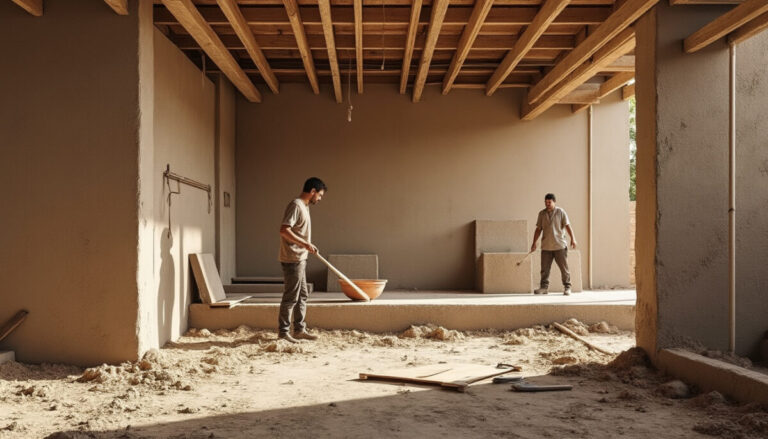
We often talk about ecology and sustainability, but caution is advised: bio-based materials can lengthen construction times and increase costs if their limitations are not properly managed. For example, poorly installed hempcrete can absorb too much moisture, leading to mold and costly repairs. Conversely, using well-suited flax or hemp fiber insulation offers superior thermal comfort in the long run.
Why bio-based materials can ruin your construction project
In theory, bio-based materials seem ideal: ecological, renewable, and often locally sourced. Yet, they require specialized expertise. Their behavior under real-world conditions—fluctuating humidity, exposure to the elements—can cause premature degradation. This risk is often underestimated by those experimenting with these solutions for the first time.
A construction project that fails to incorporate this data from the design stage will undoubtedly experience delays due to rework, the search for alternative solutions, or even the replacement of materials. Not to mention the compromised final quality, which will impact the comfort and value of the building.
For example, compressed straw requires specific expertise to ensure durable insulation without stagnant moisture. One professional once had his project halted for several weeks due to a defect related to this choice of material. A lesson learned to better anticipate potential problems.
Specific risks to be aware of
- Extended delay: Implementation often takes longer, natural drying is slower.
- Additional costs: resumption of work, profiling of specialist services, more expensive specific materials.
- Compatibility: Some BIOSes are incompatible with conventional materials.
- Maintenance and resistance: require more rigorous maintenance, sometimes prone to pests.
- Standards and guarantees: Standardization and certification are still progressing, so caution is necessary.
| Stage | Concrete action | Objective |
|---|---|---|
| Step 1 | A precise analysis of your needs, site and technical requirements. | Avoid surprises related to humidity conditions, choose appropriate products. |
| Step 2 | Rigorous selection of certified materials tested in similar projects. | Ensuring sustainability and cost control. |
| Step 3 | To train or recruit artisans specializing in organic products and to ensure meticulous site monitoring. | Reduce installation errors and delays. |
Choose according to the type of work
If it’s insulation, choose breathable and hydrophilic materials like hemp wool to prevent internal moisture. If it’s a load-bearing structure, opt for certified wood for its strength and longevity.
Innovative alternatives that combine ecology and risk management
Technology has advanced: low-carbon concrete like CarbonCure, the integration of photovoltaic panels into building materials, and smart solar-control windows facilitate sustainable construction with a limited environmental impact. These recent solutions reduce technical risks while improving the quality and comfort of the built environment.
To learn more about these innovations and avoid the pitfalls of choosing the right one, explore the resources on bio-based materials in construction And the regulatory framework for bio-based materials.
Essential sustainable materials in 2026
- FSC/PEFC certified wood: robustness and carbon sequestration.
- Compressed straw: excellent thermal insulator.
- Linen and hemp fiber insulation: easy to install.
- Recycled materials (concrete, steel) for the circular economy.
Bio-based materials and sustainability: finding a balance to guarantee the quality of the work
The success of an eco-friendly construction project hinges on striking a balance between bio-based materials and technical constraints. A poorly chosen or improperly installed bio-based material can quickly lead to hidden costs and compromise the final quality. As one industry expert stated: “The strength of a sustainable construction project lies in its ability to combine ecology and pragmatism.”
This harmonious approach ensures a well-managed construction site, a healthy building, and a reduced carbon footprint without sacrificing durability or comfort. Take the time to choose carefully and verify certifications, and your investment in eco-friendly materials will be a success.
What are the main risks associated with choosing bio-based materials?
Risks include construction delays, additional costs, moisture damage, incompatibility with other materials, and the need for specific expertise.
How to choose reliable bio-based materials for your construction project?
It is necessary to prioritize certified materials, analyze their life cycle, ensure that they are suitable for the climate and hire experienced craftsmen.
What innovations can reduce the risks associated with sustainable materials?
Low-carbon concrete, smart glazing, and integrated photovoltaic panels offer durability and performance while limiting traditional constraints.
Does the local origin of materials influence the success of the construction project?
Yes, it reduces the carbon footprint related to transport, supports the regional economy and sometimes offers better adaptation to the local climate.
Can recycled materials be used in sustainable construction?
Yes, recycled concrete and steel are widely used to reduce environmental impact and fit into a circular economy approach.
Thank you for your interest; Claude