
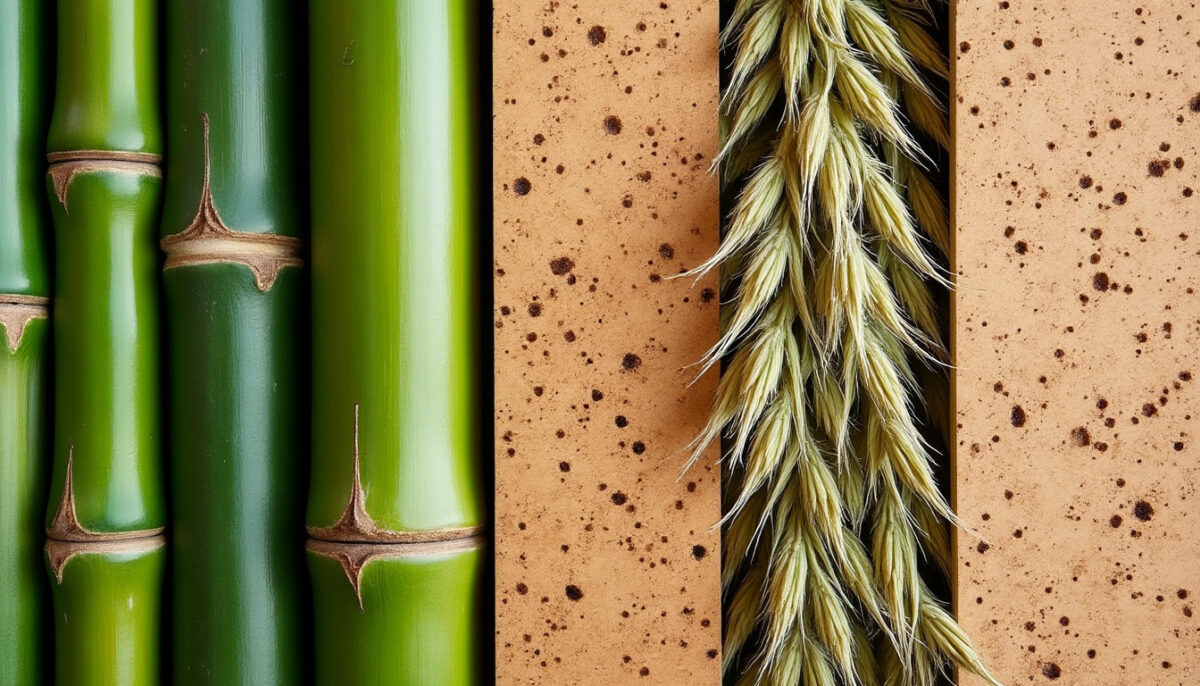
Materials: bamboo, cork, hemp, which one really holds up
Hi, this is Claude. For a sustainable and eco-friendly choice, sprayed cork often proves to be the strongest and most effective compared to hemp and bamboo, ideal for insulating your home while respecting the planet. This trio of natural materials is appealing because of its renewableity and low environmental impact, but it’s cork that truly combines strength, durability, and ease of installation. Let’s explore what each offers to help you make the right choice.
To do immediately :
- Test the humidity in your home to avoid unpleasant surprises.
- Prioritize local, natural materials to enhance the ecology of your construction site.
- Calculate the required insulation thickness based on your region and budget.
To further your comparison between bio-based materials, discover a comprehensive guide to bio-based insulation as well as this inventory of bio-based materials to better understand durability and performance.
| Criteria | Bamboo | Projected cork | Hemp |
|---|---|---|---|
| Sustainability | Good, but sensitive to humidity without treatment | Very goodnaturally resistant to moisture | Goodrequires protection against water |
| Resistance | Excellent, a very strong and flexible material | Goodcompact and stable insulation | Averagebetter in insulation than in mechanical resistance |
| Thermal performance | Medium-sized, used mainly for cladding or furniture | Excellent, conductivity around 0.038 – 0.040 W/mK | Good, around 0.039 – 0.045 W/mK |
| Ecology (renewable resource) | It grows quickly and captures a lot of CO₂ | Highly renewable if local, low carbon footprint | Very goodfast-growing and regenerative |
Cork: the champion of durability and resistance
Thanks to its unique cellular structure, sprayed cork adapts to all walls, even the most uneven, guaranteeing excellent thermal and acoustic insulation. Most importantly, it is naturally moisture-resistant, preventing mold and extending the life of your insulation. It’s a smart choice for anyone looking for a robust, durable, and easy-to-install solution, especially in humid areas.
Hemp, a natural moisture-regulating material
Hemp absorbs moisture, stores it, and releases it gradually, improving indoor air quality and balancing humidity. It is often used in panels or loose fill in well-ventilated structures. Its installation requires slightly more technical expertise than cork, but its low carbon footprint and thermal properties make it a valuable asset for a healthy and eco-friendly home.
Bamboo is known for its rapid growth and remarkable strength. Primarily used in structural applications, furniture, or cladding, it is less suitable for thermal insulation. However, it remains a valuable bio-based material, particularly for decorative elements or structural frameworks, but requires treatment to ensure its durability against moisture.
Practical advice for choosing and installing these natural materials
- Prioritize a complete assessment of your home to identify your real needs.
- Choose cork for damp areas or uneven walls, ensuring waterproofing and performance.
- Hemp is preferred in well-ventilated new homes or in breathable interior insulation.
- Uses bamboo primarily for structure and eco-friendly decoration.
- Get help from a professional or train yourself in installation to guarantee efficiency and durability.
A simple 3-step procedure for your project
- Assessment : check the condition of the walls, the ventilation and the humidity.
- Choice : Select the material based on the context, your constraints and the desired performance.
- Implementation: Hire a professional or train yourself to apply the insulation correctly.
A striking anecdote: a friend chose sprayed cork for his old house by the sea. The result? Durable, moisture-free insulation with real thermal comfort, despite the harsh weather conditions. “The ease of installation was also a real time-saver,” he told me.
As a simple proverb says, Choosing between bamboo, cork and hemp means considering longevity, performance and above all respect for the planet.
FAQs about bamboo, cork and hemp: natural materials and sustainability
Is cork suitable for wetlands?
Yes, sprayed cork is particularly recommended for humid areas thanks to its natural resistance to water and humidity.
Is hemp more environmentally friendly than cork?
Hemp has a very low carbon footprint due to its rapid growth, but local cork is also an environmentally friendly option. The choice depends primarily on technical constraints and the context of use.
Can bamboo be placed indoors?
Bamboo is most often used for structural elements, furniture, or cladding. For thermal insulation, it is less suitable than cork or hemp.
What thickness of natural insulation is needed to be effective?
In general, 10 to 15 cm of natural insulation is sufficient, depending on the material and the climatic zone, to obtain good thermal performance.
MaPrimeRenov remains the main aid available in 2026 to finance renovation with natural materials such as cork or hemp.
Thank you for your interest; Claude


