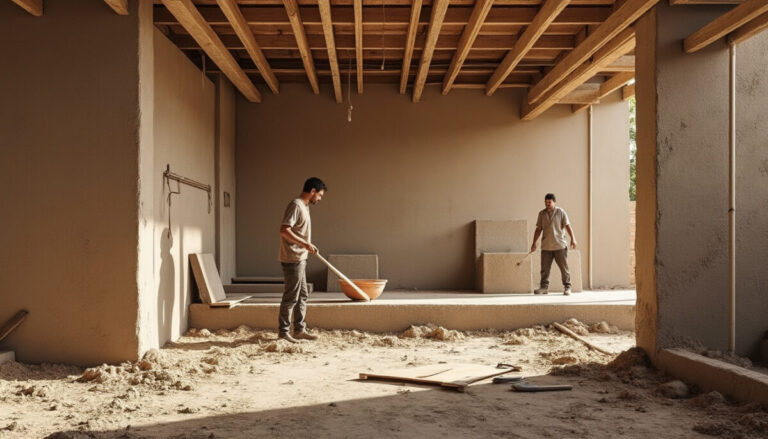

Materials: hemp or rock wool, a real risk
Hello, this is Claude. Hemp is increasingly establishing itself as a healthy and sustainable alternative to rock wool for insulation, combining thermal performance and respect for the health of occupants.
To do immediately
- Prioritize natural materials for a healthier home.
- Analyze the environmental impact before buying your insulation.
- Equip yourself properly to handle rock wool.
- Evaluate the durability of insulation materials for a long-term investment.
- Consult professionals for free and comparative quotes.
Want to better understand the health risks associated with fibers? Find out how protecting oneself when installing mineral wool and why Hemp is gaining ground against rock wool.
Understanding the risks and benefits of natural insulation materials
Insulating your home also means choosing between materials that impact health, the environment, and sustainability. Hemp, grown without pesticides and biodegradable, naturally regulates humidity and repels insects and rodents without chemical treatments. Rock wool, on the other hand, while thermally efficient, comes from mining operations with a significant carbon footprint. Handling it requires precautions to avoid irritation. Thus, hemp offers a longer lifespan (40 to 50 years) and safer handling. “Nature promises us nothing, but it gives us everything”—this choice illustrates this simple principle.
The ecological and health benefits of hemp
| Criteria | Hemp wool | |
|---|---|---|
| Cultivation/Extraction | Pesticide-free, it regenerates the soil | Mining, non-renewable resources |
| Carbon footprint | Low, virtuous cycle | Higher, heavy transport and processing |
| Humidity regulation | Excellent thanks to its hygroscopicity | Limited, often increased by ventilation |
| Pest resistance | Natural, without chemical treatments | Often necessary after manufacturing |
Ease of installation and thermal performance
Installing hemp wool is child’s play: no irritation, comfortable to handle, and no mask required. Rock wool requires full protective equipment (gloves, goggles, P2 mask) due to the airborne irritant fibers. Thermally, both insulation materials are comparable, but hemp excels in acoustic insulation, offering added comfort. For walls as well as roofs, these are choices that can transform the quality of life in your home.
More durable than it looks: hemp wool wins in the long run
Even high-performance rock wool eventually settles and loses its effectiveness after about ten years. Hemp, on the other hand, is significantly more durable: it can last up to 50 years without noticeable degradation. An eco-construction project cannot ignore this difference, which, over 20 years, completely alters the economic and environmental balance.
If it is a healthy and sustainable housing project, hemp wool will be an ideal ally.
If you are mainly looking for the short-term price, rock wool may seem more affordable, but beware of health risks and premature replacement.
3 steps to choose and install your natural insulation
- Evaluate your project ambient humidity, budget, desired duration.
- Compare several quotes consulted specialists to compare insulation materials.
- Plan the installation : equip yourself if you choose rock wool and choose an experienced installer.
An anecdote? A local builder switched from rock wool to hemp insulation after noticing that his team consistently insisted on wearing heavy protective gear for the old insulation. Installation became simpler, and customer satisfaction skyrocketed.
Thank you for your interest; Claude
Is hemp fire-resistant?
Yes, although it is a bio-based material, hemp wool is treated to offer good fire resistance, in accordance with current standards, just like rock wool.
What is the average lifespan of hemp insulation?
Its lifespan is generally between 40 and 50 years, much longer than that of rock wool which often requires replacement after about 10 years.
What are the main health risks associated with rock wool?
The fine fibers can irritate the respiratory tract and skin during application, which necessitates the wearing of specific protective equipment.
Is hemp a good sound insulator?
Yes, it often surpasses rock wool in sound insulation, which significantly improves indoor comfort.
What is the comparative environmental footprint of hemp and rock wool?
Hemp has a low carbon footprint thanks to its cultivation without pesticides and its ability to regenerate soils, while rock wool has a heavier impact due to mining and transport.