Materials: natural insulation or unnecessary extra cost
Hello, this is Claude. Regarding the question of the extra cost associated with eco-friendly insulation materials, the reality is that choosing natural insulation is often a responsible choice with excellent results. cost-benefit in the long term thanks to its thermal performance and its sustainabilityThe real debate is not so much between natural or synthetic insulation, but rather how to reconcile energy efficiency And environmental impact. To do immediately:
- Assess the current state of insulation to prioritize areas to be insulated.
- Compare the features and prices of different insulation materials.
- Consult the financial aid available for energy-efficient renovations.
- Check if the craftsman is RGE certified to guarantee the quality of the work.
- Opt for bio-based materials for a healthy home.
Pour approfondir tes connaissances, découvre les natural insulation materials and explores the comparison of best ecological insulationThese resources offer solid insights into the subject.
Natural insulation: a long-term investment for energy efficiency
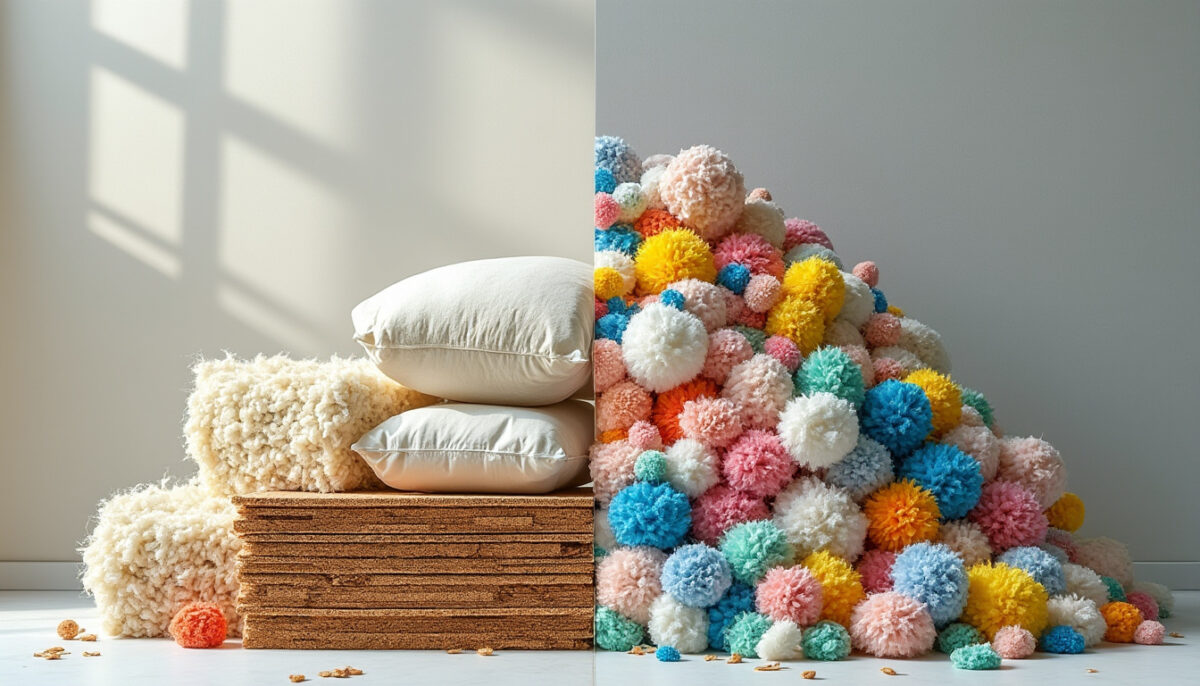
Natural insulation materials, derived from plant or animal sources, are more expensive to buy than conventional insulation but offer better thermal comfort in both summer and winter. sustainability It often lasts over 50 years, significantly reducing the costs associated with future renovations. For example, hemp wool has an average lambda value of around 0.04 W/m.K and an excellent capacity to regulate humidity. This “material innovation” helps to limit thermal bridges and improve indoor air quality.
If it’s an older property, choosing a natural insulation material can also prevent moisture-related problems, common with some synthetic insulation. If cost is the primary concern, cellulose wadding, made from recycled materials, represents an attractive compromise with a good price-to-performance ratio. cost-benefit.
Essential characteristics of natural insulators
- Renewable origin: plant fibers (hemp, flax, wood) or animal fibers (sheep’s wool).
- Low thermal conductivity: lambda often between 0.035 and 0.042 W/m.K.
- natural humidity regulation.
- Favorable carbon footprint: low energy consumption during manufacturing.
- Acoustic and thermal comfort: Better phase shift for improved summer comfort.
Comparing natural and synthetic materials: understanding the extra cost
The higher cost of eco-friendly materials often stems from less industrialized production and more complex manual harvesting. Cellular concrete, for example, has high thermal conductivity but a much shorter lifespan and lower insulation than wood wool. Polystyrene or polyurethane remain less expensive, but their environmental impact is major and their comfort in summer is often very poor.
The key difference: natural insulation contributes to a healthy living environment with good air quality, while conventional insulation can emit harmful compounds. The well-known saying “choosing natural insulation is an investment in your health” explains that this additional cost is often an investment in quality of life.
Comparative table of natural and synthetic insulation materials (indicative values)
| Insulating | Thermal conductivity λ (W/m.K) | Approximate price (€ / m² for R = 1 m².K/W) | Environmental impact (embodied energy kWh/m³) | Durability (years) |
|---|---|---|---|---|
| Hemp wool | 0.039 – 0.060 | 8-15 | forty-eight | >50 |
| Cellulose wadding | 0.038 – 0.042 | 10-25 | fifty | 40-50 |
| Sheep’s wool | 0.035 – 0.045 | 2 – 8 | fifty-one | >50 |
| Glass wool | 0.032 – 0.046 | 1.33 – 15 | two hundred fifty | 15-30 |
| Extruded polystyrene | 0.027 – 0.040 | 2.7 – 40 | seven hundred ninety-five | twenty |
| Polyurethane | 0.022 – 0.028 | 7 – 50 | nine hundred seventy-four | twenty |
3 steps to choose your natural insulation without regrets
- Analyze your needs: Clearly check the areas to be isolated, their exposure and your budget.
- Select a suitable insulation material: favours materials that are certified and recognized for their durable performance.
- Hire a RGE-certified professional: to ensure effective installation and to benefit from all financial assistance.
A responsible choice for a healthy and sustainable home
ecological materials is a process ofmaterials innovation which pays off over time.
“Insulation is the most effective way to reduce energy costs while improving comfort,” notes a study by ADEME. The initial additional cost, if indeed there is one, is therefore fully justified by the savings and lasting well-being achieved.
To delve deeper into this topic, watch this video which compares natural and conventional insulation:
Thank you for your interest; Claude
What is the main advantage of natural insulation?
They combine thermal performance, humidity regulation and low environmental impact for lasting comfort.
Are natural insulation materials always more expensive?
While often a little more expensive to buy, they pay off in the long run through their energy savings and durability.
Is it possible to receive financial assistance for natural insulation?
Yes, work carried out by an RGE professional generally benefits from aid such as energy bonuses or tax credits.
How to choose between synthetic and natural insulation?
Make a responsible choice by evaluating the environmental impact, the desired comfort, and your long-term budget.