Insulation: Gain comfort without losing a room
Hello, this is Claude. To gain interior comfort without losing a room, you need to choose thin interior thermal insulation solutions that optimize energy performance without sacrificing living space.
To do immediately
- Assess the condition of your walls to choose the ideal insulation technique.
- Opt for natural insulating materials such as cork or wood fiber.
- Opt for thermal correction rather than complete insulation if space is limited.
- Avoid non-eco-friendly multi-layer thin insulation that has poor actual performance.
- Consult an expert to avoid thermal bridges and optimize energy renovation.
In older or small homes, every centimeter counts. Traditional interior insulation can cause heat loss between 5 and 7% of living spaceThis can be a significant factor in a studio apartment or village house. To avoid this loss of space, it’s essential to use high-performance, thin materials and appropriate solutions. Insulating an interior wall without losing space gives good practical advice, while this resource details tips for preserving living space during energy renovation.
Some key points to consider when choosing insulation thickness
It all depends on the desired thermal performance and the conductivity of the materials. For complete insulation, a high thermal resistance (> 3.7 m².K/W) is necessary, often achieved with 10 to 15 cm of insulation. But to avoid sacrificing the room’s space, a thermal correction A thickness of 3 to 6 cm is often sufficient to eliminate the feeling of a cold wall and reduce energy loss.
For example, 10 cm of rigid wood fiber (λ ≈ 0.038) provides good insulation, while expanded cork requires a bit more thickness. In a studio apartment, this compromise between energy efficiency and space is often preferable.
Effective techniques to minimize surface area loss
To create a sound and flat wall, gluing thin insulating panels directly to the wall is quick and aesthetically pleasing. In this case, cork or wood fiber panels 2 to 6 cm thick prevent thermal bridging with minimal thickness.
If the wall is uneven, a thin metal frame (approximately 4.5 cm) allows for the integration of high-performance insulation in less than 7 cm total. This corrects the wall’s imperfections and provides good interior comfort.
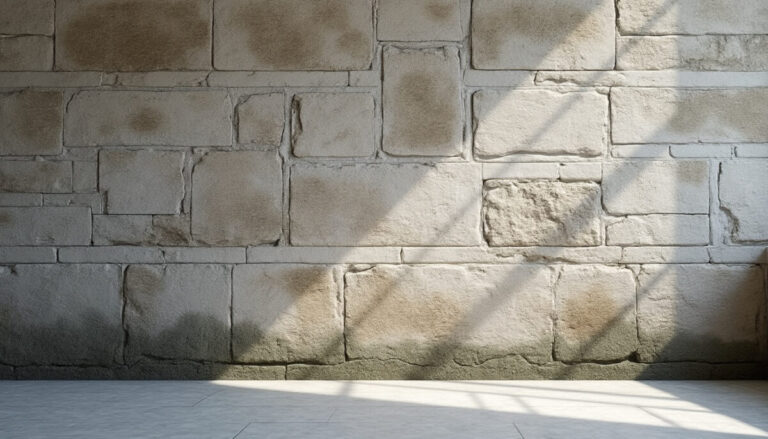
Finally, the application of a decorative insulating coating (e.g., lime-hemp) in 3 to 6 cm improves thermal performance while preserving the breathability of old walls, ideal for stone houses.
If it’s an older house, opt for natural and breathable solutions to avoid moisture problems. If it’s an urban apartment, direct installation of thin insulating panels may be quicker.
Comparative table of interior insulation materials and techniques
| Material / Technique | Average thickness (cm) | Thermal resistance R (m².K/W) | Benefits | Boundaries |
|---|---|---|---|---|
| Expanded cork | 4 to 12 | 1.0 to 2.6 | Natural, breathable, thermal correction possible | Thicker for complete insulation, moderate cost |
| Rigid wood fiber | 2 to 10 | 1.2 to 2.6 | Good thermal inertia, eco-friendly, easy to install | Flat support required, variable thickness |
| Metal frame + semi-rigid panel | 4.5 to 7 | 1.5 to 3.0 | Correction of irregularities, integration of vapor barrier | Slightly thicker, technical installation required |
| Sprayed lime-hemp plaster | 3 to 6 | 0.8 to 1.5 | Breathable, aesthetically pleasing, improves summer/winter comfort | Less complete insulation, specific implementation |
A word about exterior insulation
To avoid any loss of interior space, exterior wall insulation remains the most effective solution. It preserves living area and permanently reduces thermal bridges, while also improving the walls’ thermal inertia. This is often the best option for detached houses. However, this technique can require a larger budget and administrative procedures, particularly in heritage areas. This reading
Anecdote and reflection
The owner of a house in an old village chose a lime-hemp plaster that perfectly complemented his stone walls to regulate the temperature without sacrificing an inch of space in his tiny room. He explains, “It’s a bit like wearing a scarf indoors; it retains heat without being bulky.” As the saying goes, “Sometimes, a good balance is better than extreme performance.” This is a beautiful philosophy for reconciling indoor comfort and space!
A simple 3-step procedure to insulate a wall without losing space
- Step 1: Carefully assess the condition and nature of the wall (thick, uneven, damp).
- Step 2: Select a high-performance natural insulating material suitable for this wall (cork, wood fiber, insulating plaster).
- Step 3: Choose the technique (direct bonding, thin metal frame, or plaster spraying) according to the possible thickness and the desired finish.
Which thin insulation material is the most effective?
Multilayer thin insulation has very limited performance and is not suitable for an environmentally friendly approach. Natural insulation materials such as cork or wood fiber in thin layers offer a better compromise for thermal correction.
Is an air gap necessary behind insulation without losing space?
In general, it’s best to avoid an air gap to prevent wasting space. Breathable insulation materials like cork can be glued directly onto a sound, dry wall, eliminating the need for additional space.
Can you insulate a wall that is already insulated?
Yes, provided the existing insulation is in good condition and the added materials are compatible and breathable. Otherwise, it’s best to remove the old lining for better performance.
What is the minimum thickness required to insulate a wall?
Thermal correction can be achieved with as little as 3 to 4 cm of natural insulation. For complete insulation that meets standards, 10 cm or more is often required, but this reduces the living space.
Can an eco-friendly coating be used for insulation?
Yes, a lime-hemp or lime-cork plaster applied in a few centimeters improves comfort, regulates humidity and respects the breathing of old walls.
Thank you for your interest; Claude