
Insulation: This damp wall hides a trap
Hi, this is Claude. Insulating a damp wall without first addressing the underlying moisture problem is like putting a lid on a boiling pot: a real trap that risks making the situation worse. This article explains how to avoid the mistakes that turn a damp wall into a nightmare for your insulation and your home.
To do immediately
- Accurately diagnose the source of the moisture: rising damp, water infiltration, or condensation
- Dry and clean the wall before installing any insulation.
- Choose a rot-proof insulation material suited to the context
- Install a vapor barrier to control the flow of water vapor within the structure
- Ensure adequate ventilation to limit condensation and mold growth.
A damp wall isn’t just an aesthetic problem. It often hides a trap dangerous for your insulation, with condensation seeping in through the thermal bridges or the defects ofwaterproofingActing quickly and effectively can improve your home’s energy efficiency and protect the health of its occupants. To learn more, discover how to proceed. safely insulate a damp wall or when to favor a interior insulation depending on the type of wall and its humidity level.
Why a damp wall is a trap for your insulation
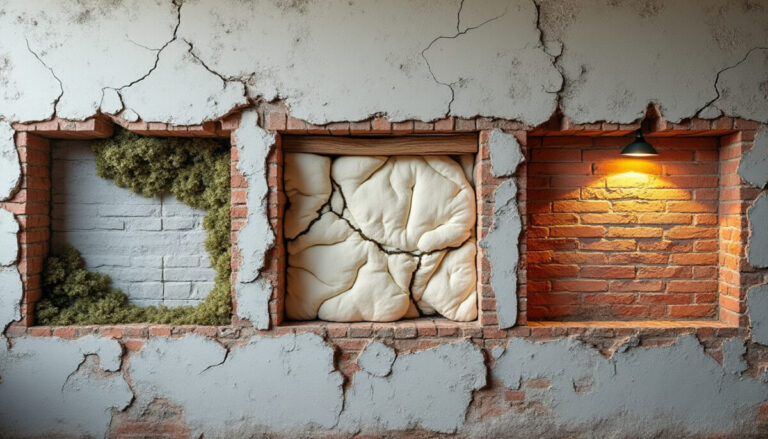
A moisture problem in a wall often manifests itself through signs such as mold, paint blistering, or musty odors. These symptoms are not merely cosmetic: stagnant water degrades materials and reduces their insulating capacity, sometimes to a significant degree. 50% depending on the type of wall and insulationDamp insulation not only loses its effectiveness, but also promotes the growth of mold, a real danger to your health and that of your family.
The phenomenon is often linked to thermal bridges where warm air meets a cold surface, causing condensation. Without proper ventilation, waterproofing Without adequate ventilation and appropriate solutions, these areas become breeding grounds for moisture. To break this vicious cycle, the problem must be addressed at its source: repair water leaks, seal thermal bridges, and above all, avoid insulating a wall that is still damp.
A concrete example to better understand
In an old stone house, poorly ventilated and with damp foundations, a homeowner decided to install interior insulation without addressing the rising damp. The result: despite a good thickness of insulation, the wall quickly became covered in mold, the paint blistered, and the work had to be redone two years later. This story perfectly illustrates the infamous trap hidden beneath insulation.
Steps to insulate a damp wall without trapping moisture
- Clean the wall : apply a treatment such as hydrophobic resin injection, drainage or tanking to stop capillary rise and water infiltration.
- Wait until completely dry : check that the humidity level has fallen below 65%, using a hygrometer if possible.
- Install suitable insulationrot-proof and breathable materials, such as expanded cork or wood fiber, should be used, provided a vapor barrier is installed and adequate ventilation is ensured.
If it’s an exterior wall, prioritize exterior insulation with an air gap and vapor barrier. If it’s an interior wall, opt for a breathable insulation material like cork installed with a slight air gap. In both cases, never neglect ventilation!
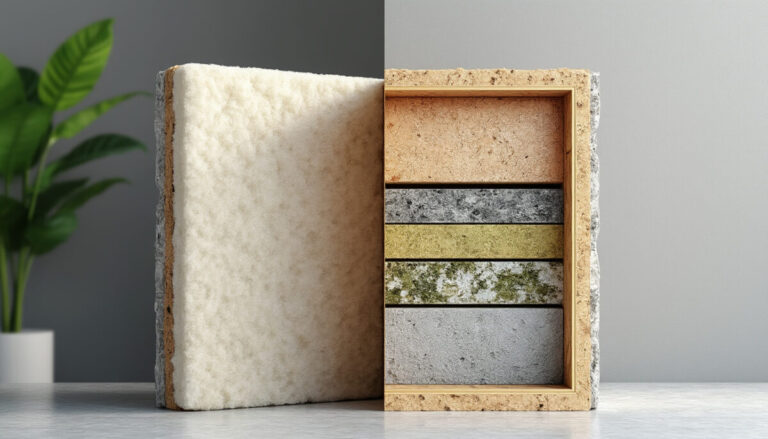
Comparative table of insulation materials for use against a damp wall
| Insulating | Moisture resistance | Water vapor permeability | Recommended use | Risks |
|---|---|---|---|---|
| Excellent | Good (permeable) | Interior insulation, damp walls | High cost | |
| Wood fiber | Good | Good (permeable) | Exterior and interior insulation | Must be protected outdoors |
| Extruded polystyrene | Very good | Low (low permeability) | Exterior insulation with an effective vapor barrier | Risk of condensation if improperly installed |
| Rock wool / glass wool | Poor (absorbs water) | Variable | Very dry walls only | Loss of effectiveness in humid conditions |
Why ventilation is key in the fight against humidity
Controlled mechanical ventilation, particularly dual-flow MVHR, plays a major role in preventing moisture trapping. By extracting humid air and supplying tempered, filtered air, it limits condensation in walls and preserves indoor air quality.
As one insulation expert points out: “A well-insulated but poorly ventilated house is often an unwitting trap for humidity. The key lies in the balance between airtightness and air renewal.”
Common pitfalls to avoid when insulating a damp wall
- Isolating without diagnosing the source of the moisture problem.
- Installing waterproof insulation without managing water vapor.
- Ignoring leaks and thermal bridges.
- Neglecting ventilation and appropriate equipment.
- Repairing only halfway without addressing rising damp or leaks.
A professional approach that combines sanitation, choice of materials and ventilation management remains the best investment to avoid falling into this costly and dangerous trap.
What are the visible signs of a damp wall that should not be ignored?
Mold stains, peeling wallpaper, musty smells, blistering paint and rising heating bills are strong indicators of a moisture problem.
Why should you not insulate a damp wall without prior treatment?
Insulating a wall that is still damp traps water behind the insulation, which promotes material degradation, the appearance of mold and a drastic drop in thermal performance.
What materials are recommended for insulating a damp wall?
Rot-proof insulation materials such as expanded cork, wood fiber or extruded polystyrene are the most suitable because they can withstand a certain amount of moisture without degrading.
How to avoid thermal bridges during insulation?
It is necessary to work on airtightness by carefully sealing the junctions between walls, windows, floors, and using properly fitted insulation to limit condensation on cold surfaces.
How important is ventilation in an isolated dwelling?
Adequate ventilation, particularly a mechanical ventilation system, helps to reduce indoor humidity, thus preventing condensation and the risk of trapped moisture in the walls.
Thank you for your interest; Claude