
Insulation: Interior walls, true comfort or false security
Hi, this is Claude. For true thermal comfort and reliable heat retention, insulating your interior walls can be very effective, but only if you choose the right insulating materials and master the installation to avoid thermal bridges and moisture problems. To do immediately: to get off to a good start, consider having a precise assessment of your wall and comparing several thorough quotes. These links will guide you very well in making the right choices: succeed in your wall insulation and a A complete guide to interior wall insulation.
- Measure the humidity and check for condensation risks.
- Identify the type and thickness of each wall to be insulated.
- Choose an insulating material that is suitable for your space and acoustic requirements.
- Plan the installation while avoiding thermal bridges and ensuring continuity of airtightness.
Why is interior wall insulation essential for your thermal comfort?
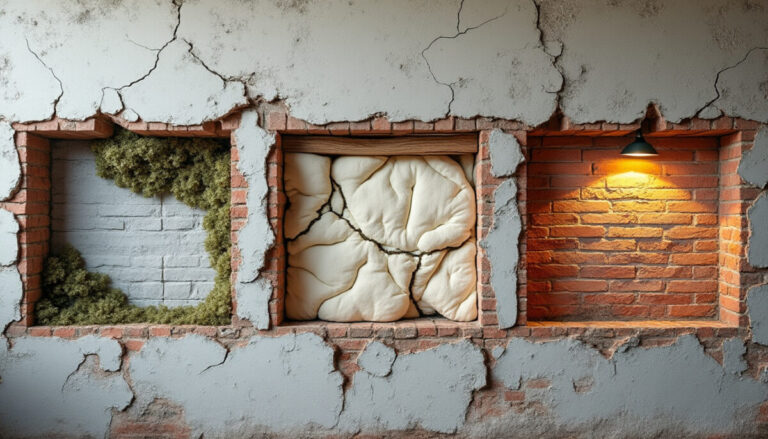
Interior thermal insulation generally improves the comfort of your home by regulating the temperature and reducing heating needs. A poorly insulated wall can lose up to 25% of the heat, which is often like heating the street. But be careful, interior insulation isn’t a one-size-fits-all solution: it requires a precise assessment to avoid false sense of security, especially if water vapor isn’t properly managed. A common mistake is sealing a damp wall behind an overly airtight vapor barrier, which can create an environment conducive to mold growth. Camille, for example, discovered these pitfalls while renovating her old apartment and had to treat the dampness locally before installing suitable bio-based insulation. The result: improved comfort and a controlled budget.
Choosing the right insulation: balancing performance, thickness and environmental impact
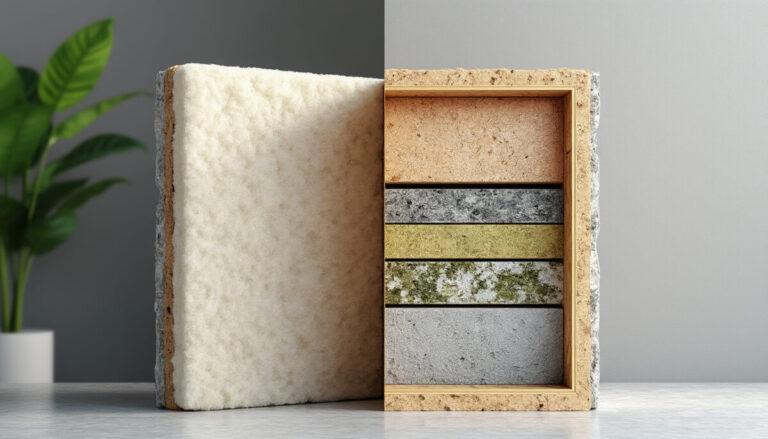
With the diversity of insulating materials available in 2026, the choice now rests on three key criteria: thermal and acoustic performance, available thickness, and environmental impact. Rock wool remains a reliable option when acoustics are a priority, while polyurethane panels offer excellent thermal insulation at a low thickness when space is limited. Bio-based insulation materials such as cellulose wadding are ideal for eco-conscious homeowners, offering good thermal inertia and natural regulation of indoor air quality thanks to their ability to manage humidity.
| Insulating | Thermal conductivity λ (W/m.K) | Thickness for R~3.7 (cm) | Environmental impact | Strengths |
|---|---|---|---|---|
| Glass wool | 0.035 | thirteen | AVERAGE | Low cost, good sound insulation |
| Rock wool | 0.035 | thirteen | AVERAGE | Improved fire resistance, sound insulation |
| Cellulose wadding | 0.038 | 14-15 | Good | Bio-based material, humidity regulation |
| 0.033 | twelve | Weak | Economical, rigid panel, easy to install | |
| PUR (polyurethane) | 0.022 | 8-9 | AVERAGE | High performance, thin profile |
Installing interior insulation without compromising air quality and avoiding thermal bridges
Proper installation is just as important as choosing the insulation. A well-installed frame, a continuous and airtight vapor barrier on the warm side, and meticulous attention to detail at critical points (electrical outlets, corners, windows and doors) are essential. Without these precautions, indoor air quality can deteriorate, and thermal bridges will compromise both thermal safety and performance. One old habit that needs to be abandoned is compressing the insulation too much; this reduces its effectiveness! Camille learned this the hard way with a poorly installed wall lining.
Practical examples: planning your insulation project to avoid mistakes
If your home is old with stone walls, be prepared to address the dampness before insulating to prevent your good idea from becoming a chronic moisture problem. If the room to be insulated is small or narrow, opt for a high-performance, thin insulation material, such as polyurethane (PUR), to maximize space.
3 steps to successful insulation
- Diagnosis : humidity control, wall condition, accessibility
- Choice of materials thermal, acoustic and environmental performance
- Rigorous installation : frame, vapor barrier, finishes and final inspection by thermal camera
Budget, financial aid and tips to optimize your insulation project
Count between €50 to €140 per m² Depending on the type of insulation, the thickness and complexity of the project are common. Also consider government assistance and subsidies that can reduce the cost. To lower costs without compromising on quality, combine several projects and prioritize local materials. A pro tip is to standardize the cladding to minimize cuts and waste.
List of common mistakes to avoid
- Ignoring the humidity Sealing a damp wall can cause mold.
- Compress the insulation This reduces its ability to insulate.
- Poorly installing the vapor barrier : creates areas of condensation.
- Forget about ventilation : air must continue to circulate to prevent degradation.
- Do not treat thermal bridges : performance decline.
To learn more about insulation and thermal comfort, see this link. gives a clear overview of the advantages and limitations and this one The installation and materials are well presented.
Interior insulation is often preferred for renovations when the exterior appearance cannot be altered or when budget constraints are present. It provides rapid thermal comfort and simpler installation, but requires careful attention to moisture management.
What is the best insulating material for an interior wall?
There is no ‘best’ universal insulation. In general, rock wool is ideal for acoustics and durability, PUR for small spaces, and bio-based insulation for a good compromise between ecology and humidity regulation.
How to avoid thermal bridges during interior insulation?
This involves the continuous installation of quality insulation, a framework decoupled from the wall, thermal breaks at the metal-wall interfaces, and precise attention to corners, electrical boxes and joinery.
Does interior insulation have an impact on air quality?
Yes, if installed incorrectly, it can block moisture vaporization and create risks of condensation and mold. A variable vapor barrier and good ventilation are therefore essential.
What maintenance is required after insulating interior walls?
Regular ventilation maintenance is necessary. Monitoring ambient humidity, visually inspecting the cladding for cracks or mold, and performing a thermal imaging check every 2-3 years help maintain performance.