10 Insulation Pitfalls in an Old House
Hello, this is Claude. To insulate an old house without ruining its charm or thermal efficiency, you need to avoid 10 common pitfalls such as poorly treated thermal bridges, damp walls, or insufficient ventilation. The insulation must respect the building’s structure and materials; otherwise, condensation, mold, and air leaks will quickly follow.
To do immediately
- Accurately diagnose the condition of the walls and identify all sources of moisture.
- Choose compatible and hygro-regulating materials suitable for old buildings.
- Ensure efficient ventilation, preferably with a double-flow CMV.
- Address thermal bridges from the insulation design phase.
- Prioritize techniques that respect the interior and exterior appearance of the house.
Discover the best methods ofinsulation suitable for old houses and avoid common mistakes during construction. For further information, here is a complete guide on the Insulation methods in old buildings which are based on respect for heritage.
10 common pitfalls to avoid when insulating an old house
1. Neglecting pre-existing moisture
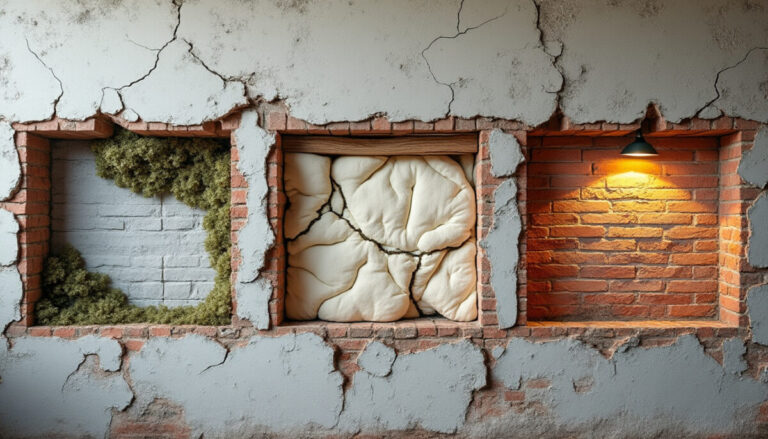
Insulating without treating damp walls opens the door to condensation and mold. Before any installation, thorough drying via drainage or resin injection is essential. I saw a project where the absence of this treatment led to a rapid return of mold.
2. Using incompatible materials
Polystyrene or fiberglass insulation on a stone or earthen wall hinders the wall’s breathability. The result? Moisture buildup and plaster peeling. Wood wool, hemp, or cellulose wadding are preferable, as they allow water vapor to pass through.
3. Forgetting about ventilation
Insufficient ventilation promotes internal condensation. A simple single-flow mechanical ventilation system may not be sufficient in a well-insulated older home. A humidity-controlled double-flow mechanical ventilation system ensures optimal air renewal.
4. Poor management of thermal bridges
The junctions between stone and wood, windows, and floors are key points. Without treatment, heat loss and localized condensation are inevitable. Appropriate thermal breaks are essential.
5. Installing insulation that is too thick without planning
Excessive thickness can obscure moldings and baseboards, detracting from the interior’s appearance. The placement of outlets and switches must also be planned in advance, and an expert should be consulted.
6. Glue the insulation directly onto the old wall
The absence of an air gap or intelligent vapor barrier is often the beginning of moisture problems and efficiency losses.
These defects must be corrected before insulation is installed, otherwise damage or heat loss will increase. An old, poorly insulated house will lose a lot of heat despite insulation.
8. Neglecting post-construction maintenance and follow-up
Regular monitoring of humidity, plaster, and ventilation prevents costly repairs later on. An anecdote: a client found mold growing on his insulated wall due to a lack of controlled ventilation.
9. Choosing unsuitable finishes
Opt for lime or raw earth plasters that respect the permeability of the old wall. Modern, overly waterproof paints can also cause problems.
10. Bypassing current standards and aid
They may seem restrictive, but RT2020 compliance and financial aid facilitate the success and profitability of the work.
Choosing the right insulation materials for an old house
Here is a comparative table of natural insulation materials and their key properties for old buildings:
| Insulating | Conductivity λ (W/m·K) | Hygroscopic capacity | Benefits | |
|---|---|---|---|---|
| Wood wool | 0.038 | High | Natural humidity regulator | High cost |
| Expanded cork | 0.040 | Average | Rot-proof, sound insulation | Difficult to cut |
| Hemp | 0.042 | High | Good humidity regulation | Premium price |
| Cellulose wadding | 0.039 | Very high | Eco-friendly, recycled | Risk of settlement |
| Glass wool | 0.032 | Weak | Cheap | Non-hygroregulating |
3-step procedure for successful insulation
- Step 1: Carry out a complete hygrothermal diagnosis and correct the sources of humidity.
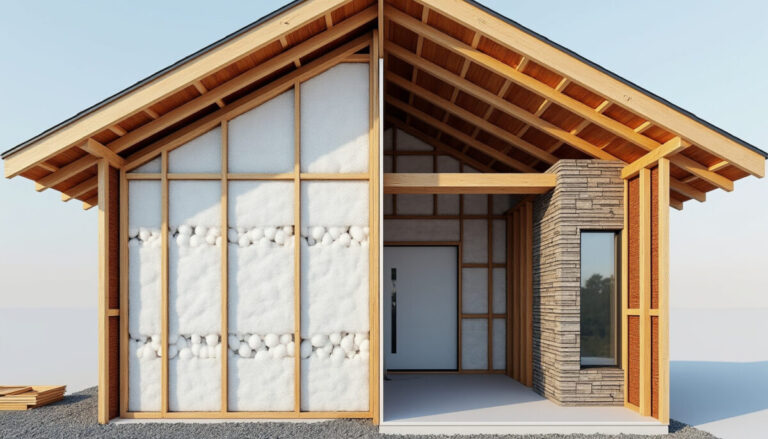
- Step 2: Choose a suitable insulation technique (framework, bonded lining, blown-in insulation) using natural materials.
- Step 3: Install efficient ventilation and plan for regular monitoring to prevent condensation and mold.
Quick cases
If it is A very damp stone wall should be prioritized for drying and for very permeable insulation such as wood wool.
If it is a dry brick wall, insulation by bonded lining may be considered to gain living space.
Essential information on humidity and ventilation
Managing humidity is essential to prevent mold growth and the deterioration of damp walls. Insufficient ventilation also promotes condensation, exacerbating heat loss. “A healthy home is a home that breathes” aptly summarizes the importance of this step.
Thank you for your interest; Claude
What thickness of insulation should I choose for an old house?
A thickness of 120 to 160 mm is often necessary for a good R-value, depending on the type of insulation and the configuration of the house.
Can fiberglass insulation be installed in an old house?
Fiberglass insulation can be used but is not suitable for humidity regulation. Natural materials are preferable to limit the risk of condensation and mold growth.
How to effectively treat thermal bridges?
Install thermal breaks and properly insulate the junctions between walls, floors and windows to prevent condensation and heat loss.
What methods can be used to prevent water infiltration before insulation?
Peripheral drainage, injection of water-repellent resin, sealing of cracks, and repair of gutters are essential.
Do you need a permit to insulate an old house?
Interior insulation does not alter the exterior appearance and rarely requires a permit. However, check local regulations, especially for listed buildings.