
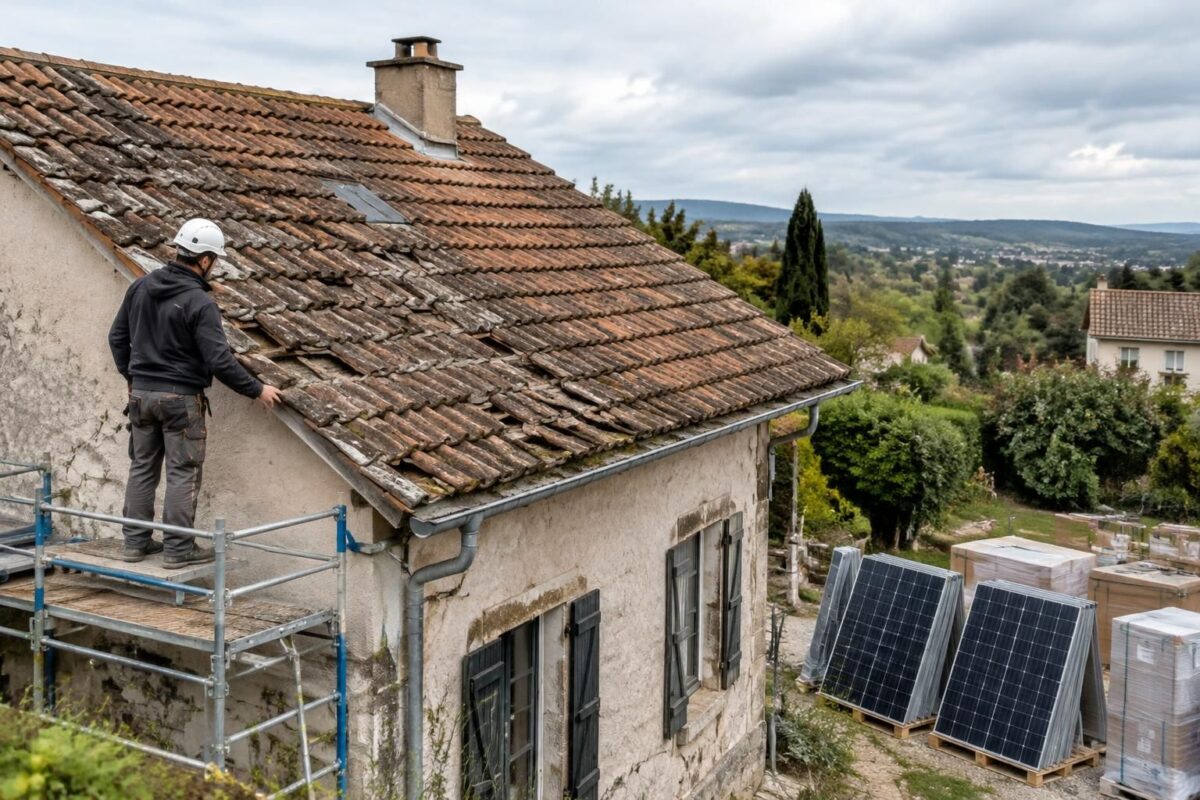
Materials: unsuitable roof, slowing solar autonomy
Hello, this is Claude. An unsuitable roof slows the path to solar independence: first check its structure, watertightness and materials, then adapt the mounting system to the roof. A well-planned photovoltaic installation starts with the building, not the panels. By combining roof renovation, insulation and solar generation, you can move toward energy independence with greater confidence. Every roof has its constraints, but a clear assessment helps identify a lasting solution.
Things to do immediately
- Look for broken tiles, leaks, signs of damp and old repairs.
- Have the roof frame and its structural strength checked before planning for the weight of the panels.
- Note the type of roof covering: tile, slate, metal sheeting or flat roof.
- Observe the roof’s orientation, its pitch and the shaded areas throughout the day.
- Request an assessment that covers the roof, insulation and solar compatibility.
For more details on the checks to carry out, you can consult this guide on whether a roof is suitable for solar and these tips on preparing for energy independence before installing panels.
When roofing materials hinder solar
Roofing materials do not always prevent a project, but they do affect how the modules are mounted. Concrete interlocking tiles can often accommodate suitable hooks. Slate requires specific fixings and careful installation, while metal sheeting is generally well suited to an over-roof mounting system.
A flat roof can accommodate panels on ballasted or fixed supports, depending on its watertightness and building regulations. In all cases, solar compatibility also depends on the roof’s condition: fragile roofing or a weakened roof frame must be addressed before the photovoltaic installation.
Roof condition, orientation and solar output
A well-oriented roof with little shade improves solar output, but an east- or west-facing roof can also be suitable. The pitch, trees, a chimney or a neighbouring building all affect actual production. An installer can assess these factors before sizing the system.
The additional load from the panels and their supports is often around 12 to 18 kg/m², depending on the model and the situation. Only an inspection of the roof frame can confirm that this extra load is acceptable; it is best to get one before signing a quote.
Choosing the right roof renovation before installing panels
If the roof covering is nearing the end of its useful life, installing modules without renovating may mean having to remove them a few years later. Combining roof repairs, insulation and solar installation requires a larger budget upfront, but often avoids having to carry out the same work several times.
Over-roof mounting is often practical when renovating: the panels are installed above the roof covering, which makes maintenance easier and limits work on the watertight layer. Integrating the panels into the roof can meet aesthetic requirements, but calls for especially meticulous installation.
| Solution | Key advantage | What to check |
|---|---|---|
| Over-roof mounting | Often simpler to install and maintain | Condition of the fixings and strength of the roof frame |
| Roof-integrated system | Uniform appearance | Watertightness, ventilation and system cost |
| Roof renovation followed by solar installation | Allows the roof covering and insulation to be addressed together | Upfront budget and coordination of the work |
“A good solar installation starts with a sound roof.” This rule helps avoid confusing electricity generation with lasting renovation: panels will not fix a leak or inadequate insulation.
Two quick scenarios to help you decide
If the roof is leaking or the roof frame shows signs of weakness, postpone the installation and arrange an assessment. If the roof is sound but the material requires special hooks, ask for a compatible system and a detailed quote.
Three-step process to prepare your solar project
- Step 1: Have qualified professionals inspect the roof covering, watertightness, insulation and roof frame. Point out any signs of damp and repairs already carried out.
- Step 2: Request an assessment of the roof’s orientation, shading and expected output. Compare several scenarios based on how you use energy, rather than choosing solely on the basis of maximum capacity.
- Step 3: Choose compatible fixings and materials, then get the warranties, maintenance requirements and post-installation checks specified. Keep the technical documents with the house records.
A story often comes up during roof inspections: a family had planned to install panels before noticing a leak near a chimney. The project was reorganized so the roof could be repaired and insulated first, which avoided having to remove the modules later.
Connecting insulation, watertightness and energy independence
Panels generate electricity, but on their own they do not reduce heating needs. Improving loft or roof insulation and carefully sealing junctions limits heat loss; this is often a useful step before sizing a solar system.
A better-insulated home can make greater use of its own generation, especially if electricity use is shifted to sunny hours. The proportion covered varies depending on sunshine, installed capacity and household habits: a 3 to 6 kWp system may suit some homes, but this is only a guide and depends on the system and the situation.
Ventilation matters too. Adequate airflow beneath the panels and in the loft helps manage heat and moisture, while properly installed joints protect the roof’s watertightness. An inspection after the work can quickly identify any installation defects.
FAQ about roofs unsuitable for solar panels
Can panels be installed on an old roof?
Yes, provided the roof frame, roof covering and watertight layer are in a condition to support the project. A preliminary assessment can determine whether renovation is needed before installation.
Which roofing material is best suited to solar?
Concrete interlocking tiles and metal sheeting are often straightforward to equip with suitable systems. Slate and flat roofs can also be suitable, with specific fixings or supports.
Should insulation be upgraded before a photovoltaic installation?
Not necessarily, but taking the opportunity to improve insulation during a roof renovation can increase comfort and avoid reopening the roof later.
Is over-roof mounting always preferable to roof integration?
No. Over-roof mounting is often easier to maintain, while integration may better meet aesthetic requirements. The choice depends on the condition of the roof covering, watertightness and budget.
Thank you for your interest; Claude