
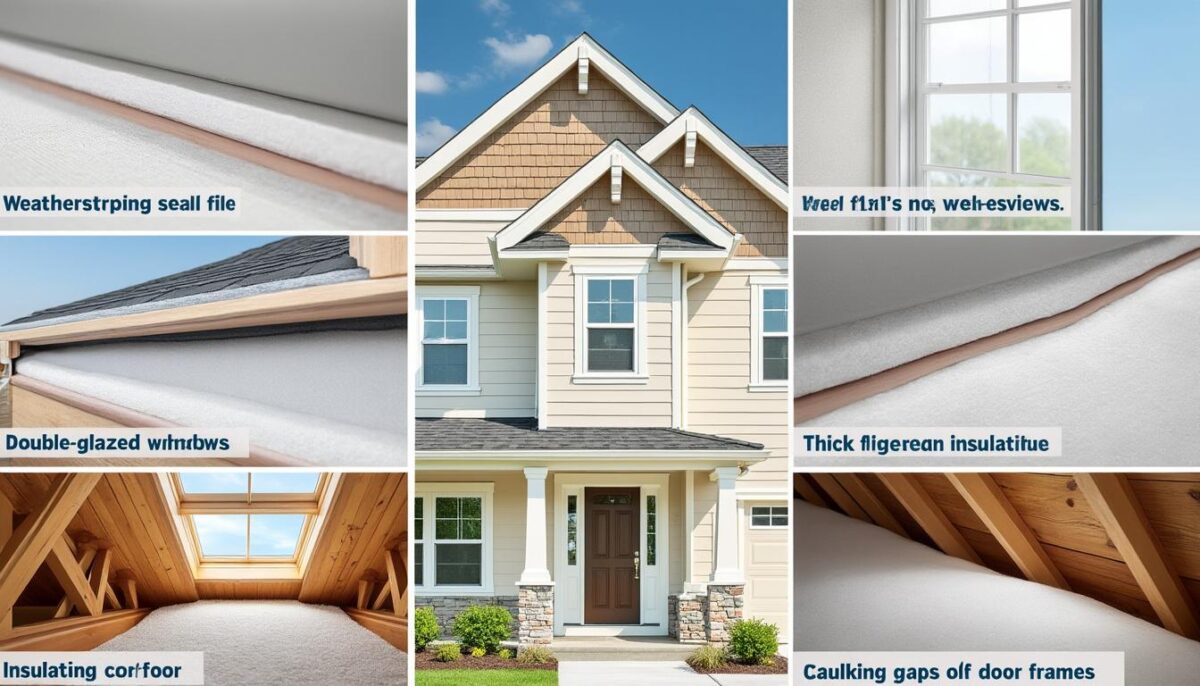
6 Insulation Actions to Stop the Leak
Hi, this is Claude. To stop energy loss, you need to immediately focus on insulating the most vulnerable areas, such as windows, doors, and the attic. A leak can easily increase your heating bill and reduce your daily comfort. By eliminating these losses, you’ll gain warmth and save money. Insulate your windows and understand why Cold walls are a real problem are two fundamental factors in limiting air infiltration.
To do immediately
- Check and secure the caulking around windows and doors to prevent air leaks.
- Install sealing strips on window and door frames for enhanced insulation.
- Insulate the attic, because up to 30% of the heat often escapes through the roof.
- Use suitable insulating materials, such as rock wool or cork, to address the most glaring thermal bridges.
- Repair or replace worn insulation seals to make your home airtight again.
If it’s an old building, air leaks are often numerous and thermal bridges are poorly addressed. If you’re in a new house, it’s often small air leaks around windows or doors that cause problems.
How to detect and fix air and heat leaks
Step 1: Look for cold spots with an infrared thermometer or simply your hand. Feel for drafts near window sashes, electrical outlets, and around baseboards.
Step 2: Address the issue of caulking and the installation of sealing strips. This is a quick and inexpensive intervention that immediately reduces heat loss.
Step 3: Reinforce thermal insulation with suitable insulating materials, especially in attics and walls if they are accessible.
Why attic insulation plays a key role
Poorly insulated attics let heat in unchecked. Effective insulation can reduce your heating bill by 15 to 25%, depending on the roof. A friend spent a day installing mineral wool in her attic—her gas bill dropped by 20% the very next month. That’s something, isn’t it?
Insulating materials: what are their uses?
| Materials | Use | Benefits | Boundaries |
|---|---|---|---|
| Rock wool | Attics, walls | Good value for money, fire resistant | May irritate the skin during application |
| Natural cork | Thermal insulation, thermal bridges | Eco-friendly, good sound insulation, durable | Higher cost |
| Expanded polystyrene | Exterior walls, under-slab insulation | Lightweight, easy to install | Medium fire resistance |
Addressing thermal bridges to prevent heat loss
A thermal bridge is an area in a building where heat escapes more easily, often in the framing, at wall/floor junctions, or around poorly insulated windows and doors. Targeted correction can limit thermal bridges and improve your comfort. “Insulation isn’t an expense, it’s an investment.”
How can I tell if my windows are letting in air?
Feel the edges of windows to detect a draft or use an infrared thermometer to identify cold spots.
What materials are suitable for eco-friendly thermal insulation?
Natural cork, sheep’s wool and cellulose are often preferred ecological insulators.
How to seal a door to prevent leaks?
Place foam or rubber seals around the perimeter of the door and install a watertight threshold bar at the bottom.
Why is attic insulation a priority?
Because a lot of heat escapes through the roof, good attic insulation effectively protects your interior.
Should you replace your windows for better insulation?
Sometimes, but often, good caulking and sealing strips are enough to limit significant losses.
Thank you for your interest; Claude