
Materials: Which insulation keeps the wall healthy?
Hello, this is Claude. To maintain a healthy wall while ensuring effective thermal insulation, natural and breathable insulation is often the best solution. These materials help retain moisture in the wall, prevent condensation, and limit mold growth, thus guaranteeing long-lasting wall protection. Insulating without suffocating the wall is vital for the material’s durability and the well-being of your interior.
To do immediately
- Choose insulation with good vapor permeability to avoid trapped moisture.
- Opt for natural insulation materials such as cellulose wadding, hemp, or wood wool.
- Check the condition of the walls before insulation to detect any traces of moisture or mold.
- Install a suitable vapor barrier, compatible with breathable insulation, to prevent condensation.
- Hire a professional for a complete diagnosis before work begins.
To delve deeper, consult these comprehensive guides that help you choose the right one. thermal insulator and understand the issues related to the humidity preservation walls: interior wall insulation materials And best thermal insulation for interior walls.
Natural insulation materials for a healthy and durable wall
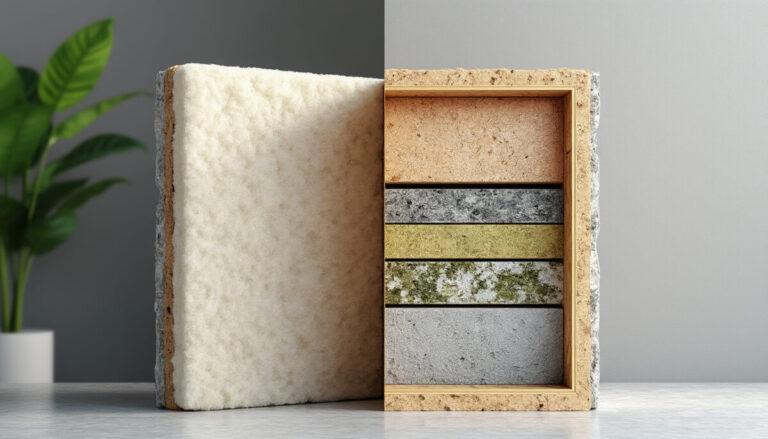
Natural insulation materials such as wood wool, cellulose wadding, and hemp are ideal for keeping walls dry and healthy. Their ability to regulate humidity reduces internal condensation, a key factor in preventing mold and deterioration. These materials are also vapor permeableThis means they allow the wall to breathe while maintaining effective insulation.
For example, cellulose wadding, made from recycled paper, offers good mold resistance and excellent sound and thermal performance. As for hemp, it combines thermal insulation and humidity regulation, ensuring a wall protection optimal over time.
| Material | Lambda (W/m.K) | Thermal resistance R (per 10 cm) |
Breathability | Material durability | Mold resistance |
|---|---|---|---|---|---|
| Wood wool | 0.038-0.045 | 2.2 – 2.6 | Excellent | Long | Good |
| Cellulose wadding | 0.038-0.042 | 2.4 – 2.6 | Excellent | Long | Excellent |
| Hemp | 0.04-0.05 | 2.0 – 2.5 | Very good | Long | Good |
| Glass wool | 0.035 | 2.86 | Average | Average | Average |
Protecting the wall against moisture: a vital issue
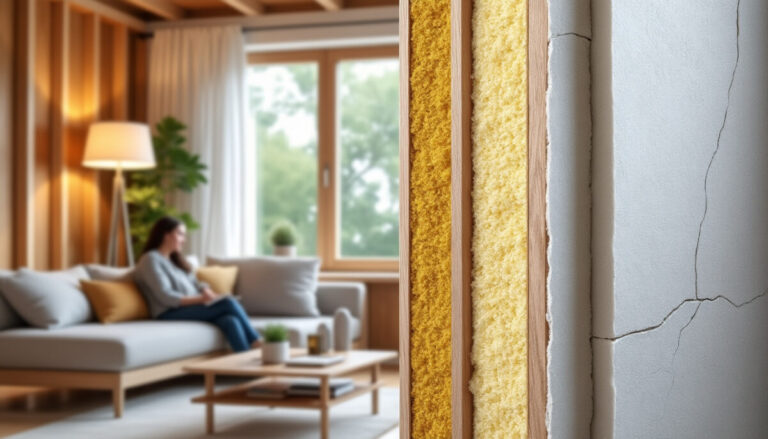
A healthy wall relies on good moisture management. Natural insulation acts as a breathable shield, promoting the diffusion of water vapor and limiting condensation. This condensation prevention is essential to prevent the proliferation of mold which deteriorates materials and harms indoor air quality.
A friend renovated his old house using exclusively wood wool insulation and found that the walls remained dry even after periods of heavy rain. This is simple proof that suitable insulation plays a crucial role in the material durability.
If it’s a stone wall…
Opt for a natural and breathable insulation material, such as cellulose wadding, to avoid trapping moisture. It helps keep the wall healthy by ensuring good vapor permeability.
If it’s a concrete wall…
Opt for an insulating panel with an integrated but breathable vapor barrier, in order to control condensation and avoid moisture stagnation.
3 simple steps to install effective natural insulation
- Prepare the wall by removing all traces of moisture and repairing cracks and defects.
- Choose a breathable insulation suitable for the type of wall, with sufficient thickness to achieve thermal resistance in accordance with regulations.
- Install a breathable vapor barrier to ensure airtightness while allowing vapor to circulate between the wall and insulation.
“The best insulation is that which respects the building’s natural breathing.” This proverb takes on its full meaning with natural insulation materials. They represent a real solution for preserve humidity at the right level and keep the wall in good condition.
Thinking about insulation also means thinking about air quality and the longevity of your walls. Don’t sacrifice the structural integrity of your home for poorly designed insulation. Choose materials that protect your home while remaining environmentally friendly and safe for your property.
Thank you for your interest; Claude
Which thermal insulation promotes the preservation of healthy walls?
Natural insulation materials such as cellulose wadding, hemp or wood wool are the most suitable because they allow the wall to breathe, preventing stagnant moisture.
Why is vapor permeability important?
It allows water vapor to circulate without condensation, which prevents the formation of mold and preserves the structure of the wall.
Can synthetic insulation materials be used safely in a sound wall?
Synthetic insulation materials offer good thermal insulation but often have low vapor permeability, which can lead to moisture problems in the long term.
How to avoid thermal bridges during interior insulation?
By installing the insulation continuously, carefully treating all joints and using a suitable vapor barrier to ensure airtightness without blocking the wall’s breathability.
What criteria guarantee the durability of insulation?
Choosing a material that is resistant to moisture and mold, certified for its durability, and properly installed according to best practices guarantees long-lasting insulation.