Autonomy: renovating old buildings without relying on heating
Hi, this is Claude. To renovate an old house without relying on conventional heating, you need to focus on enhanced natural insulation and combine renewable energy sources like solar heating and off-grid systems. This approach allows you to drastically reduce energy consumption while improving the energy efficiency of your home.
To do immediately
- Insulate the walls, roof and floor with suitable ecological materials.
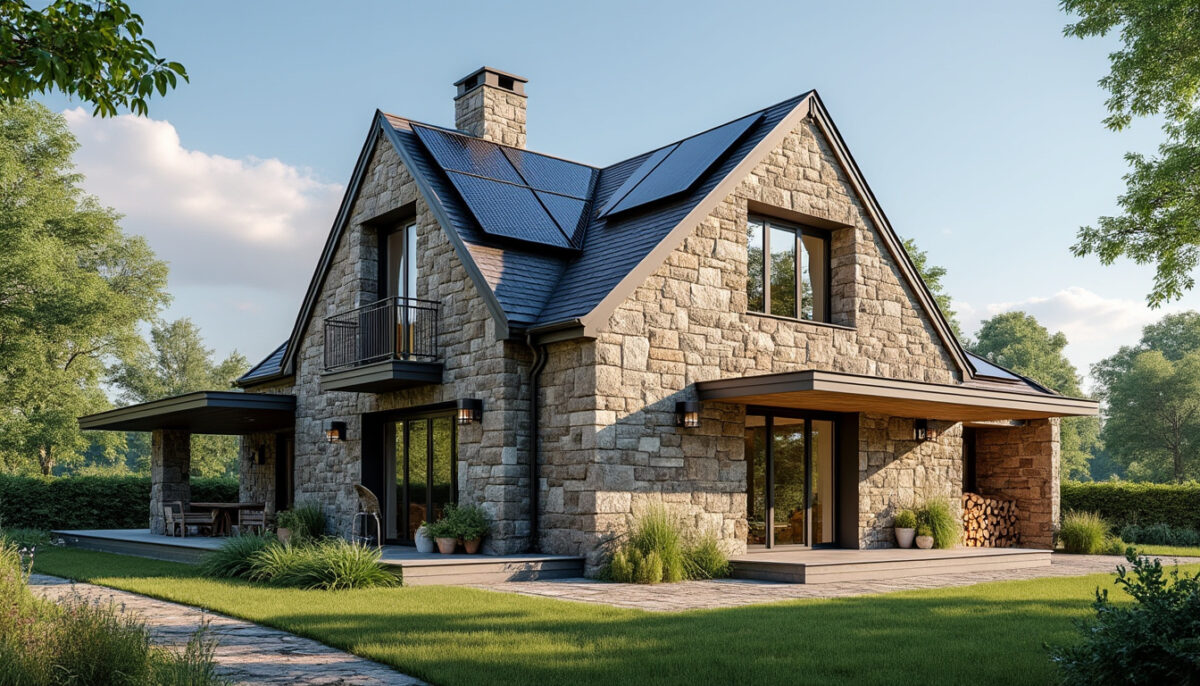
- Install photovoltaic solar panels for electricity and thermal panels for solar heating.
- Implement a system for intelligent energy recovery and management.
- Replace the windows with triple glazing to limit heat loss.
- Choose an independent wood or pellet heating system for cooler evenings.
A demanding renovation requires careful planning, which typically begins with optimizing thermal performance. To go further and control energy costs, explore How to renovate a house without heating and discover the method to make your house almost passive are crucial steps.
Renovating an old house without heating: focus on natural and efficient insulation
A successful renovation begins with enhanced natural insulation. The goal is to make your home highly airtight while using eco-friendly materials such as hemp wool, cellulose wadding, or wood fiber. These materials provide excellent thermal insulation and regulate humidity. In addition to increasing indoor comfort, they lead to a significant reduction in heating needs.
If your house is very old, often featuring stone walls, you should prioritize a thermal renovation Adapted, often carried out from the outside to avoid thermal bridges while preserving the building. Airtightness must be perfect, with controlled ventilation, ideally a double-flow mechanical ventilation system to recover heat from the extracted air. To enhance an older renovation without breaking the bank, start by checking How to insulate an unused attic space effectively before thinking about heating or major renovations.
Independent heating: the sustainable alternative for comfort without dependence
The solutions of autonomous heating Wood-burning or pellet stoves, combined with good heat storage, are ideal for a renovated home without conventional heating. The stove can also be combined with a solar thermal heating system that preheats water or air, further reducing the need for electricity or gas.
The key is to combine these systems with electricity production from photovoltaic panels, which store the energy in batteries sized for energy self-sufficiency. This combination ensures long-term independence, provided you carefully manage your consumption by using low-energy appliances.
3 essential steps for a successful, independent renovation
- Step 1: Conducts a comprehensive energy performance assessment. Identifies heat loss, insulation and ventilation priorities.
- Step 2: Installs enhanced natural insulation on walls, roof and floor, optimizes ventilation and replaces windows with triple glazing.
- Step 3: Set up a solar photovoltaic and thermal installation coupled with an autonomous heating system (wood stove, pellets, solar heat pump) with efficient energy storage.
The case of the isolated site
If your house is far from the grid, this strategy also allows for total energy independence while preserving a high level of living comfort.
The case of the townhouse
If your house is in the city, the main objective will be to reduce consumption and improve energy performance, while using solar heating as a supplement and limiting losses as much as possible.
Optimizing ecological materials for energy performance
Using eco-friendly materials for renovation improves the energy performance and quality of life. Here is a list of options to consider:
- Hemp wool for walls and roofs: thermal and acoustic insulation.
- Cellulose wadding, suitable for uninsulated attics and older buildings.
- Wood fiber provides excellent thermal storage.
- Lime-based plasters promote humidity regulation.
- Expanded cork for floor insulation.
Each material has its specific characteristics; for example, good insulation should aim for an R-value greater than 5 for walls and 7 for the roof for optimal results.
Table: Expected costs and gains in autonomous renovation
| Job | Estimated cost (€) | Estimated annual earnings (€) | Impact |
|---|---|---|---|
| Natural insulation (walls, roof, floor) | 10,000 – 20,000 | 1200 – 1800 | Significant reduction in heat loss |
| Independent heating (wood/pellet stove) | 5,000 – 12,000 | 800 – 1200 | Independence from gas or electricity |
| Solar panels (photovoltaic + thermal) | 15,000 – 25,000 | 1,000 – 1,500 | Renewable energy production |
| Triple-glazed windows | 8,000 – 12,000 | 600 – 900 | Reduction of heat loss |
| Intelligent management and storage | 5,000 – 10,000 | 500 – 800 | Consumption optimization |
To guarantee sustainable and self-sufficient housing
To aim for sustainable housing and operate in total self-sufficiencyControlling consumption is just as important as production. This involves intelligent management of appliances, limiting unnecessary energy-intensive devices, and raising awareness of energy-saving practices.
Every successful thermal renovation must incorporate the concept of consumption reductionby combining the right choices in insulation, solar heating, and suitable equipment. As the architect Norman Foster said: “The best energy is the energy you don’t use.”
To delve deeper into this approach and discover the latest advancements in self-sufficient housing, feel free to consult this feedback on The self-sufficient home in practice and the practical guide for become energy independent.
How to ensure good natural insulation in an old house?
Ecological materials suitable for old buildings should be favoured, such as cellulose wadding or hemp wool, installed as exterior insulation to avoid thermal bridges and preserve the structure.
Which independent heating system should I choose for a renovation?
Wood or pellet stoves are efficient and economical, particularly when coupled with solar thermal heating to limit electricity consumption.
Is it possible to achieve total energy self-sufficiency through renovation?
Yes, by combining high-performance insulation, solar electricity production with storage and autonomous heating, it is possible to reduce or eliminate dependence on the grid.
What eco-friendly materials are recommended for thermal renovation?
Hemp wool, cellulose wadding, wood fiber or cork are the best for their thermal efficiency and respect for the environment.
How to manage energy in a self-sufficient house?
Intelligent management adapts consumption to production, prioritizing low-consumption devices and storing excess energy in appropriately sized batteries.
Thank you for your interest; Claude