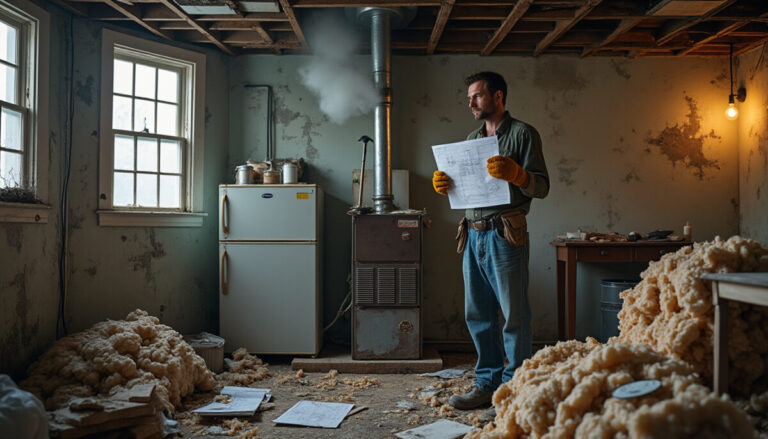

5 tips for self-renovating without relying on others
Hi, this is Claude. To renovate without relying on professionals, you need to master your project from start to finish by combining eco-friendly material choices, rigorous organization, and essential tools for greater self-sufficiency. This is the key to reducing your dependence on professionals or suppliers by 2026, all while staying within your budget. This approach is based on practical advice that will allow you to manage your DIY projects safely and without surprises.
To do immediately
- Choose eco-friendly materials like wood or straw, which provide natural insulation and are durable.
- Plan your budget by including a contingency fund and keep a detailed tracking log.
- Organize your project by clearly defining the steps to avoid downtime.
- Acquire essential basic tools, such as drills, levels and safety equipment.
- Train yourself using guides or tutorials to acquire simple and effective technical skills.
These steps are essential to ensure you can move forward without relying on other, unforeseen assistance. If your renovation involves an older building, prioritize a less invasive approach to minimize risks. If your project is new construction, focus on the quality of materials from the outset to maximize energy efficiency.
Discover how self-build renovation guarantees autonomy and ecology And to better manage your construction site.
How to choose the right materials and techniques for a DIY renovation
Choosing natural materials, such as wood or raw earth, not only reduces the carbon footprint of your renovation but also ensures effective thermal insulation, significantly limiting heating needs. These materials are often easy to work with yourself, perfect for DIY projects. For example, using straw to insulate a wall or applying a lime plaster helps regulate humidity and makes your home healthier.
Opt for lightweight, minimally invasive construction techniques to limit major work. Solutions like exterior insulation with natural panels or partitions made from bio-based materials will allow you to move quickly while ensuring site safety. This approach avoids the hidden costs associated with a large construction project and gives you more control over your renovation.
Maximize energy self-sufficiency and natural resource management
Producing your own energy is a powerful tool for creating an energy-independent home. Installing photovoltaic solar panels with a storage system, or a small wind turbine, allows you to capture renewable energy locally and reduce your reliance on the grid. Added to this is rainwater harvesting, a key system in energy-independent renovations, which covers a portion of your household energy needs.
Dry toilets and autonomous sanitation systems not only help reduce water consumption but also avoid the burdens associated with conventional sewage networks. Learning to manage water using these techniques reduces operating costs and ensures genuine autonomy, even in the event of a network outage.
The guide to renovating an old building without relying on traditional heating will be an excellent practical addition if you want to reduce your energy bill to a minimum.
Project organization and management: the keys to not losing control
For a successful DIY renovation, the project must be tackled in clear stages. The foundation: a precise schedule, a controlled budget, and tight task organization. This three-pronged approach prevents interruptions and costly mistakes. Use a logbook or a dedicated app to record each step, supplier, order, and deadline. This also helps anticipate unforeseen problems.
Don’t neglect site safety: make sure you learn best practices, equip yourself accordingly, and set up an organized work area. Risk prevention reduces accidents and work stoppages. When you get stuck, don’t hesitate to consult forums, tutorials, or call on a tradesperson for targeted advice without delegating everything.
Maintaining your self-sufficient home: maintenance, a step to incorporate from the start
Self-sufficiency doesn’t end once the renovation is complete. It requires regular maintenance of your energy systems, your rainwater harvesting system, and the care of natural materials. For example, cleaning solar panels and checking the condition of insulation seals prevents energy loss and costly repairs. Maintaining good ventilation also limits the build-up of humidity and extends the building’s lifespan.
As a simple proverb says:Sustainable housing is cultivated every day.“Your investment in maintenance will be rewarded with a home that remains efficient and comfortable for a long time, without depending on technicians for every little problem.
List of concrete actions to take control of your renovation
- Choose your materials based on their ecological performance and their suitability for DIY.
- Create a schedule with specific milestones and a logbook for your budget.
- Get the basic tools and train yourself using reliable content.
- Set up a system for water recovery and renewable energy production.
- Adopt a regular maintenance routine to ensure the longevity of your home.
Table: Key steps and their impact on your autonomy
| Stage | Action | Impact on autonomy |
|---|---|---|
| Preparation | Define budget, schedule, and list of eco-friendly materials | Complete cost control and improved site organization |
| Choice of materials | Prioritize wood, straw, raw earth, natural insulation | Reducing energy dependence and respecting the environment |
| Realization | Carry out the work step by step with the appropriate tools. | Gained skills and independence in managing the construction site |
| Energy and water | Install solar panels, collect rainwater, and install dry toilets. | Genuine autonomy from public networks |
| Interview | Plan for regular cleaning and inspections of the facilities | Ensures durability and comfort of life |
How to start a DIY renovation without experience?
Start by training yourself using online guides or tutorials, plan your budget, and buy the essential basic tools. Opt for natural materials that are easy to install.
What eco-friendly materials should be prioritized to achieve self-sufficiency?
Wood, straw, raw earth, as well as natural insulation materials such as hemp wool, are recommended for their performance and ease of use in DIY projects.
How to manage your budget to remain financially independent?
Leave a buffer for unexpected expenses, track each purchase regularly, and avoid impulse buys. A budgeting notebook is a simple yet highly effective tool.
What are the advantages of a self-sufficient home on a daily basis?
It allows you to drastically reduce energy bills, control your consumption and be more resilient to the vagaries of external networks.
Is it possible to combine autonomy and site safety?
Yes, with good organization, suitable equipment, and strict adherence to safety rules, it is perfectly possible to manage a construction site independently.
Thank you for your interest; Claude