Energy: these green materials don’t always provide better insulation
Hello, this is Claude. Green materials don’t always guarantee better insulation; they must be chosen based on their actual performance and their suitability for each use. To guarantee a energy performance For optimal performance, it is essential to combine ecological materials with real thermal efficiency. Sustainability depends not only on plant-based or bio-based materials, but also on their ability to limit energy loss, protect against heat or cold, and reduce overall environmental impact. Insulate with green materials is not enough if their insulating capacity is smaller or poorly adapted. Better understanding of green materials and their insulation And discover sustainable ecological innovations can guide towards the right choices.
To do immediately
- Check the precise thermal characteristics (lambda) rather than relying solely on the eco-label.
- Choose materials that are suitable for your region and the nature of the dwelling (humidity, climate, use).
- Combines green materials with careful implementation (airtightness and appropriate installation).
- Prioritize life cycle assessment (LCA) to evaluate the overall ecological impact.
- Consult experts to avoid materials that can trap moisture or are not very durable.
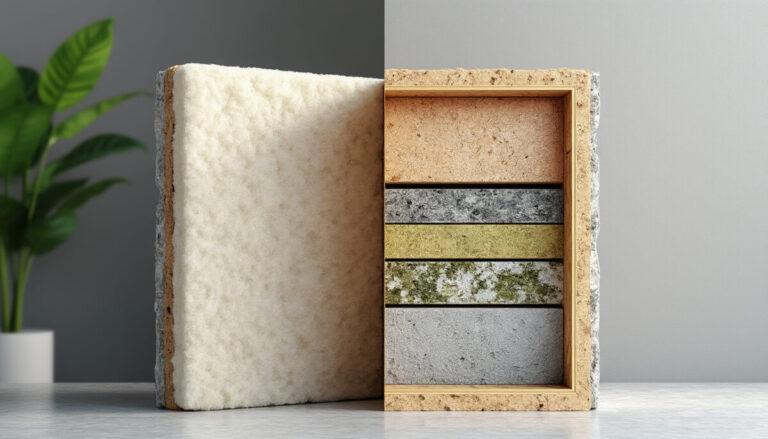
Materials such as wood wool or hemp offer good insulation in most cases, but some bio-based materials, for example poorly ventilated or too dense, can lose effectiveness. A careful reading on the risks and limitations of green materials This reveals that nothing is perfect. If it’s an older renovation, prioritize tried-and-tested, robust insulation. If it’s a new build, involving experts from the design stage ensures the right materials are chosen for the right places.
Common pitfalls of green insulation materials
While appealing, eco-friendly materials sometimes conceal major drawbacks. Some green insulation materials are sensitive to moisture, which can significantly reduce their thermal performance. For example, natural wool can absorb water and lose its insulating capacity, unlike synthetic insulation, which is highly waterproof.
The best insulator will often remain still air. Very dense materials limit the circulation of this air, which is essential for natural insulation. In trying to be eco-friendly, we sometimes forget that the energy performance thermal comfort is a priority.
Furthermore, not all green materials are equal in terms of durability and resistance. Some age poorly, settle or degrade more quickly, generating more waste and a greater environmental impact in the long term.
3-step process for an informed choice
- Evaluate the local climate: Humidity, temperature, winds. Each region requires a specific type of insulation.
- Select materials based on certified thermal performance: favours those with low thermal conductivity (low lambda), validated by an LCA.
- Implement carefully: Ensure air and vapor tightness to avoid thermal bridges and internal condensation.
Concrete examples for better ecological insulation
If you choose wood wool in a temperate climate, it regulates both heat and humidity, offering comfort and eco-friendliness. However, in a very humid environment, opt for well-protected cellulose wadding or moisture-resistant treated wood fiber panels.
If your home is old and poorly ventilated, certain materials will worsen humidity problems; renovations must therefore absolutely include proper ventilation. Conversely, well-designed new builds allow you to fully benefit from eco-friendly insulation.
Popular green materials, performance and price in 2026
| Material | Thermal performance (lambda) | Price range €/m² | Benefits | Boundaries |
|---|---|---|---|---|
| Wood wool | 0.038 – 0.045 | 18-32 | Humidity regulation, biodegradable, good comfort | Sensitive to humidity, variable density |
| Hemp | 0.040 – 0.050 | 15-45 | Good resistance to humidity, captures CO2 | May require insect treatment |
| Cellulose wadding | 0.037 – 0.045 | 14-20 | Economical, good thermal and acoustic insulation | May settle without proper fixing |
| Wood fiber panels | 0.038 – 0.042 | 65 – 90 | Continuous insulation, limiting thermal bridges | High cost, more complex installation |
The role of life cycle assessment (LCA) in the choice of green materials
Life cycle assessment (LCA) is essential for estimating theenvironmental impact This comprehensive analysis of a material’s lifecycle, from extraction to end-of-life, sheds light on the amount of greenhouse gases emitted, water and energy consumption, and waste production throughout the entire process. With this information, you can make informed choices, favoring products with a low carbon footprint that can be easily recycled or reused.
Compliance with standards and the availability of Environmental Product Declarations (EPDs) are essential indicators for avoiding seemingly good ideas that are ultimately flawed. Integrating a Life Cycle Assessment (LCA) into projects upstream acts as a powerful lever for sustainable planning.
Optimize sustainability and energy performance
We often hear the saying, “Still air is the best insulator.” This reminds us that the quality of installation The integration of materials into a ventilated architecture is just as important as their nature. Poorly installed bio-based insulation can reduce heating or air conditioning performance and increase energy bills despite its ecological qualities.
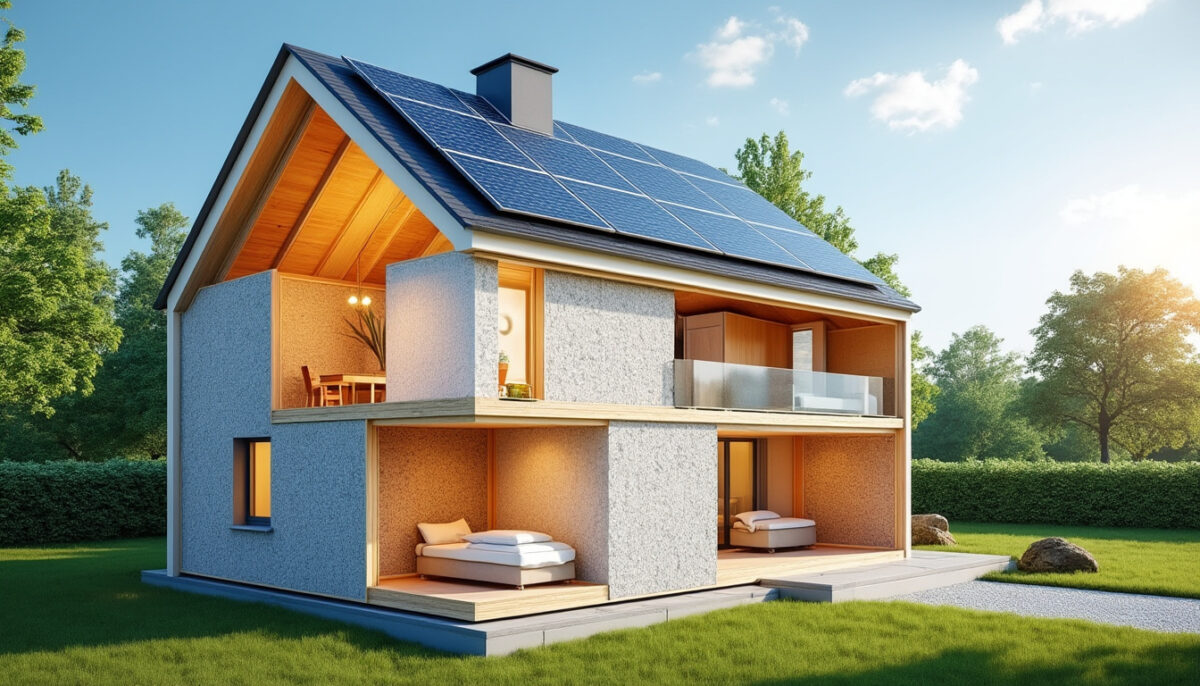
Sustainability requires a comprehensive approach: materials, installation, ventilation, and the choice of heating systems. A well-insulated house with a high-performance heat pump and judicious ventilation management offers lasting comfort while minimizing environmental impact.
An eco-build contractor told me about a client who thought he was “going green” by installing an unsuitable natural insulation material—the result was mold and double the cost. This case clearly illustrates that it’s not enough to simply buy green materials; you have to know how to integrate them.
As a saying about ecology applied to the home points out: “Don’t confuse ecology with eco-jokes.”
Why do some green materials insulate less effectively?
Because they can be sensitive to humidity, settle over time or fail to trap air effectively, which impairs their thermal capacity.
What criteria should be used to choose a good eco-friendly insulation material?
Materials with a low lambda coefficient, good resistance to humidity, long durability and a low environmental impact over their entire life cycle should be preferred.
Can ecological insulation and energy performance be combined?
Yes, by combining suitable green materials, careful installation and efficient heating and ventilation systems adapted to the building.
Which green materials should be avoided in a wetland area?
Natural insulation materials that are very vulnerable to moisture, such as some untreated plant-based wools, can pose a problem; opt for treated panels or materials that are more resistant to water.
Is life cycle assessment (LCA) really useful?
Absolutely, it allows us to measure the real impact of materials and to guide us towards truly sustainable choices from an environmental and economic point of view.
Thank you for your interest; Claude