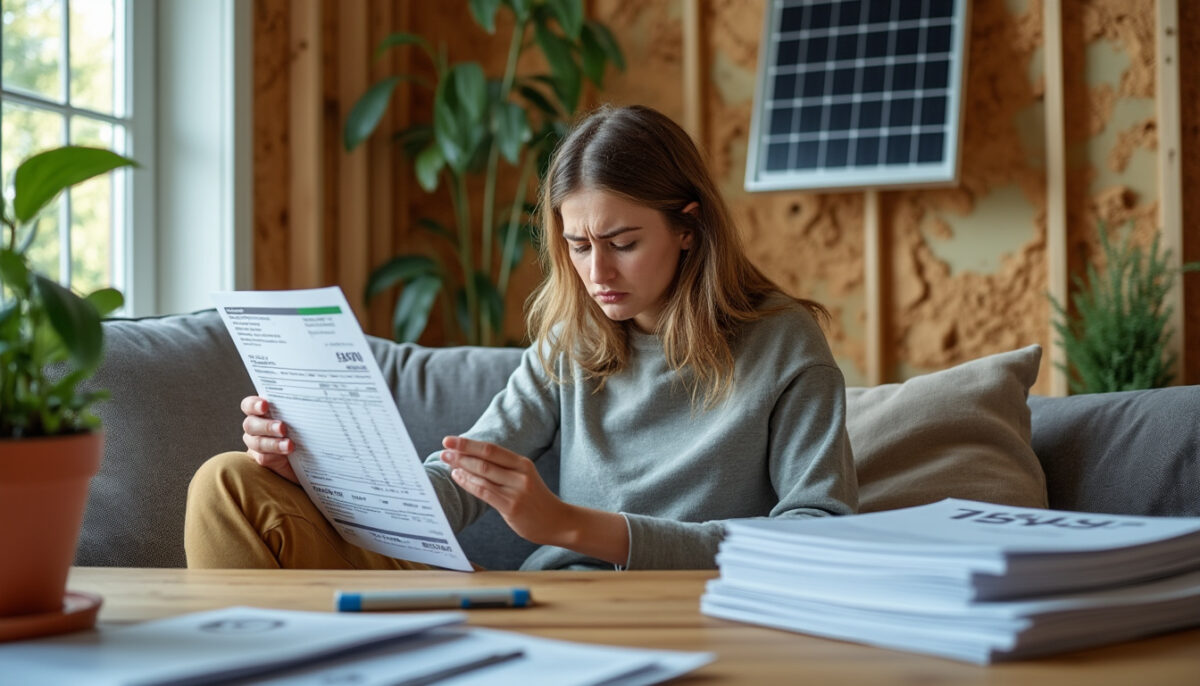
Eco-friendly actions: believing in miracle materials often comes at a high price.
Hi, this is Claude. Believing that a miracle material can single-handedly solve all your home’s environmental problems is often expensive and can lead you away from truly effective choices. The key is to adopt sustainable eco-friendly practices that combine responsible materials, energy savings, and responsible consumption. Indeed, choosing a sustainable material, while admittedly more expensive initially, proves to be a real long-term investment that limits environmental impact while improving quality of life.
To do immediately
- Take inventory of your current materials, focusing on those that are not very durable.
- Educate yourself on simple eco-friendly actions to adopt daily to reduce your energy consumption.
- Check out the available assistance to finance the purchase of sustainable materials and energy-efficient equipment.
- Learn to recognize the use of “miracle material” so you don’t fall into a costly trap.
- Optimize your home’s insulation first before embarking on unnecessary expenses.
In construction or renovation, believing that a single material will solve everything is a common mistake. Depending on the quality of the insulation, the type of heating, or daily use, the results will vary. Understanding why quick savings are a trap And identify the details that are hindering your savings will help you make an informed, sustainable and truly effective choice.
Why focus on several eco-friendly actions rather than a miracle material?
The myth of the miracle material often masks a high, hidden cost: purchase price, complicated installation, or expensive maintenance. To maximize your environmental impact, a combination of actions will always have more impact. For example, lowering the heating, improving insulation, and using sustainable and energy-efficient materials—that’s a winning formula.
If it’s an old house, prioritize insulation before investing in sophisticated equipment. If it’s a modern home, focus on smart energy management.
The cumulative effect of eco-friendly actions to save money
- Reduce the heating temperature to 19°C.
- Install energy-efficient LED light bulbs.
- Choose eco-friendly materials for insulation and finishes.
- Use efficient and well-maintained household appliances.
- Limit the waste of water and electricity on a daily basis.
A 3-step process for a sustainable and straightforward choice
- Establish an accurate diagnosis of your consumption and the materials in place.
- Implement several appropriate eco-friendly actions : insulation, heating, lighting, appliances.
- Monitor regularly your consumption with digital tools to adjust and progress.
This simple method avoids falling into the trap of miracles. A common anecdote about homeowners who invest heavily in innovative insulation that is neither recognized nor suited to their climate shows that correcting a poor choice often costs much more than expected.
Table of potential savings per eco-friendly action and financial impact
| Eco-action | Estimated annual energy savings | Impact on the bill |
|---|---|---|
| Lower the heating to 19°C | 5 to 15% depending on the insulation | Direct reduction on the heating bill |
| Switch to LED bulbs | Up to 80% less electricity consumption | Significant reduction in electricity bills |
| Install good insulation | 15 to 25% depending on materials and surface area | Combined discount on heating and air conditioning |
| Use high-performance equipment | 10 to 30% energy saved | General decrease in household appliance costs |
| Limit standby time and waste | 5 to 10% of consumption avoided | Substantial savings on electricity |
As the ecological proverb says, “Little by little, the bird builds its nest.” The message is clear: sustainability is achieved through the repetition of small choices, not by seeking the miracle of the perfect material overnight.
How to finance your sustainable choices?
Numerous public and private subsidies now support the energy transition. These grants and low-interest loans can alleviate the high initial cost of sustainable materials. It is important to contact specialized organizations to understand your rights and optimize your budget.
To learn more, you can visit the official page on energy saving in summer and discover other tips on eco-friendly actions to adopt.
What is the main risk of believing in miracle materials?
Believing in miracle materials can lead to unnecessary expenses without actually reducing environmental impact if other essential eco-friendly practices are neglected.
How can we combine eco-friendly actions for better sustainability?
We need to adopt several small actions together: insulation, heating, lighting, waste management, energy-efficient appliances.
What financial assistance is available for sustainable materials?
Subsidies, tax credits and zero-interest loans are offered to reduce the initial cost of sustainable materials.
Why is insulation a priority in an old house?
Insulation reduces significant energy losses and significantly improves comfort, before investing in other solutions.
What tools are available to monitor energy consumption?
Mobile applications and connected devices allow users to view and control their consumption in real time.
Thank you for your interest; Claude