10 Energy Tips to Pay Less This Winter
Hi, this is Claude. To pay less this winter, the key lies in controlling your energy consumption by improving your insulation and adopting simple but effective practices. Start by properly insulating your home, regulate your heating with a programmable thermostat, and adjust your daily habits to reduce your bill without sacrificing comfort.
To do immediately:
- Check the condition of the seals on your windows and doors to prevent air leaks.
- Program your thermostat to lower the temperature at night and when you are not at home.
- Unplug devices on standby and prioritize LED lighting in the rooms you use.
- Take showers instead of baths to limit your hot water consumption.
- Compare electricity offers based on your consumption profile to reduce your costs.
To learn more, check out the valuable advice on How to reduce your energy consumption this winter and discover complementary tactics on Prepare effectively for winter with these 10 tips.
Optimize insulation to retain heat and reduce your energy bill
Good insulation is often the first step to saving energy this winter. Up to 30% of heat loss occurs through poorly insulated windows or doors. Installing thick or thermal curtains, sealing air leaks with tape, or applying insulating film to windows allows you to maintain a comfortable indoor temperature without increasing your energy consumption. These actions not only reduce your bills but also improve your everyday comfort.
Use a programmable thermostat for heating adapted to your rhythm
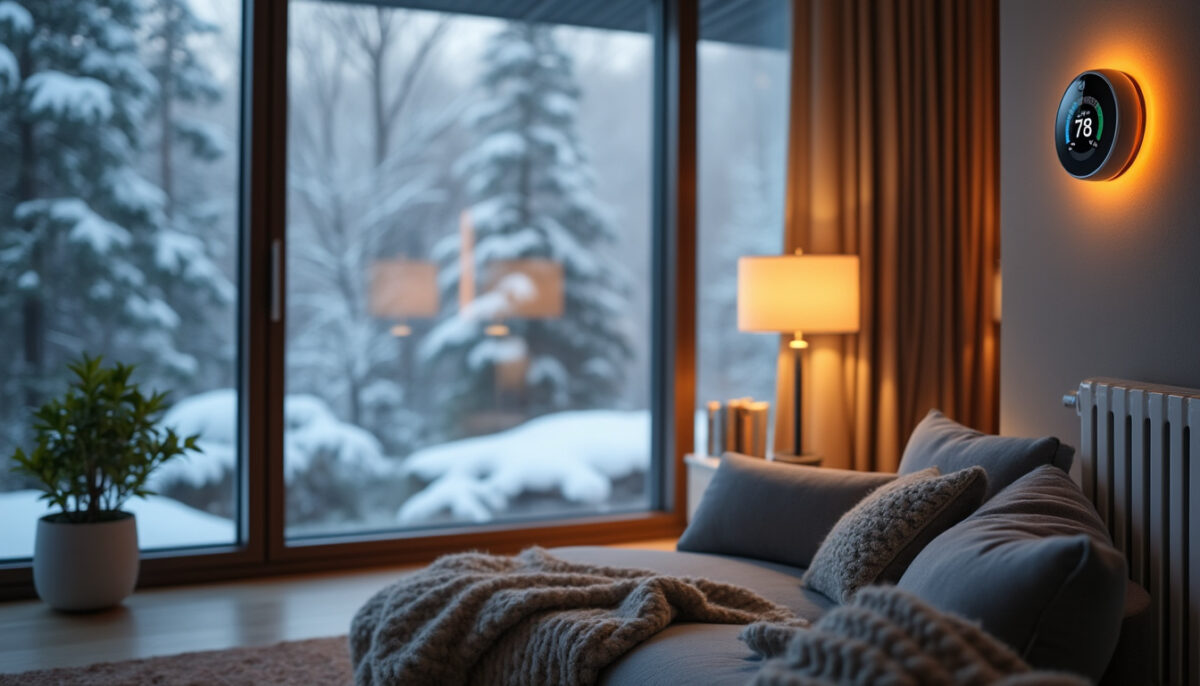
Heating accounts for the largest share of your winter electricity consumption, but it’s easy to control this expense. Installing a programmable thermostat allows for precise adjustments based on your schedule and needs: lowering the temperature at night or when you’re away, and raising it just before you return. On average, each degree lowered can save approximately 7% on your heating bill.
Simple but effective heating tips
- Lower the temperature by 1 to 2 degrees to limit consumption.
- Open the curtains during the day to take advantage of free solar heat and close them at night.
- Regularly bleeding the radiators: a well-maintained boiler consumes less.
- Position the furniture away from the radiators so as not to block the heat.
- Install reflective panels behind the radiators to direct the heat into the room.
If your heating is electric, pay close attention to its maintenance to prevent it from becoming an energy drain. If you use a gas or wood boiler, have it checked annually to optimize its efficiency.
Equip your home with energy-efficient and well-maintained appliances
Household appliances and lighting also contribute significantly to winter energy bills. Replacing your light bulbs with LEDs and choosing appliances labeled A++ or A+++ can help reduce energy consumption. Furthermore, unplugging unused chargers and completely switching off TVs, computers, and other devices prevents often-overlooked energy consumption.
| Device | Economic advice | Impact on the bill |
|---|---|---|
| Boiler | Annual maintenance and bleeding of radiators | Can save up to 15% energy |
| Light bulbs | Replace with LED | Reduces consumption by 60 to 80% |
| Thermostat | Intelligent programming | Savings of around 7% per degree lowered |
| Chargers and standby modes | Unplug and turn off completely | Avoid unnecessary daily consumption |
If you live in an apartment with communal central heating, insulation and appliance management become even more crucial. In a detached house, investing in alternative solutions like a high-performance wood-burning stove can also lower your energy bill.
Comprehensive management for a controlled budget
- Reduce your heating temperature gradually.
- Take advantage of off-peak hours by adjusting your heating.
- Invest in high-performance and well-maintained equipment.
- Be mindful and guide household members to adopt these habits.
- Do an annual review to assess progress on your consumption.
Raising awareness throughout the family for sustainable savings
The success of an energy-saving initiative also depends on the participation of all residents. Explaining the impact of small actions, such as closing doors to prevent heat loss or turning off lights when leaving a room, helps to lower overall bills. It’s a team effort, where each member plays a vital role.
As Benjamin Franklin so aptly put it: “A penny saved is a penny earned.” Adopting these simple habits is often more accessible than changing all your equipment at once.
How to properly program a thermostat to save money?
It is recommended to lower the temperature to 19°C in living areas during the day and to 16°C at night. Schedule heating times to suit your presence to avoid unnecessary heating.
What are some simple steps we can take to avoid wasting electricity in winter?
Closing the shutters at night, unplugging unused chargers, choosing showers over baths, and using LED bulbs are effective ways to reduce your consumption.
When should you have your heating system serviced?
Annual maintenance is recommended to prevent overconsumption and ensure optimal operation. This includes bleeding the radiators and having them checked by a professional.
How to improve insulation without major renovations?
Installing thermal curtains, putting insulating strips around windows, sealing cracks and using thick carpets are quick and economical solutions.
Yes, appliances with an A++ or A+++ energy rating consume significantly less energy. The investment is often quickly recouped through savings on your energy bill.
Thank you for your interest; Claude