
Insulation: Cold wall or genuine structural defect
Hello, this is Claude. A cold wall isn’t always simply a matter of poor insulation; often it’s a real structural problem that needs to be properly diagnosed in order to take effective action. The best solution is often exterior thermal insulation to eliminate thermal bridges and combat humidity. To do immediately : check the condition of the exterior walls, identify areas of persistent dampness, test the ventilation, carry out a complete thermal diagnosis and consider appropriate insulation. Determining if a wall is insulated And Recognizing the signs of poor insulation will help you see things more clearly.
Identifying a cold wall: symptom of poor insulation or structural problem?
A cold wall is often found in older or poorly renovated houses, and it can indicate several things: insufficient or missing insulation, a lack of airtightness, or even a more serious problem such as water infiltration or rising damp. If you touch your wall and it’s cold to the touch, even with efficient heating, it’s often a sign of an untreated thermal bridge, which can lead to condensation and dampness.
A damp wall after rain, especially on the ground floor, often indicates that water is seeping in or rising from the ground. This can damage insulation materials, reduce the home’s energy efficiency, and create a vicious cycle where the indoors becomes permanently cool. As one building expert said, “A healthy home starts with healthy walls.”
+ To do immediately
- Visually inspect the facade for cracks or mold.
- Test the ventilation to prevent moisture buildup.
- Check the condition of the seals around the windows and doors
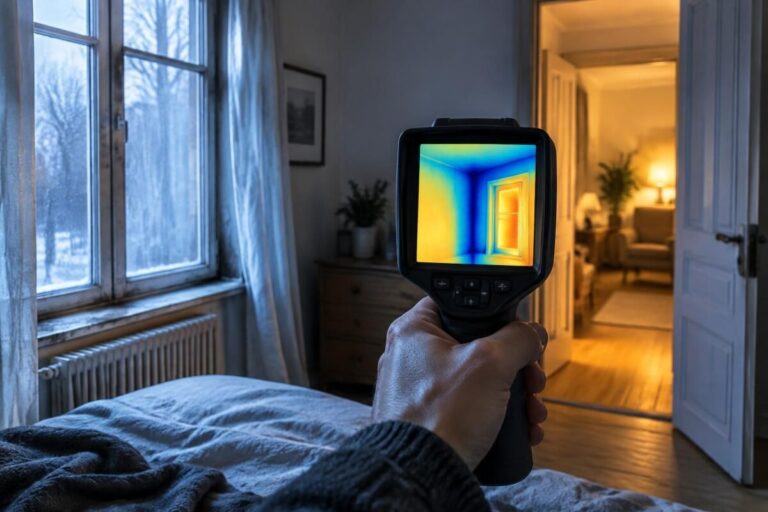
- Measure the surface temperature of the walls with a thermal imaging camera
- Consult a professional for a complete thermal diagnosis
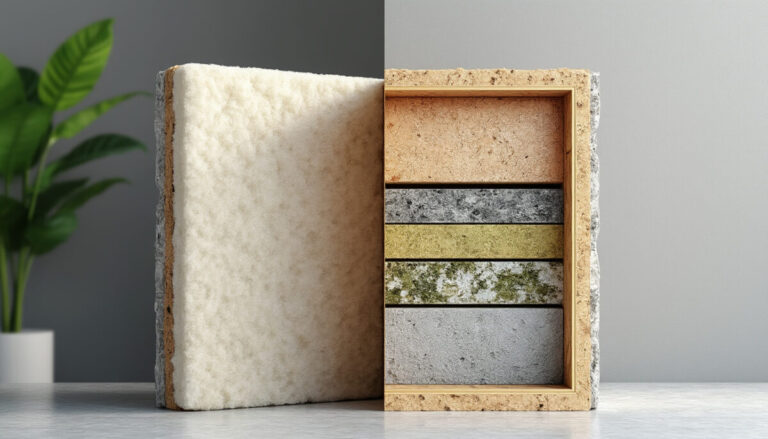
If the problem is due to poor insulation, opt for exterior insulation: it eliminates thermal bridges by covering the entire wall and protects against the elements. If it’s a genuine structural defect, such as significant water infiltration, repair the damage first before insulating.
Why exterior insulation is often the best solution against a cold wall
External thermal insulation (ETI) is the most effective way to treat a cold wall because it envelops the house in a continuous insulating layer, avoiding the breaks that create thermal bridges. This method keeps the heat inside and protects the facade from the elements, reducing condensation and the risk of dampness.
A major advantage: external thermal insulation (ETI) doesn’t reduce living space and doesn’t require a temporary relocation. For homes with poorly insulated or uninsulated walls, it’s a worthwhile investment that improves comfort while lowering energy bills. However, be aware that a building permit may be required if the exterior appearance changes.
Practical steps for treating a cold wall
- Step 1: Diagnose accurately: identify moisture, thermal bridges, insulation defects.
- Step 2: Repair existing issues if necessary: waterproofing, cracks, insufficient ventilation.
- Step 3: Install continuous thermal insulation, preferably from the outside for maximum efficiency.
A quick anecdote: a homeowner had insulated his walls from the inside, but the wall remained cold because his house suffered from untreated rising damp. Once this dampness was repaired and the insulation was installed on the outside, the comfort level improved dramatically.
How to spot poor insulation before it becomes a real problem
Several signs indicate poor insulation: drafts, cold walls or floors, high energy bills, moisture buildup, and mold growth. These signs reflect heat loss or cold air infiltration, which degrades the overall energy efficiency of the house.
Poor insulation often leads to thermal discomfort, with a constant need to increase the heating. A cold wall isn’t just a nuisance; it also contributes to higher costs and an increased risk of long-term deterioration.
- Condensation is present on cold surfaces.
- Mold growth in poorly ventilated areas
- Cracks in the walls associated with visible dampness
- Significant temperature differences between rooms
- Heating bill increasing for no apparent reason
Comparison of insulation methods for cold walls and structural defects
| Criteria | Interior insulation | External insulation (EWI) |
|---|---|---|
| Reduction of thermal bridges | Limited, risk of persistent cold zones | Excellent, full continuous envelope |
| Protection against moisture | Ineffective, risk of internal condensation | Protects walls and structure against moisture and inclement weather |
| Impact on living space | Reduces internal surfaces | No impact, surface preserved |
| Time and complexity of the work | Quick to implement, less expensive | Longer and more expensive, but durable |
| Need for administrative declaration | Often not necessary | A work declaration is often required. |
One last tip
A thermal assessment remains essential to avoid unnecessary expenses or ineffective remedies. It clearly reveals whether the cold wall is primarily due to an insulation failure or a structural defect requiring further intervention.
For further information, you can consult Why a damp wall often hides a trap and understand the advantages of optimized interior insulation.
How can I tell if my walls are truly insulated?
Using a thermal camera to detect thermal bridges or calling on a professional for a complete diagnosis is essential to know the true state of the insulation.
Why do my walls remain cold despite the heating?
This can result from thermal bridges, uninsulated walls, or air and moisture infiltration that lowers the temperature of the walls.
Is exterior insulation still recommended?
It is often the best solution for cold walls and old houses, but it is important to check administrative constraints and technical feasibility.
What are the risks if I don’t treat a cold wall?
An untreated cold wall will promote humidity, mold growth, material degradation, and chronic overconsumption of energy.
Is it possible to insulate an old house without losing its charm?
Yes, by choosing suitable materials and methods, it is possible to improve energy performance while preserving the aesthetics of the house.
Thank you for your interest; Claude