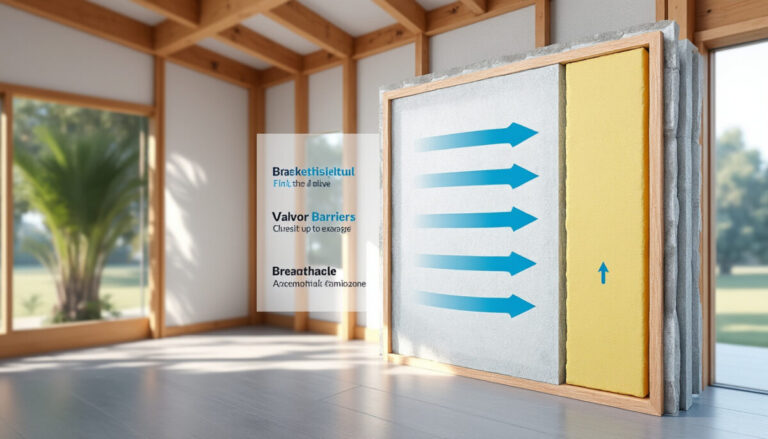
5 Insulation Tips for a Cheaper Home
Hi, this is Claude. To save energy in your home, the key is to improve thermal insulation with simple and inexpensive measures. These 5 tips will allow you to act quickly to reduce your bills without undertaking major renovations immediately.
To do immediately
- Maintain your heating system regularly to avoid energy loss.
- Installation of insulation seals on windows and doors to limit drafts.
- Use thick curtains or shutters to trap heat at night.
- Lay down thick mats on cold floors for improved thermal comfort.
- Take full advantage of the greenhouse effect by letting in natural light during the day.
You will also find additional useful information in these resources to easily insulate and understand thermal insulation: easily insulate your property, help to insulate your house.
Maintaining your heating system: a simple step to reduce costs
A well-maintained heating system is essential for your home to retain heat efficiently. A poorly adjusted boiler or stove consumes more fuel, and that quickly increases your bills.
Each year, have a professional drain and bleed your radiators and check the settings. This can reduce energy consumption by 5 to 15%, depending on your equipment. Also, remember to insulate your hot water pipes with foam sleeves to prevent unnecessary heat loss in unheated areas.
If it’s an old boiler, also consider replacing it with a high-efficiency model. It might seem like an investment, but the cost savings will often outweigh the initial expense.
Optimize window insulation without breaking the bank
Windows are responsible for approximately 30 to 40% of heat loss in many homes. This is a weak point that absolutely must be addressed to retain heat.
If you can, install double glazing. Otherwise, apply a suitable thermal insulation film, which is inexpensive and easy to install. For cold nights, remember to close the shutters or draw thick curtains that trap heat near the windows. Finally, install self-adhesive weatherstripping to prevent drafts. It’s economical and very effective.
Anecdote: In a recently renovated house, two small actions – applying sealant and installing thermal curtains – reduced the heating bill by almost 10% in one season.
Reinforcing front doors: a quick and useful step
Front doors often let in a lot of cold air, especially under the door. Installing a draft excluder is a quick and easy way to stop this draft.
Repair or replace the sealant around the doors, and add an insulating brush to the mailbox if it’s built-in. These small details improve your comfort and reduce your heating needs.
For a higher level of insulation, doors with a better thermal insulation coefficient ensure a significant reduction in heat loss. This should be considered if more extensive renovations are planned.
Insulating walls and floors: how to improve your home without major renovations
North-facing walls and uninsulated floors contribute to a persistent feeling of cold. Installing insulating panels on vulnerable walls is an accessible first step. On floors, the use of rugs or thick carpets acts as natural insulation. A quality rug can reduce heat loss at this level by 5 to 10%.
If you are planning any work, prioritize bio-based materials such as wood fiber or hemp, which are more expensive but have a reduced environmental impact and excellent summer comfort.
| Insulating materials | Thickness for suitable R-value (m².K/W) | Benefits | Indicative cost |
|---|---|---|---|
| Glass wool | Good value for money, easy to install | Economic | |
| Cellulose wadding | 27-34 cm (roof) | Natural, good summer comfort | Moderate (30-50% more expensive than wool) |
| Wood fiber | 25-29 cm (roof) | Thermal and acoustic insulation, environmentally friendly | Superior |
| Expanded polystyrene | 12-19 cm (walls) | Lightweight, easy to install | Economical but less environmentally friendly |
Harnessing passive heat, the natural boost
Even the best insulation is useless if you let heat escape unnecessarily. Let in natural light during the day by keeping the shutters open. After using appliances that generate heat, like the oven, open the doors to redistribute the heat throughout the house.
Ventilating twice a day for 5 to 10 minutes helps remove the humidity that makes the air heavy and hinders heating. Conversely, ventilating for too long or during the coldest hours actually undermines your thermal insulation efforts.
What are the most economical insulating materials?
Glass wool and expanded polystyrene are the most affordable, offering good value for money for many applications. They are well-suited to limited budgets.
How can you tell if insulation is effective?
Thermal resistance (R) is measured. The higher it is, the better the insulation. To qualify for subsidies, a minimum value often needs to be met depending on the area being insulated, for example, R=7 m².K/W for attics.
Is it always advisable to insulate from the outside?
Exterior insulation is effective at reducing thermal bridging but is more expensive and not always feasible (listed facades, technical constraints). Interior insulation remains a good alternative.
What is the average lifespan of a natural insulator?
Bio-based insulation materials, such as wood fiber or hemp, can last for several decades if they are properly installed and treated against moisture and pests.
Can insulation be improved without construction work?
Yes, with simple actions: sealing windows and doors, installing thermal curtains, maintaining heating, and utilizing passive heat. These quick actions reduce heat loss.
Thank you for your interest; Claude