Eco-friendly actions: does lowering the temperature by one degree change everything?
Hi, this is Claude. Lowering your heating temperature by just one degree can save you up to 7% on your energy bills, significantly reducing your environmental impact. This simple step is a concrete action you can incorporate into your smart home and eco-friendly routine to help fight climate change.
To do immediately
- Set your heating to a maximum of 19°C during occupied hours.
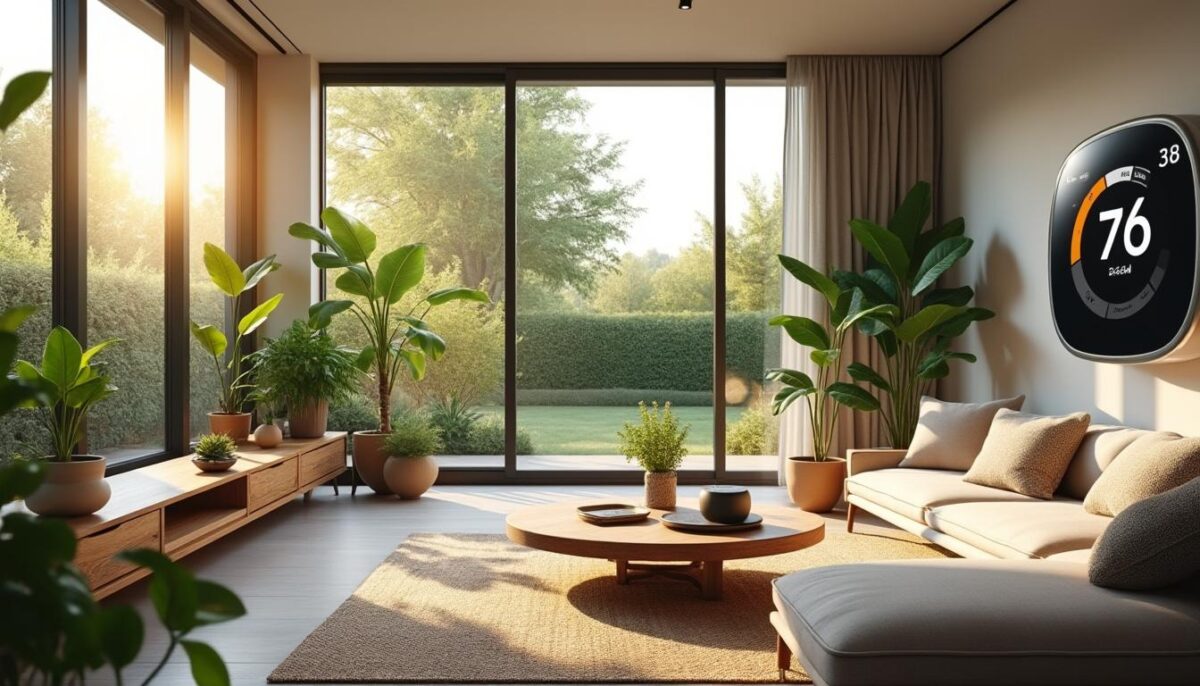
- Program a thermostat to lower the temperature at night or when you are away.
- Install thick curtains and door sweeps to limit heat loss.
- Reduce the water heater temperature to 55°C and decrease the duration of showers.
- Turn off devices on standby using power strips with switches.
Heating accounts for over 66% of a home’s energy costs. Lowering the thermostat by one degree has an immediate effect, without sacrificing your comfort. If you live in a well-insulated home, you’ll barely notice the difference. If your home is less energy-efficient, consider installing a programmable thermostat or requesting an energy audit. France Rénov’To complete the picture, discover summer tips to best manage your consumption with these practical tips.
Why lowering the temperature by one degree is a powerful ecological gesture
Every degree counts in the fight against overconsumption and the reduction of greenhouse gas emissions. Heating is a sector where sustainability and energy efficiency are crucial. According to ADEME, lowering the temperature by one degree in an occupied room generates approximately 7% savings on energy bills.
A friend of mine lived in a poorly insulated apartment. By adjusting his heating temperature from 20°C to 19°C, he found that, well wrapped up, he was just as comfortable. He managed to reduce his energy consumption without feeling cold, simply by wearing a sweater.
“The simplicity of eco-friendly actions is their strength”, as an energy efficiency expert often reminds us.
Additional steps to maximize your impact
- Program the heating to only work when you are at home.
- Install a thermostat in each room to avoid unnecessarily heating empty rooms.
- Bleed your radiators regularly to optimize their efficiency.
- Close shutters and curtains in the evening to retain heat.
- Uses equipment powered by renewable energy sources such as a heat pump.
A concrete action in 3 steps
- Step 1: Identify the current temperature of your main rooms and reduce it by 1 degree.
- Step 2: Check your water heater setting and adjust it to 55°C.
- Step 3: Install a programmable thermostat to automate and optimize this reduction.
A table showing the concrete impacts of this simple gesture
| Action | Energy saving | Impact on the bill | Environmental impact |
|---|---|---|---|
| Lower the heating by 1°C | ~7% of heating consumption | Significant reduction in the bill | Fewer CO₂ emissions |
| Water heater setting at 55°C | Up to 10% savings on hot water | €270 potential annual savings | Reduction of emissions related to hot water production |
| Turn off devices in standby mode | Up to 10% savings on electricity | The reduction is visible on the invoice. | Less energy waste |
Adopting responsible consumption beyond heating
Controlling temperature is essential, but eco-friendly actions don’t stop there. Using low-energy appliances, limiting the use of standby power, and choosing high-performance equipment all contribute to significantly reducing overall consumption.
If you’re wondering where to start to transform your entire house into a model of sustainability, I invite you to consult these detailed recommendations on eco-friendly actionsThey cover all aspects, from cooking to lighting, via a simple-to-apply guide.
Why lower the temperature to 19°C?
19°C is the recommended temperature which combines comfort and energy efficiency, allowing you to limit energy consumption without feeling cold.
What are the advantages of a programmable thermostat?
A programmable thermostat allows you to adjust the temperature according to the presence in the rooms, achieving up to 15% annual savings.
Is it possible to save money on hot water?
Reducing the water heater temperature to 55°C and limiting the duration of showers can save 10% on hot water consumption.
Do devices in standby mode consume a lot of power?
Yes, they can account for up to 10% of your electricity consumption. Cutting them off completely is an effective and simple action.
How can we reduce emissions through eco-friendly actions?
Every energy saving reduces the demand for energy production, which in turn reduces greenhouse gas emissions and slows climate change.
Thank you for your interest; Claude