
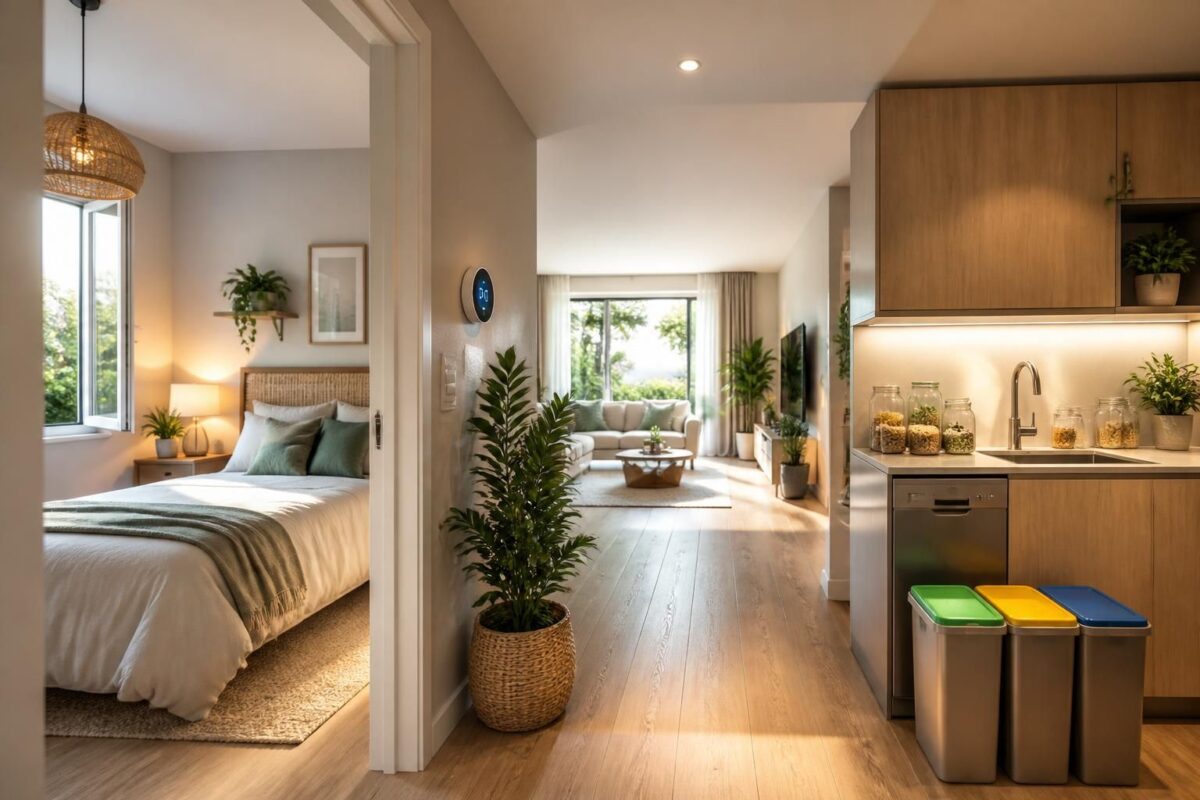
Eco-gestures: bedroom, kitchen, living room, where to act first
Hello, it’s Claude. To quickly reduce your environmental impact at home, start by acting in the kitchen, the living room, then the bedroom by prioritizing simple actions that optimize energy and save water. These three rooms generally concentrate most of your energy and resource consumption, so it’s best to tackle them first.
To do right away
- Always turn off devices in standby, especially in the living room.
- Regularly defrost your refrigerator and freezer to save energy.
- Use a faucet aerator in the kitchen for responsible water use.
- Opt for LED lighting in all rooms.
- Practice selective waste sorting in an easily accessible space, such as the kitchen.
To deepen these practical eco-gestures, you can consult this comprehensive guide to essential eco-gestures and this piece-by-piece detailed article.
Why start in the kitchen for quick energy savings
The kitchen is often the first area of electricity and water consumption in the home. Simplifying gestures here helps avoid heavy losses. For example, regularly defrosting your refrigerator improves its efficiency. Using pots that match the size of the burners limits energy waste. The ‘eco’ mode of the dishwasher is also an indispensable ally.
A quirk often forgotten: letting the water run while washing vegetables or doing the dishes can waste up to 50 liters of water per day. A simple action like using a basin or installing a faucet with a flow regulator has a direct impact. A study reports that these small habits can reduce your water consumption by 15 to 25% depending on the situation.
Some eco-gestures in the kitchen to adopt without delay
- Defrost your freezer every 6 months.
- Use pots and pans that fit your stove tops.
- Run your dishwasher at full load and in eco mode.
- Lower the washing temperature when your laundry isn’t very dirty.
- Avoid taking a bath; opt for a shower.
Living room: how to limit unnecessary expenses for sustainable consumption
The living room is often an area where many devices stay plugged in on standby. All small appliances and electronics (TV, internet box, game console) draw power even when off. Setting up switched power strips helps control this phantom load.
Natural ventilation, by opening the windows for a few minutes each day, avoids prolonged use of air conditioning or heating. Furthermore, regular decluttering improves air quality by reducing dust and allergens, which is also good for your health and the planet.
Quick actions to reduce your energy bill in the living room
- Unplug or use a switchable power strip for electronics.
- Switch to LED lighting throughout the room.
- Ventilate the living room daily for better natural ventilation.
Bedroom: a space to optimize for better energy efficiency
Although the bedroom is less energy-intensive than the kitchen or living room, it should not be neglected. Reducing standby use of devices, optimizing heating, and favoring bedding made from ecological materials are simple actions that improve your comfort while limiting your consumption.
If it is a child’s bedroom, opting for LED lighting is a wise choice. For your own bedroom, consider slightly opening the window in case of high heat instead of using an electric fan.
Here’s an anecdote that clearly illustrates the impact of a simple gesture: a household that adopted window insulation in its bedrooms reduced its heating needs by nearly 20% in winter, showing that investing in your home is a winning move in the long term.
3 steps to optimize your bedroom ecologically
- Declutter the bedroom to facilitate air circulation.
- Use thick curtains to strengthen thermal insulation.
- Install a programmable thermostat to adjust heating as needed.
| Room | Priority eco-gestures | Impact on consumption | Concrete examples |
|---|---|---|---|
| Kitchen | Optimize water use and efficient appliances | Water reduction 15-25%, up to 30% on electricity | Defrost freezer, dishwasher eco mode |
| Living room | Turn off standby, LED lighting | Energy savings 10-20% | Switched-off power strips, natural ventilation |
| Bedroom | Insulation, heating management, decluttering | Increased comfort, reduced energy bills | Insulating curtains, programmable thermostat |
In summary, acting first in the kitchen, then in the living room, and finally in the bedroom yields quick and visible results in energy savings and waste reduction. Sorting waste will also make daily waste management easier in these strategic spaces.
To go further, discover how to optimize your bathroom and which other eco-gestures to adopt by visiting a site of experts in ecological gestures.
What are the first eco-gestures to apply at home?
Start by turning off all devices in standby, prioritize LED lighting, and optimize water consumption in the kitchen and bathroom.
How to reduce energy consumption in the living room?
Use switched power strips to cut standby power, switch to LED lighting, and favor natural ventilation.
Why act first in the kitchen?
The kitchen concentrates many energy- and water-hungry appliances, so acting there provides an immediate impact on your bills and your consumption.
What is the importance of decluttering?
Decluttering improves air circulation and indoor quality, thus reducing heating or air conditioning needs.
What concrete benefits do eco-gestures provide?
They enable a significant reduction in energy consumption, savings on the annual bill, and a reduction of ecological impact.
Thank you for your interest; Claude