Insulation: poor choice, old wall that suffocates
Hello, this is Claude. Insulating an old, poorly designed wall can cause it to become suffocated, leading to dampness, condensation, and structural damage. The key to lasting thermal comfort is an accurate assessment followed by careful and well-ventilated insulation.
To do immediately
- Diagnose the exact condition of the wall: humidity, materials, cracks.
- Choose a breathable insulation suitable for old walls, such as wood wool or hemp.
- Promote external thermal insulation whenever possible to avoid thermal bridges.
- Ensure adequate ventilation to limit condensation and humidity.
- Hire a certified professional for a complete audit and compliant work.
After a thorough diagnosis, it is essential to avoid unsuitable materials that trap moisture and create a veritable suffocation of the old wall. To learn more about common mistakes to avoid, consult this practical guide on insulating old housesIn addition, you will find effective and suitable solutions for insulating old walls in this detailed article.
Why a poor choice of insulation is suffocating your old wall
An old, poorly insulated wall becomes suffocated when moisture can no longer circulate freely. This inadequate ventilation promotes condensation and mold, which quickly damage the structure. In fact, the use of non-breathable insulation, such as certain polyurethanes, blocks the diffusion of water vapor. The result: cold walls on the surface, thermal discomfort inside, and accelerated degradation of the materials.
A local craftsman recounts: “I’ve seen walls crack after poorly designed interior insulation, because moisture stagnated with no way to escape.” Remember: an old wall is alive. It needs to breathe to stay healthy.
Accurate diagnosis: a key step before any insulation work
Every insulation project should begin with a thorough assessment. Identifying moisture or structural defects will save you from a post-insulation disaster. Use a hygrometer to measure water vapor and a thermal imaging camera to locate cold walls or thermal bridges. A complete visual inspection will detect cracks and mold stains.
If humidity is high, this problem must be addressed first before applying insulation. This rigorous approach guarantees thermal comfort and a durable home.
| Stage | Objective | Recommended tools/materials |
|---|---|---|
| Visual inspection | Identify cracks, stains and materials | Hygrometer, lamp, thermal camera |
| Humidity measurement | Assess potential condensation | Hygrometer, humidity detector |
| Location of thermal bridges | Identify areas of heat loss | Thermal camera |
| Insulating choice | Take suitable breathable insulation | Wood wool, hemp, lime plaster |
| Wall preparation | Clean and dry before insulation | Lime mortar, brush, ventilation |
Suitable insulation techniques to preserve your old wall
The best solution to prevent an old wall from becoming suffocated is external thermal insulation (ETI). It protects the wall from the elements while preserving its permeability. ETI reduces thermal bridging and prevents moisture from being trapped inside the walls. For this, natural and breathable materials such as wood wool or a lime-based insulating plaster are ideal.
Internal Thermal Insulation (ITI): alternatives, but beware of humidity
When external thermal insulation (ETI) is not possible (due to regulations or budget constraints), internal thermal insulation (ITI) remains an option. However, it absolutely requires the use of breathable insulation materials such as cellulose wadding or hemp wool. Appropriate ventilation (single or double flow mechanical ventilation) must be maintained to prevent condensation and the walls becoming stifling.
Ventilation and humidity management: for lasting comfort
Inadequate ventilation is the primary cause of dampness and condensation in older homes. Without effective air renewal, even high-performance insulation is insufficient. Ventilate regularly, install a mechanical ventilation system (MVHR) suited to your home, and operate it regularly. The equation: healthy walls = breathable insulation + effective ventilation is simple but often overlooked.
Tips to avoid common mistakes
- Never install waterproof insulation without prior moisture treatment.
- Avoid non-breathable synthetic insulation that traps water vapor.
- Always prefer a natural and breathable insulation that is compatible with old materials.
- Ensure regular monitoring of post-insulation humidity.
- Using RGE certified craftsmen guarantees expertise and access to financial aid.
Case studies to inspire you
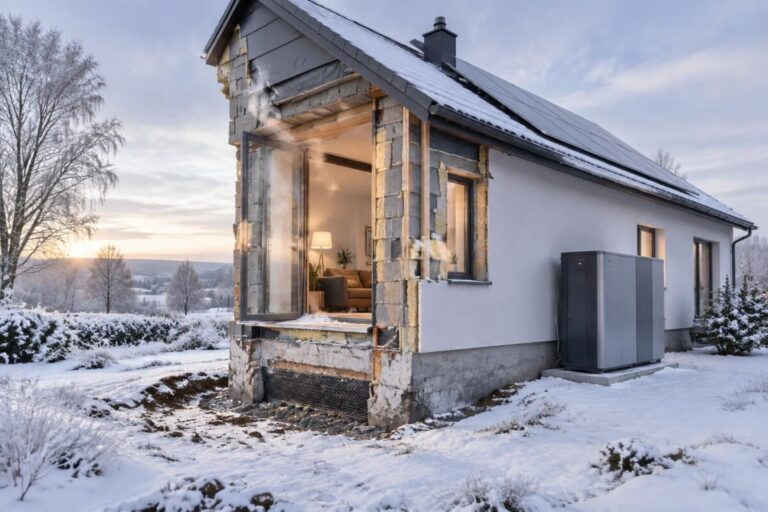
A 150-year-old stone house, insulated externally with wood wool and ventilated cladding, saw its heating bill cut in half. The installation of a mechanical ventilation system also eliminated mold and wall suffocation problems.
In another project, a Norman half-timbered house was insulated internally with cellulose wadding while maintaining strong ventilation. Thermal comfort was significantly improved without compromising the aesthetics or the structural integrity of the building.
Knowing the right methods and diagnoses avoids costly mistakes, which are sources of moisture and lasting thermal discomfort in old walls.
Compare breathable insulation materials for old walls
| Material | Benefits | Disadvantages | Ecological note |
|---|---|---|---|
| Wood wool | Highly breathable, natural insulator, good thermal inertia | Cost can be high, requires protection against direct moisture | High |
| Hemp | Excellent insulating properties, antibacterial, regulates humidity | Less readily available locally, installation requires expertise. | Very high |
| Cellulose wadding | Good vapor permeability, recycled material | Can settle without professional installation | High |
| Lime plaster | Breathable, reduces thermal bridging, aesthetically pleasing | Less insulating than plant fibers | Very high |
To go into more detail and avoid common pitfalls, consult the advice of specialists in materials suitable for old walls and avoids the common mistakes listed by this site is dedicated to the insulation of old houses.
Why can an old wall ‘suffocate’ with poor insulation?
An old wall ‘suffocates’ when non-breathable insulation blocks the circulation of water vapor. This causes condensation, dampness, and damages the structure.
How to choose insulation for an old wall?
It is necessary to favour breathable and ecological materials such as wood wool, hemp or lime plaster, adapted to the natural permeability of the wall.
What is the best technique for insulating an old wall?
External thermal insulation is often recommended to limit thermal bridges and protect the structure, while preserving the charm of the building.
How to prevent moisture after insulation
Maintain efficient ventilation with a suitable mechanical ventilation system, use breathable materials and regularly monitor ambient humidity.
What dangers does a poor choice of insulation present?
It can cause thermal discomfort, cold walls, serious structural damage, and significant energy loss.
Thank you for your interest; Claude