Energy: Insulating more without trapping moisture
Hello, this is Claude. To insulate effectively without trapping moisture, you need to combine high-performance insulation with controlled ventilation and a properly installed vapor barrier. This is the key to preserving energy efficiency and preventing invisible water damage in the walls.
To do immediately
- Check the condition of thermal bridges, as these are often the entry points for condensation.
- Install or maintain a mechanical ventilation system to ensure good air circulation and limit indoor humidity.
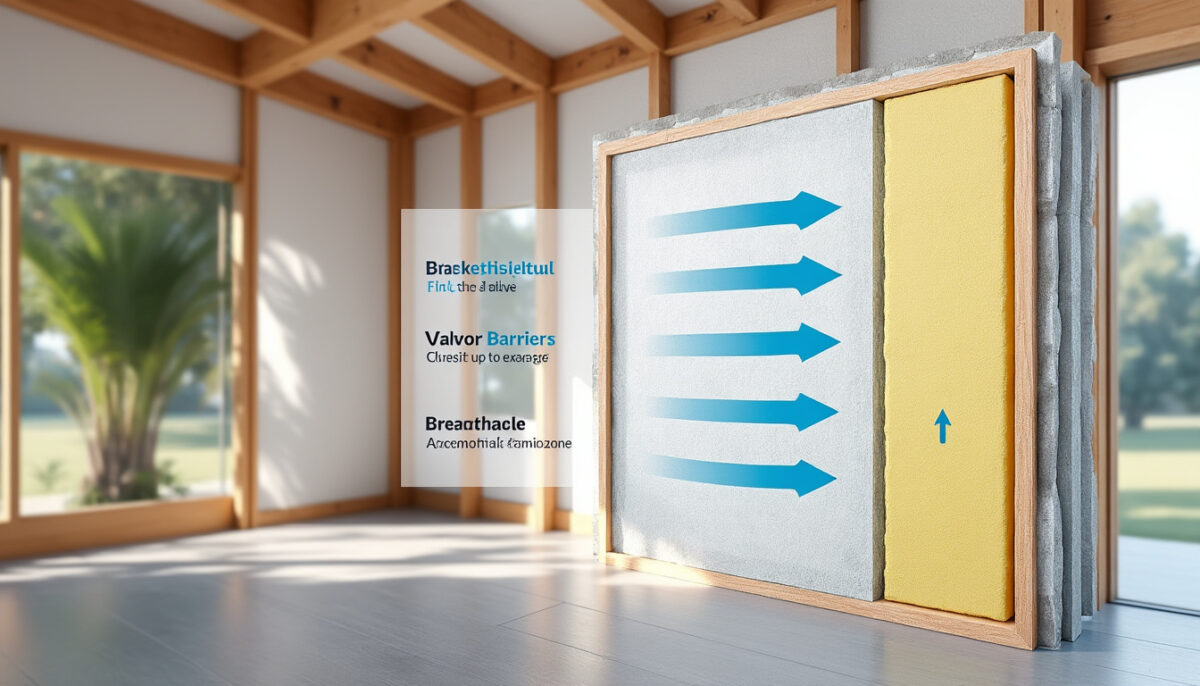
- Install a suitable vapor barrier on the interior side to block water vapor from heated rooms.
- Rigorously control the air permeability of the building envelope and seal all leaks.
- Inspect the external water drainage system to prevent capillary rise.
Right after insulation, discover how treat a damp wall effectively and why it is crucial tooptimize insulation to combat humidity.
A well-insulated house without attention to humidity can lose up to 50% of its energy performanceThermal bridges, poorly sealed joints, and rising damp promote condensation, which accumulates in insulating materials. This leads to increasing thermal discomfort despite additional heating costs.
Thermal bridges, the invisible enemies of moisture insulation
A thermal bridge is a break or weakness in the insulation where warm air meets a colder surface. This difference causes a condensation bridge, as water vapor liquefies and degrades the insulation and structure.
They often appear at wall-slab junctions, around poorly installed openings, or when insulation is improperly fitted. Sometimes just a defect of a few millimeters is enough to trigger a cycle of long-lasting degradation that is invisible in the short term.
If it’s an older house, thermal bridges must be eliminated by identifying them with a camera or thermography before installing insulation. For a new building, the construction project must incorporate careful design of air permeability and insulation connections.
Why ventilation is essential despite good insulation
Installing good ventilation, such as a mechanical ventilation system (MVHR), is essential. Effective insulation without ventilation traps moisture generated by breathing, cooking, or even drying laundry.
This humidity can quickly exceed 70% in some poorly ventilated rooms, creating an environment conducive to mold growth and reduced insulation effectiveness. A dual-flow mechanical ventilation system, thanks to heat recovery from the extracted air, improves comfort and reduces heat loss.
A former homeowner testifies: “After installing a mechanical ventilation system, my bills went down and the bad smells disappeared.”
3 steps to successfully insulate without trapping moisture
- Accurately diagnose the sources of moisture and the condition of the walls before any intervention: hygrometric measurement, search for thermal bridges, analysis of infiltrations.
- Choose suitable insulating materials depending on the environment: hemp wool, cork or perlite for their vapor permeability, or resistant synthetic materials such as polyurethane properly installed with a vapor barrier.
- Ensuring efficient ventilation and rigorous airtightness, complemented by external water management to prevent any infiltration or capillary rise.
Signs not to ignore: humidity and energy efficiency
- Heating bills that are rising for no apparent reason
- Musty smells in corners or under floorboards
- Blisters in the paint or peeling baseboards
- Dark stains visible in the corners of the walls
- Increased humidity alarms on walls
These symptoms should trigger an immediate inspection. The earlier they are detected, the more easily repairs can be made.
Choose insulating materials that manage moisture well
Natural insulation materials such as hemp wool, cork, or sheep’s wool are superbly suited to environments with fluctuating humidity, as they regulate water vapor without deteriorating quickly. Some synthetic insulation materials, such as polyurethane, are waterproof and water-resistant, but require a specific vapor barrier to prevent internal condensation.
| Insulating | Moisture resistance | Vapor permeability | Sustainability | Suitable for… |
|---|---|---|---|---|
| Hemp wool | High | Medium to high | Long | Old buildings and eco-friendly renovations |
| Cork | Very high | Average | Very long | Wetlands, walls and floors |
| Polyurethane | Very high | Low (waterproof) | Long | Exterior applications and interior insulation with vapor barrier |
| Rock wool | Average | Average | Average | Dry areas, economical insulation |
| Cellulose wadding | Medium to high | High | Good | Eco-friendly insulation with natural moisture management |
To delve deeper into this topic, it is helpful to consult the advice on moisture-resistant insulation as well as on best practices ofinsulation for a comfortable home all year round.
Perspectives and tips for optimal humidity management in 2026
Solutions are evolving with innovations in hygroscopic materials and integrated ventilation systems. Several manufacturers now offer membranes that adapt their permeability according to the season, promoting both airtightness in winter and drying in summer. This passive intelligence prevents moisture from accumulating within the insulation.
A phrase that thermal physicist James Lovelock often used: “We must see the house not as an assembly, but as a living organism.” This holistic view now leads us to consider insulation, ventilation and water management together, for sustainable energy performance.
How can I detect a moisture problem in my insulation?
Watch for signs such as musty smells, dark spots in corners, an unexplained increase in heating bills, or blisters on walls or paintwork.
What is the role of the vapor barrier in insulation?
The vapor barrier blocks water vapor on the interior side, preventing its migration so that it does not condense in the insulation or on the walls.
Why is ventilation essential even with recent insulation?
Because a house always generates humidity due to breathing, cooking, and hygiene. Without controlled ventilation, this humidity stagnates and damages the insulation.
What insulating materials are recommended if my wall is already damp?
Natural materials such as cork or hemp wool, which regulate water vapor better, are preferable. Combining this with an accurate diagnosis and treatment of the humidity problem is essential.
Can I insulate an interior wall without losing space?
Yes, by choosing high-performance, thin insulation materials combined with careful installation of the vapor barrier to avoid moisture problems, see [link to relevant section] for more details. here.
Thank you for your interest; Claude