
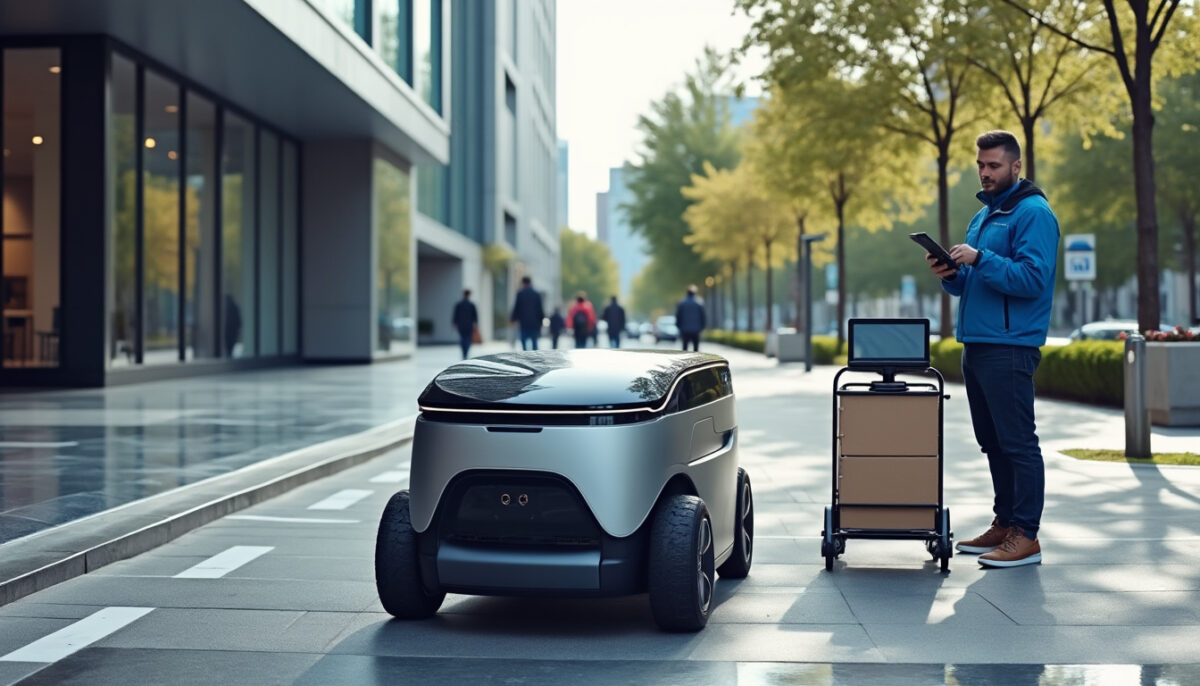
Autonomy: partial autonomy, real gain, or mode
Hello, this is Claude. Partial autonomy is often seen as a real advantage, but some still consider it a passing fad. In reality, this form of autonomy, particularly in technologies like autonomous vehicles, offers a balance between innovation and road safety, while we await full autonomy.
To do immediately
- Assess your current level of autonomy using concrete criteria.
- Test assisted driving technologies to familiarize yourself with partial autonomy.
- Learn about road safety related to automotive innovations.
- Consult resources to understand the difference between partial and total autonomy.
- Observe the latest advances in autonomous technology to anticipate future changes.
To learn more, discover how to calculate your level of autonomy with this practical tool and explores the different levels of autonomy to better understand your progress.
Partial autonomy, particularly in the context of autonomous vehicles, refers to a stage where technology takes over certain tasks without entirely freeing the driver. This assisted driving improves road safety by reducing human error, but requires continued human vigilance. It is therefore not simply a passing trend, but a key step in a process of technological evolution. A famous anecdote recounts that in 2025, a driver avoided an accident thanks to his autonomous vehicle, which took control at the right moment.
Levels of autonomy: understanding them to move forward more effectively
In the automotive sector, partial autonomy often corresponds to levels 2 and 3 on a scale of 0 to 5. These levels indicate a progression towards full autonomy, but with the need for human intervention. Here is a summary table of the different levels of autonomy:
| Level | Description | Human intervention |
|---|---|---|
| 0 – Anchoring | No autonomy, work or driving entirely manual. | Total |
| 1 – Improvisation | Basic tasks automated, minimal assistance. | Majority |
| 2 – Acclimatization (partial autonomy) | Assisted driving, the vehicle controls certain functions. | Important |
| 3 – Connection | Optimized human-machine collaboration, greater autonomy. | Moderate |
| 4 – Offset | Increased flexibility, results-oriented management and autonomy. | Weak |
| 5 – Distribution | Total autonomy, autonomous vehicle without human intervention. | Zero |
Partial autonomy: a real benefit or just a passing fad?
If you wish to move towards complete autonomy
If you’re an occasional driver, start with simple driver assistance features like adaptive cruise control. If you drive a lot, look for vehicles with advanced systems that you can test regularly to better understand their strengths and limitations.
3 steps to integrate partial autonomy into your life
- Step 1: Identify your specific needs in terms of safety and comfort on the road.
- Step 2: Testing vehicles equipped with assisted driving to experiment with partial autonomy.
- Step 3: Educate yourself about technological developments and adapt accordingly, while remaining vigilant.
The path to complete autonomy involves a series of gradual advances, where each level of autonomy brings its own challenges and benefits. As a famous quote reminds us: “Technology does not replace humans, it accompanies them.” By 2026, awareness of these nuances becomes crucial to fully enjoy the benefits without sacrificing safety.
Why is partial autonomy necessary in transport?
Beyond automobiles, partial autonomy is also integrated into other aspects of sustainable daily life. In housing, for example, it sometimes means partial energy self-sufficiency, with a mix of renewable sources and traditional grids. This pragmatic approach is more accessible, avoids hasty mistakes, and optimizes resources.
To begin at home, it is advisable to Prioritize water and energy self-sufficiency through concrete steps. And to adopt sustainable solutions without unnecessary spendingSimilarly, partial autonomy in vehicles allows for a smooth transition towards a more responsible future.
What is partial autonomy in autonomous vehicles?
This is a level where the car can manage certain tasks such as braking or steering under human supervision.
Is partial autonomy secure?
It generally increases safety by reducing human error, but requires the driver to remain attentive.
What are the levels of autonomy in teleworking and their link with personal autonomy?
They indicate increasing stages of management and responsibility, similar to those of assisted driving, thus allowing for better organization and efficiency.
How to start aiming for self-sufficiency at home?
Start with small actions without large investments, such as smart water and energy management.
Is assisted driving a passing fad?
No, it’s a major step in a technological evolution that promises safer and more environmentally friendly driving.
Thank you for your interest; Claude