Materials: buy a compost bin, useful or hasty
Hello, this is Claude. Buying a composter is often a great idea to reduce your organic waste while feeding the soil. Choosing the right model and material is the key to successful home composting without frustration or rushing.
Things to do now
- Identify the available space to install a suitable composter.
- Gather organic waste (peels, dry leaves) to start composting.
- Choose between a wooden, plastic or metal composter according to your priorities: durability, aesthetics, budget.
- Ensure to balance dry and wet materials with each addition.
- Remember to aerate regularly to avoid odors and accelerate decomposition.
To deepen your selection of your compost bin, check out this comprehensive guide on which compost bin to choose as well as this useful resource comparing materials for composters.
Why buying a composter can prevent rushed composting
Having a structured composter guides you toward effective composting that reduces organic waste while improving the soil. Without proper equipment, one can easily become discouraged, generate bad odors or attract pests. The composter should not be an impulse purchase but a well-considered choice, based on space, the amount of waste produced and ease of use.
If it’s for an apartment, prefer a compact composter or worm bin. For a house with a garden, a sturdy wooden or plastic model will often be more useful. This investment sits primarily within a sustainable approach to ecological gardening.
The materials for composters: wood, plastic or metal?
Each has its advantages and disadvantages depending on your priorities :
| Material | Advantages | Disadvantages |
|---|---|---|
| Wood | Natural aesthetics, good thermal insulation, durable if maintained, ecological choice | Requires regular maintenance, can degrade in rain |
| Plastic | Lightweight, economical, weather-resistant, easy to move and clean | Less robust in the long term, some low-end models deform |
| Metal | Very durable, weather-resistant, modern design, strong | Can overheat in the sun, more expensive, sometimes hard to assemble |
This comparison reflects the best options in 2026 so you can invest in a useful and durable composter without rushing.
A simple procedure for using a composter effectively
- Step 1 : Install the composter in the shade, on well-drained soil.
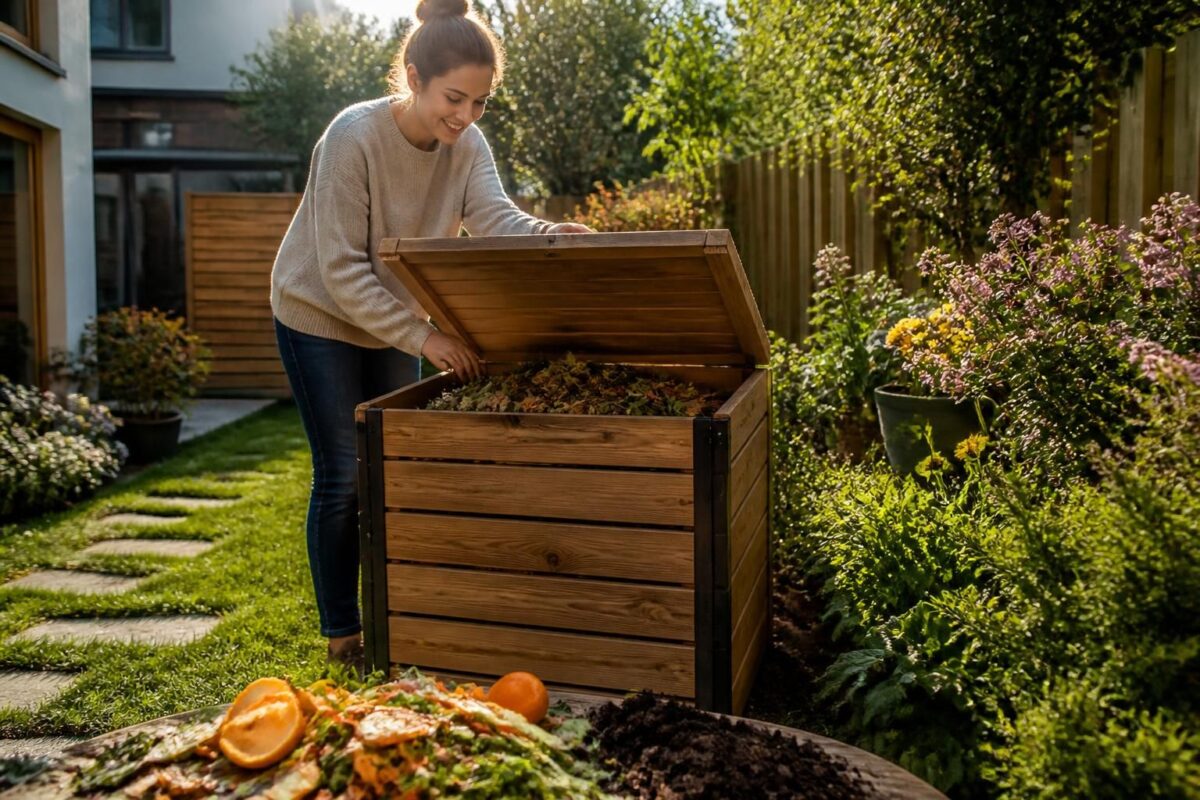
- Step 2 : Alternate in the drum the wet organic waste (peels, clippings) with dry materials (dead leaves, untreated cardboard).
- Step 3 : Aerate the pile regularly to activate microbial life and prevent odors.
By following these steps, your compost will gradually form in 2 to 6 months depending on the weather and the type of waste.
This routine not only improves soil quality but also reduces the organic waste bin.
5 essential tips for successful home composting
- Never compost meat scraps or dairy products to avoid pests and odors.
- Maintain a good balance between wet and dry waste.
- Don’t compact the waste too much; air should circulate freely.
- Have a simple tool to mix the compost every 2–3 weeks.
- Use mature compost for your garden or indoor plants as a natural fertilizer.
Why choose a composter that fits your needs?
A poorly chosen composter is often a source of disappointment and poorly valued waste. On the other hand, a good composter facilitates waste reduction, improves the soil’s microbial life, and blends harmoniously into your living space.
A neighbor who composes once told me: “The secret is the right equipment; after all, it all runs smoothly.” This wisdom perfectly captures the importance of a thoughtful choice.
To deepen your quest, here is a complete article that will help you succeed at home composting with the right materials and tips: guide to choosing and using your garden composter.
Quick FAQ about buying and using a composter
Is it useful to buy a composter if I have little space?
Yes, there are composters adapted to small spaces, such as vermicomposters or composting bags that take up little space.
What material makes a composter last over time?
Metal and recycled plastic are durable and resistant, but well-maintained wood is also an excellent choice for good insulation.
Can all organic waste be composted?
No, you should avoid meat, dairy products, oils and diseased plants to prevent odor and pests.
What is the average duration to obtain usable compost?
Generally between 2 and 6 months depending on the method and the temperature.
Is a plastic composter eco-friendly?
Yes, especially those made from recycled plastic, which offer a good balance between practicality and respect for the environment.
Thank you for your interest; Claude