Energy: battery or grid, which choice protects you better?
Hello, this is Claude. A battery offers better protection during a power outage, while the electrical grid is more convenient for everyday use: for solid energy security, combining the two is often the most balanced option.
The right choice depends mainly on which appliances you need to keep running and how long outages last in your area. A properly sized battery provides backup power, but it does not automatically replace the grid.
Good habits to adopt
- Identify essential appliances: refrigerator, lighting, phone, or medical equipment.
- Estimate their energy use and how long they need to run.
- Check how often outages occur with your electricity supplier or grid operator.
- Compare the total cost of a battery, its installation, and maintenance with the cost of grid electricity.
- Have the installation checked by a qualified professional, especially the connection and electrical protection.
To lay the groundwork for a realistic project, also consult this guide to energy independence and these tips for assessing the limitations of solar panels alone.
Battery or electrical grid: two different forms of protection
The grid supplies electricity without you having to manage storage at home. However, a local outage or widespread power failure can interrupt the supply, even if your home has grid-connected solar panels.
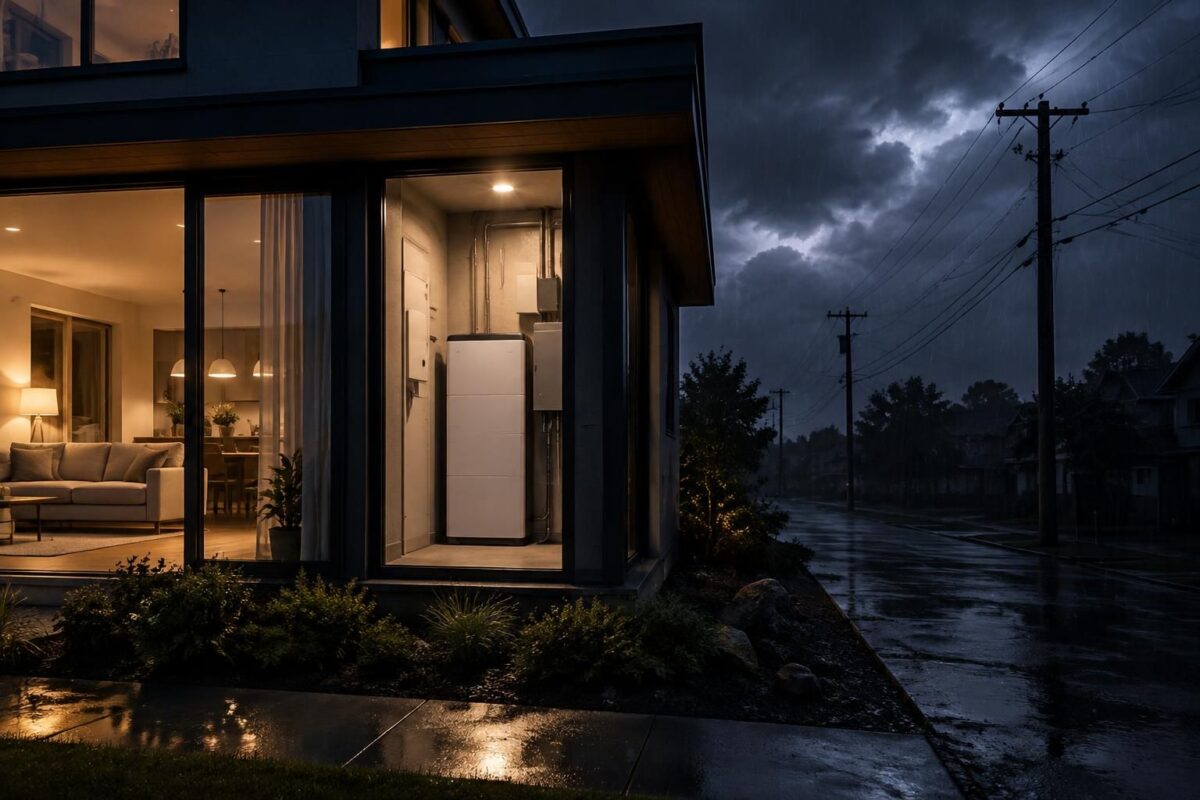
A battery stores energy that has been generated or drawn from the grid so it can be used later. To power your home during an outage, it must be paired with a system capable of disconnecting the home from the grid and providing backup power. The equipment and installation must be designed for this purpose.
The choice depends on how long the outage lasts
| Situation | Electrical grid | Home battery |
|---|---|---|
| Everyday use | Convenient and available as long as the grid is operating. | Lets you shift some of your stored energy to the hours you choose. |
| Power outage | Generally no longer supplies electricity to the home. | Can power circuits designated for backup, depending on its capacity and installation. |
| Backup duration | Depends on when grid service is restored. | Depends on the stored energy, the power demand, and the possibility of recharging. |
| Management required | Little household equipment to monitor. | Capacity, state of charge, and maintenance need to be taken into account. |
A battery advertised as having 5 kWh does not guarantee five hours of backup in every home. The duration varies depending on which appliances are used and how much energy they consume: limiting backup power to the refrigerator, a few lights, and communications can extend energy autonomy.
Energy security requires a suitable system
A battery improves your home’s resilience, but it does not provide complete energy independence. If it runs out of power, the system cannot operate in island mode, or the outage lasts a long time, the backup supply may prove insufficient.
Another common pitfall is assuming that solar panels will always keep powering the home during an outage. Many grid-connected systems shut down during an outage to protect technicians working on the lines. You need to check exactly what backup functions are provided by the installed equipment.
For Nora, who works from home and experiences a few brief outages every winter, a small battery dedicated to essential equipment may be enough. If outages are rare and short, the grid is often the simplest choice; if they happen regularly, a properly configured battery can provide useful protection.
Three steps to choosing between a battery and the grid
- List your priority needs. Note the power requirements of the appliances you need to run and the number of hours of backup you want. Medical equipment requires special attention and an appropriate backup plan.
- Assess outages and costs. Compare how often they occur with the cost of purchasing, installing, and potentially replacing the battery. Request several detailed quotes.
- Have the configuration checked. A professional will check system compatibility, the circuits covered by backup power, and electrical protection devices. They can also confirm whether solar charging is still possible during an outage.
For most households, the grid meets everyday needs, while a targeted battery protects priority uses. This approach avoids aiming for total energy independence when partial autonomy already meets your needs.
Frequently asked questions about batteries and the grid
Does a home battery work during a power outage?
Yes, if the system is designed to operate in backup mode, with the necessary isolation equipment and circuits configured for this purpose.
Do solar panels power the home during an outage?
Not automatically. Many grid-connected systems shut down during an outage; you need to check that the inverter and storage system allow safe standalone operation.
What battery capacity should you choose?
It depends on the priority appliances, their power requirements, and the desired backup duration. A review of energy consumption and advice from a professional can help size the energy storage system.
Does a battery make a home independent of the grid?
Not necessarily. Autonomy also depends on generation, the seasons, consumption, and the ability to recharge the battery; the grid can remain a valuable supplement.
Thanks for stopping by! See you soon for a new article.