
Insulation: natural insulation or moisture in six months
Hello, this is Claude. Using a well-chosen and properly installed natural insulation is the best way to prevent dampness within six months and ensure a healthy and sustainable home. Natural materials like hemp wool or cork offer effective humidity regulation that protects your house in the long term, while also improving its energy efficiency.
To do immediately
- Check the ventilation and airflow of your spaces before any insulation work.
- Choose a natural insulation material that is suitable for your climate zone and wall type.
- Prioritize breathable materials that regulate moisture, such as hemp wool.
- Install a variable-permeability vapor barrier to prevent condensation.
- Consult practical guides for installing effective natural insulation.
Discover how to manage the risks of moisture between insulation and condensation with these practical tips. More details on managing condensation in insulation and the best moisture-resistant insulation will help you make an informed choice.
Why choose a natural insulator to prevent moisture
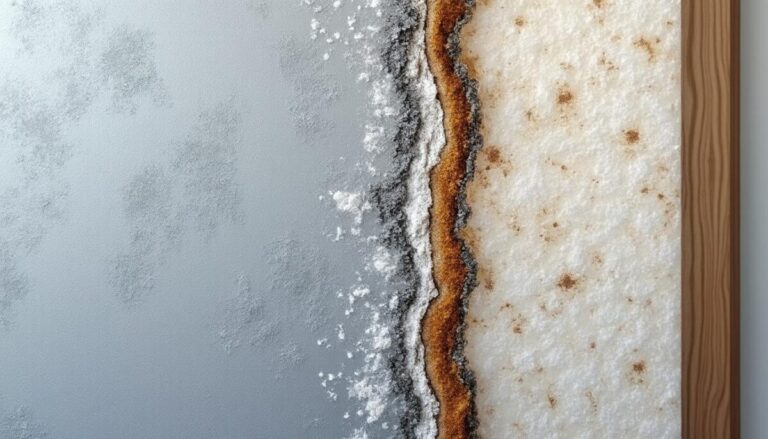
Natural insulators such as hemp wool or cork offer dual benefits: optimal thermal insulation and natural moisture management. These materials possess a hygrometric regulation which prevents the formation of condensation, the main cause of mold. Their structure promotes the diffusion of water vapor while maintaining effective insulation over time.
Hemp wool, in particular, stabilizes temperature thanks to its good thermal lag (approximately 8 hours), limiting fluctuations that cause cold bridges and humidity. It also protects against seasonal variations, a significant advantage for the insulation’s durability.
Concrete advantages of natural insulation against humidity
- Absorbs up to 30% of moisture without loss of effectiveness (sheep’s wool)
- Natural resistance to mold and pests (expanded cork)
- Durability without settling or rapid degradation
- Flexible installation options: panels, rolls or projection
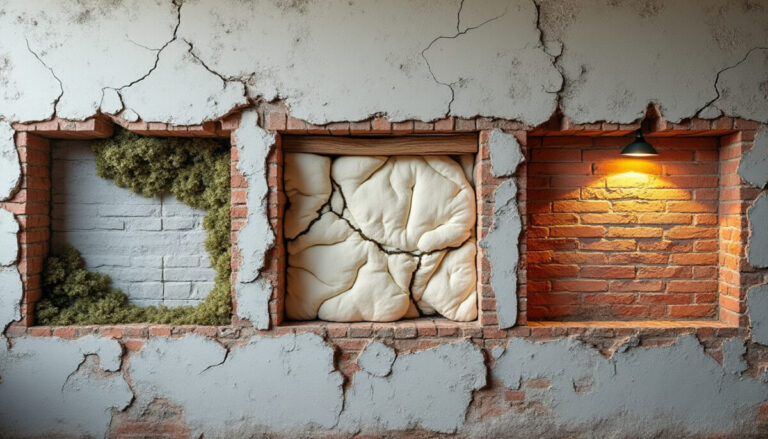
If it is an old house with old walls, opt for breathable insulation such as hemp wool and good ventilation to avoid condensation.
If it is a new construction, opt for cork roofing and high-density wood fiber panels to optimize durability and thermal performance.
3 steps to high-performance and sustainable natural insulation
- Step 1: Choose a natural insulation material that is suitable for your region and your walls, promoting humidity regulation.
- Step 2: Install a variable vapor barrier to limit the risk of condensation inside.
- Step 3: Ensure efficient and regular ventilation to remove residual moisture.
An anecdote: a homeowner in western France replaced their old synthetic insulation with hemp panels. Six months later, there was no trace of dampness or mold, and a feeling of comfort that lasted from spring to winter.
Natural insulation: an eco-friendly approach for a healthy building
“Insulation is the first step towards a more ecological and comfortable home.” Choosing natural insulation significantly limits environmental impact by reducing energy consumption and avoiding polluting materials. This insulation, made from sustainably renewable materials, supports the shift towards… healthy buildings and respectful of their environment.
Comparison of natural insulation materials: performance and resistance to humidity
| Material | Thermal conductivity (λ in W/mK) | Thermal phase shift | Moisture resistance | Recommended uses |
|---|---|---|---|---|
| Hemp wool | 0.039 | 8 a.m. | Good, natural regulation | Walls, attics, roofs |
| Expanded cork | 0.040 | 10 h+ | Very high, rot-proof | Damp floors, walls, partitions |
| Cellulose wadding | 0.038 | 8-10 am | Good, mold-resistant | Attic insulation, blown-in walls |
| Rigid wood wool | 0.036 | 10 h+ | Good, to be used in conjunction with a vapor barrier. | Roofs, floors |
| Recycled cotton fibers | 0.039 | 7-8 a.m. | Moderate, sensitive to compaction | Partitions, attics |
To delve deeper into this topic, see our guide on high-performance natural insulation details their characteristics and uses.
Can a natural insulator really prevent moisture?
Yes, thanks to its ability to regulate ambient humidity, a good natural insulator prevents condensation, the main cause of mold.
Which natural insulation material is most resistant to moisture?
Expanded cork is one of the most moisture-resistant natural insulators, perfect for damp rooms.
It is recommended to install a hygrovariable vapor barrier to maximize protection against moisture, especially in exposed areas.
How to prevent mold after insulation?
Ensures good ventilation and avoids thermal bridges; prioritizes rigorous installation with suitable membranes.
Can natural insulation be installed by oneself?
Yes, insulation materials like hemp wool or cellulose wadding are easy for a skilled DIYer to install, but professional installation guarantees better durability.
Thank you for your interest; Claude