Materials: reusing things here can save you from a needless purchase
Hello, this is Claude. To avoid an unnecessary purchase, start by checking what you can salvage, repair, or repurpose at home before ordering something new. Wood, bricks, tiles, and some metal elements can often still be used. The right approach: check their condition and intended use before incorporating them into the project.
Things to do right away
- Identify materials and objects that are still in good condition before demolition.
- Measure the salvageable pieces and note their quantities.
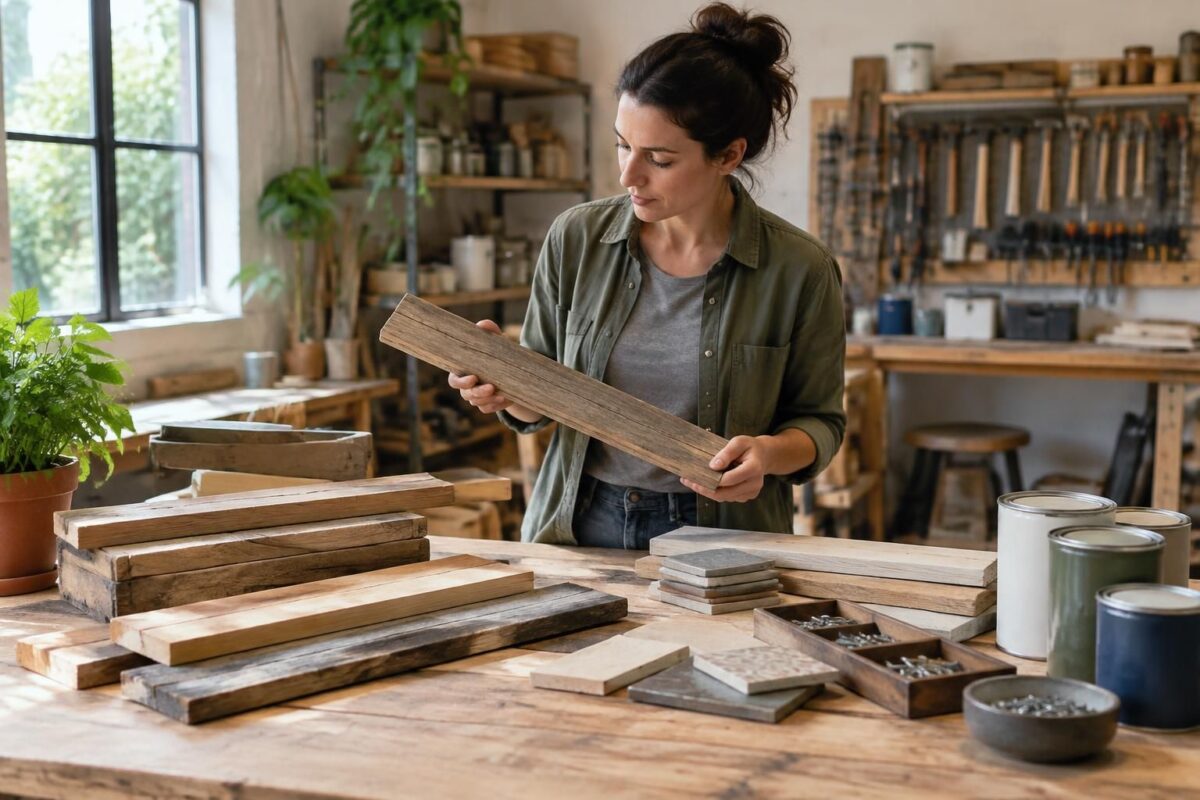
- Sort the wood, metal, bricks, and tiles separately.
- Check for risks and consider the intended use before reusing anything.
- Check with a local reuse center before buying new.
A quick inventory may reveal a door that needs repainting, boards for a shelf, or tiles for a small backsplash. To decide what to keep and what to replace, check out these tips on which materials to keep or replace and the pitfalls to avoid during an eco-friendly renovation.
Reusing materials: what to keep without making things complicated
Reuse means using an item as is or after restoring it. A beam can find a new place in a room, a window can become an interior glass partition, and leftover tiles can be turned into a mosaic. These reclaimed materials add character to a home while helping reduce waste.
Recycling, on the other hand, transforms the material: crushed concrete can be used as aggregate, while metal is melted down for a new purpose. Both approaches are part of the circular economy, but reuse often avoids more processing. “The most sustainable material is often the one you don’t need to buy again.”
| Material | Possible reuse | What to check |
|---|---|---|
| Wood | Shelf, furniture, cladding | Moisture, insects, stability |
| Metal | Railing, handle, frame | Rust and strength |
| Bricks | Decorative wall or edging | Condition and suitability for installation |
| Tiles | Mosaic or backsplash | Quantity and differences in size |
A very simple story: during a small renovation, a few tiles left at the bottom of a box were enough to repair a backsplash. The pattern didn’t match, but that detail became the room’s charm.
Reusing materials at home: three steps to get started
Step 1: Walk through the room before work begins. Make a note of what can stay, be repaired, or be carefully dismantled, then take measurements.
Step 2: Adapt your plan to the materials available. A secondhand piece of furniture, door, or tiles may inspire a simple solution, but avoid designing a use that isn’t suitable for their condition.
Step 3: Check safety and plan for storage. For a load-bearing element, electrical component, or item exposed to moisture, ask a professional for advice. Good eco-design also plans for future dismantling and reuse.
If it’s a stable piece of furniture, cleaning and repairing it may be all that’s needed. If it’s a structural or damaged element, have it checked before reusing it.
Local salvage and responsible purchasing
Reuse centers, secondhand platforms, and specialist tradespeople can help you find suitable items. Also look for surplus materials from construction projects: searching locally can save you a long trip and support the salvage sector in your area.
Before making a purchase, compare the total cost: price, transport, preparation, and installation. Reuse isn’t always the cheapest option, but it can avoid a new purchase, reduce waste, and provide a unique finish. It’s a responsible purchase when the material truly meets your needs.
Practical questions about reused materials
Which materials are easiest to reuse?
Wood, tiles, bricks, and some metal elements are often suitable for reuse, provided you check their condition and intended use.
How can I find reclaimed materials near me?
Ask reuse centers, secondhand platforms, and local tradespeople. Neighborhood groups may also share information about available surplus materials.
Can a damaged material be reused?
Sometimes, if the repair is suitable for its future use. For a load-bearing element, electrical component, or item exposed to moisture, ask a professional for advice first.
What is the difference between reuse and recycling?
Reuse keeps an object or material for a new purpose, sometimes after repair. Recycling transforms the material to make another product.
Thank you for your interest; Claude