
Your mineral insulation irritates your throat
Hello everyone, it’s Claude. If glass or rock wool makes your throat itch after some work, first move away from the dust and stop handling it. Mechanical irritation is possible, but that does not prove you have an allergy. Here’s how to reduce exposure and identify situations that call for medical advice.
To understand how and why this discomfort occurs, it is essential to know the properties of the materials involved and the appropriate preventive measures. We’ll also guide you on how to keep this irritant from disrupting your daily life indoors. For more information, feel free to read about breathing difficulties linked to dampness in the home as well as why some mineral insulation materials affect indoor air quality. Here’s some practical information to help you better understand what happens when your throat becomes sensitive after contact with insulation fibers.
Why does mineral insulation make your throat itch?
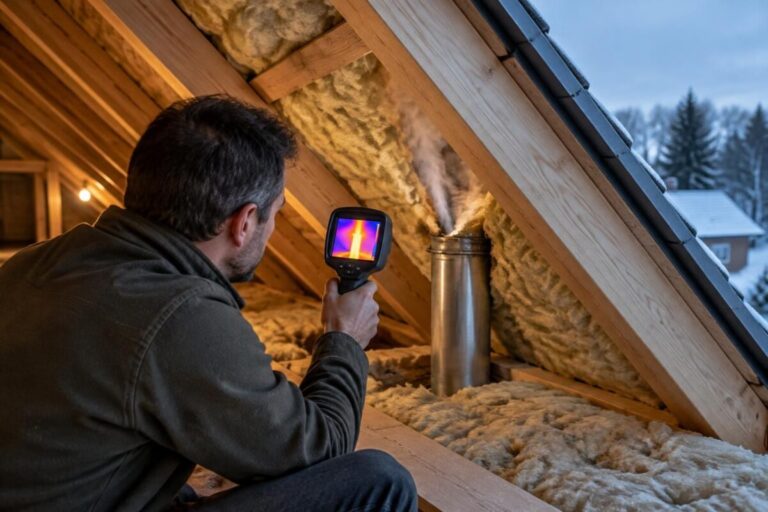
Mineral insulation is made of fine fibers derived in particular from volcanic rock, sand, or recycled glass. Although these fibers are effective at retaining heat and providing acoustic comfort, they can cause an itchy sensation when they become airborne. During installation or if the material is damaged, insulation dust is released into the air, often causing respiratory irritation that affects the throat. The risk depends in particular on the product, the amount of dust released, and the way the work is carried out. An irritated throat on its own does not identify the cause.
Start by limiting dust at the source: unpack the material near the installation area, cut it with a suitable tool, and avoid tearing the panels. The INRS provides detailed guidance on good practices for mineral wool: covering clothing, gloves, goggles, and at least P2 respiratory protection, such as a properly fitted FFP2 mask, depending on the worksite conditions.
Common symptoms of a throat irritated by mineral fibers
Recognizing the signs of irritation linked to mineral insulation makes it possible to act quickly and avoid making it worse. Typical symptoms include:
- Itching and tickling in the throat, especially after DIY or renovation work.
- Dry throat, sometimes accompanied by a mild, dry, irritating cough.
- Redness or a burning sensation at the back of the throat.
- Sneezing may occur, but this alone is not enough to diagnose an allergy.
These symptoms reflect the direct impact of dust and tiny inhaled fibers, and show how important it is to adapt your surroundings. Above all, stop the exposure and identify the source before resuming work. Another useful precaution is to avoid prolonged contact with perfumed sprays or household dust, which can worsen irritation.
Mineral insulation, allergies, and precautions to take
Irritation or an allergy to glass wool? Fibers can mechanically irritate the skin, eyes, and upper respiratory tract. Reactions to binders or additives are also possible, as explained by the INRS in its information on inorganic fibers. Only a healthcare professional can assess persistent or recurring symptoms; don’t conclude that you have an allergy based solely on an itchy sensation.
Here are some practical tips to follow right away:
- Use a certified respirator when installing or handling mineral wool.
- Wear protective goggles and avoid direct contact with the skin.
- Keep the work area separate from occupied rooms, ventilate without spreading the dust, and clean using a vacuum suitable for capturing it; do not dry sweep or use compressed air.
- Check the product label and safety data sheet; bag offcuts and wash work clothes separately.
Ignoring these precautions can lead to chronic irritation or even more serious respiratory problems.
Causes of an irritated throat: summary table
| Main cause | Typical situation | Associated symptoms |
|---|---|---|
| Inhalation of mineral fibers | Handling insulation without protection | Itchy throat, dry cough, irritation of the mucous membranes |
| Respiratory allergies | Increased exposure during work | Sneezing, redness, irritated throat |
| Dry air or indoor pollution | Poorly ventilated rooms, intensive heating | Dry throat, burning sensations |
| Gastroesophageal reflux (indirectly) | After a quick meal and lying down | Heartburn, irritated throat |
This table offers possible explanations, not a diagnosis. Several causes can produce similar symptoms.
What should you do if your mineral insulation makes your throat itch?
Leave the dusty area, change out of exposed clothing, and wash yourself without scrubbing your skin aggressively. Drinking a little water may soothe a dry throat, but it won’t remove inhaled fibers and is no substitute for medical advice. If the discomfort persists after exposure stops or returns every time you work, consult a healthcare professional and specify the product and the conditions in which it was handled. If you have significant difficulty breathing, contact emergency services immediately.
In an occupied room, don’t remove the insulation yourself just because your throat itches. Have any exposed fibers, air leaks from the attic, or failures in containment checked. A wall’s ability to “breathe” does not replace ventilation or protection against dust. If you want to understand how your home can better manage moisture and improve your breathing comfort, I also invite you to read my article on the importance of insulation that truly breathes or on the relationship between sound and thermal insulation.
Why does my mineral insulation make my throat irritated?
Fine fibers and dust released during installation or when insulation deteriorates can be inhaled, irritating the throat and respiratory tract.
How can I protect myself when handling mineral insulation?
It is recommended that you wear appropriate personal protective equipment: a respirator, protective goggles, and covering clothing to avoid direct contact.
What should I do right after exposure to dust?
Stop handling the material and move away from the dust. Change out of exposed clothing and wash yourself. A little water may soothe dryness, but it does not treat exposure through inhalation. Consult a healthcare professional if symptoms persist.
When should I see a doctor?
Consult a healthcare professional if the discomfort persists after exposure stops, recurs, or is accompanied by wheezing. Significant difficulty breathing requires immediate emergency assistance.
Can dry air make discomfort caused by insulation worse?
Dry air can increase discomfort, but you should not routinely humidify your home. Check the ventilation and ambient humidity, and focus above all on addressing the source of the dust.
Thank you for your loyalty; Claude