Insulation: this flaw causes electricity demand to skyrocket
Hello, this is Claude. To reduce electricity use, first address air leaks and thermal bridges, then check the heating settings. Poor thermal insulation lets heat escape and often causes electric heating to run for longer. An electrical insulation fault, on the other hand, is a dangerous current leak: it should not be confused with heat loss. A few simple checks can help identify the problem and choose the right course of action.
“Do this immediately”
- Check windows, doors, and outlets for drafts.
- Close the shutters at night and fit suitable weatherstripping to openings that leak air.
- Clear space around radiators and set the heating according to how each room is used.
- Make a note of rooms that cool down quickly, especially after the heating is turned off.
- If a residual-current device trips, unplug the appliance involved and do not use it again until it has been checked.
To take action in the right order, start by reducing demand before producing more, then see how the coldest room reveals insulation weaknesses.
Why poor insulation increases electricity use
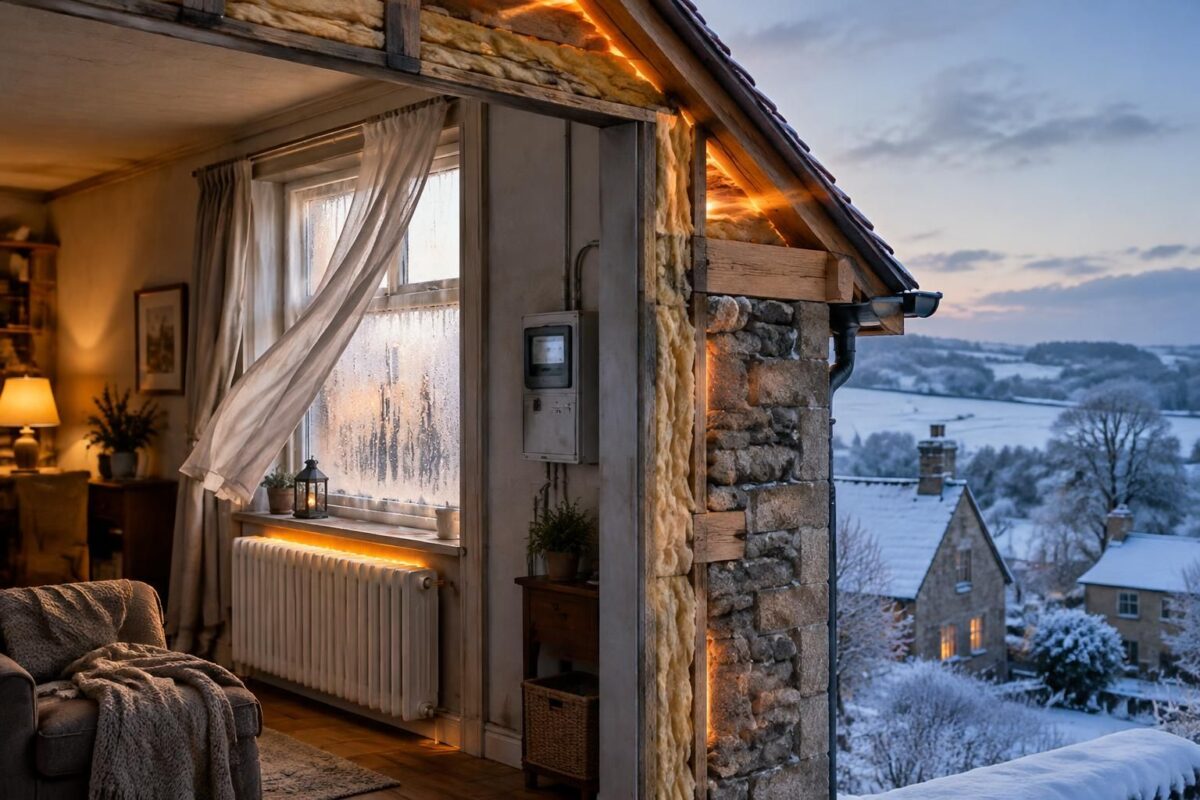
When walls, the roof, or windows let heat escape, the home cools down more quickly. Electric heating compensates for this heat loss by switching on more often: electricity use increases, and the electricity bill may rise as a result.
Thermal bridges, often found where walls meet floors or around windows, create cold spots. A well-planned energy renovation improves thermal performance and comfort, without having to turn the heating up higher and higher.
Air leaks and thermal bridges: signs to look for
A room that stays cold near an exterior wall, recurring condensation, or a draft around a window may indicate a weak spot. These signs are not enough to make a diagnosis, but they show where to start checking.
Once, in a bedroom, a simple draft under the door made the desk area uncomfortable, even with a radiator running. The heating setting was not the real issue: the air leak needed to be addressed first.
| What you notice | Possible cause | Useful first step |
|---|---|---|
| Draft near a window | Worn weatherstripping or a poorly adjusted closure | Check the weatherstripping and closure |
| Cold wall or localized dampness | Poor insulation or a thermal bridge | Have the area assessed before carrying out work |
| Heating running for a long time | Heat loss or unsuitable settings | Compare temperatures and program the heating |
| Residual-current device trips | Possible electrical insulation fault | Unplug the suspected appliance and request an inspection |
Electrical insulation fault: a different problem to take seriously
An electrical insulation fault occurs when a live conductor leaks current to earth or to a metal part, for example because of a damaged cable, moisture, or an appliance getting old. The residual-current device may then cut off the circuit to protect people.
This fault does not automatically mean that the home is using much more electricity. However, it can cause power cuts, and a deteriorated electrical installation poses an electrical hazard. “Repeated tripping is a warning sign that needs to be checked, not an inconvenience to work around.”
If it’s a cold room… if it’s the residual-current device that trips
If it’s a cold room, first look for an air leak, a cold surface, or a heating adjustment issue. If the residual-current device trips, unplug the appliances on the affected circuit and call an electrician if it continues to trip.
Check the problem in three steps
- Step 1: identify the symptom. Note the room, time, weather, and how the heating is behaving. If an electrical device trips, also note which appliance was in use, without opening the electrical panel.
- Step 2: carry out safe checks. For thermal insulation, check the weatherstripping, air leaks, and cold spots. For electrical issues, unplug the suspected appliance and avoid taking measurements on a live circuit.
- Step 3: choose the right professional. An insulation specialist can assess heat loss and recommend suitable work. A qualified electrician should measure insulation resistance with the appropriate instrument and inspect the installation.
An ordinary multimeter cannot always correctly measure insulation resistance. Depending on the circuit and measurement conditions, an insulation resistance tester is required; the minimum reference value specified for domestic installations is generally 0.5 MΩ, subject to the applicable rules and measurement procedure.
Reduce heat loss without turning up the heating
Small steps can help, but they do not replace a lasting fix for defects in the building. Start with leaks that are easy to address, then have the building envelope and thermal bridges assessed before undertaking a more extensive energy renovation.
Well-designed insulation often reduces how long electric heating runs and stabilizes the temperature. The goal is not to turn up the thermostat, but to keep the heat that has already been produced for longer.
Can poor insulation increase the electricity bill?
Yes. If the home loses heat quickly, electric heating often runs for longer. The extent depends on the building, the weather, and the settings.
Does an electrical insulation fault always increase electricity use?
No. It mainly causes a current leak and can trip the residual-current device. It should be checked to prevent hazards and repeated power cuts.
Can I measure an insulation fault myself?
A reliable check requires a suitable tester and a procedure carried out with the power off. Do not dismantle the electrical panel; call an electrician if in doubt.
Where should I start to improve energy efficiency?
Look for drafts and cold rooms, set the heating correctly, then have the main sources of heat loss assessed before planning any work.
Thank you for your interest; Claude