Self-sufficiency: a simple old house without major renovations
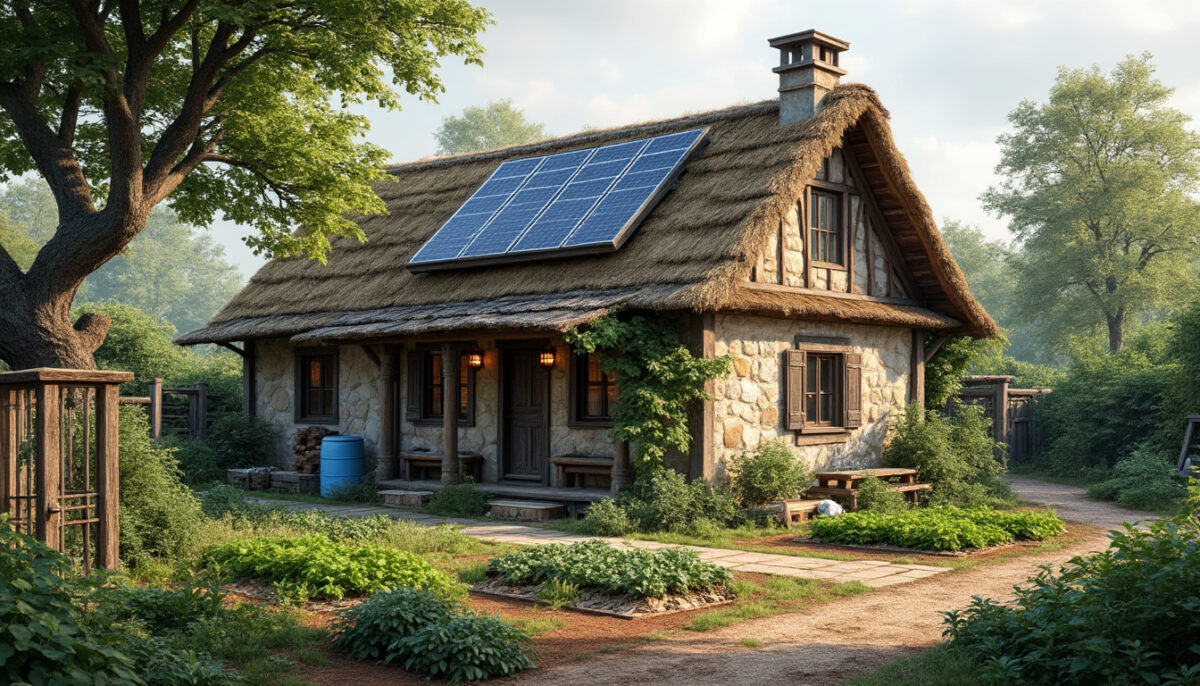
Hello, this is Claude. To have a simple and self-sufficient old house without major renovations, you have to focus on energy efficiency, light renovation and intelligent resource management, favoring small jobs and ecological materials.
- Install low-energy LED switches and light bulbs.
- Install simple rainwater harvesting systems, such as a connected barrel.
- Improve natural insulation with thick curtains or window seals.
- Optimize heating with a high-performance wood stove adapted to the size of the dwelling.
- Introduce energy management via connected plugs to control consumption.
To delve deeper into these strategies, explore practical guides on How to achieve self-sufficiency without a large budget and explores practical tips for a well-designed independent house.
The basics for energy self-sufficiency in an old house
Older houses often have beautiful stone walls and wooden floors, two assets for natural insulation. Their energy efficiency can be improved with minor renovations, avoiding major construction work. The idea is to reduce heat loss through simple but effective measures.
For example, replacing windows with double-glazed models, or blocking drafts with eco-friendly seals, helps retain heat. A modern wood-burning stove provides efficient heating, reducing reliance on the grid. Rainwater harvesting systems facilitate self-sufficiency without the need for extensive construction.
A few tips for small jobs with a big impact
- Install thermal curtains on old windows.
- Install wooden shutters to limit heat exchange.
- Revamp the attic insulation with natural materials such as wood wool.
- Implement controlled natural ventilation.
- Choose eco-friendly, breathable materials to avoid moisture.
Take 3 simple steps towards sustainable sobriety
- Step 1: Conduct a precise energy audit beforehand to identify weaknesses.
- Step 2: Prioritize small, low-cost but high-efficiency jobs, such as attic insulation and waterproofing repairs.
- Step 3: Install energy-efficient equipment: low-consumption heat pump, suitable solar panels and integrated water management system.
What costs should be expected for modest improvements without major construction work?
| Job | Cost range (€) | Impact on autonomy |
|---|---|---|
| Double glazing / windows | 3,000 – 7,000 | Significantly reduces heat loss |
| Photovoltaic solar panels (lightweight installation) | 7,500 – 12,000 | Partial electrical autonomy (60-80%) |
| Wood-burning stove or heat pump | 3,000 – 10,000 | Energy-efficient gas-free heating |
| Rainwater harvesting (simple system) | 2,000 – 5,000 | Reduces dependence on drinking water |
| Natural insulation (attics, walls) | 4,000 – 8,000 | Improves lasting comfort |
Quick cases:
If it’s a well-preserved stone house: prioritize the installation of wooden shutters and natural insulation to maintain breathability.
If it is a semi-detached building: focus on attic insulation and improve energy management through modular equipment.
Integrate comfort and independence through lifting without major construction work
Modernizing an old house without major construction also means considering interior mobility. Installing a compact elevator, for example, can improve comfort and accessibility without altering the structure. Self-supporting technologies integrate into the stairwell without extensive masonry work, preserving both aesthetics and structural integrity.
To find out how to successfully complete this integration, consult the tips for Installing an elevator in an old house without major renovationsThis approach provides real, lasting comfort for everyone, with controlled frugality.
Why choose simplicity over over-equipment?
A truly self-sufficient home doesn’t necessarily mean disconnecting from the grid or investing a fortune in high-tech equipment. Energy efficiency, based on common sense and small actions, reduces consumption. This is often the key to lasting efficiency. As the saying goes, “The best circuit is the one you don’t make.” Sometimes, effective insulation is better than multiplying appliances.
Lasting comfort comes from a well-thought-out approach, combining natural insulation, water management, and appropriate equipment. The goal is to avoid major, costly, and time-consuming renovations, making an older home both self-sufficient and pleasant to live in.
How to improve the insulation of an old house without major renovations?
Invest in installing double glazing, adding thermal curtains, sealing openings and insulating the attic with natural materials such as wood wool.
What are the advantages of rainwater harvesting?
It reduces drinking water consumption, allows for watering the garden and supplying some grey water, while limiting the water bill and ensuring greater autonomy.
Is it possible to install an elevator in an old house without damaging the structure?
Yes, thanks to compact self-supporting elevators and modern technologies that avoid the creation of shafts or major construction work.
Is it possible to be energy self-sufficient without access to an electrical grid?
Often, a very high level of energy self-sufficiency (60-80%) is a good strategy, keeping the grid as a safety net without overinvesting.
What materials should be prioritized for eco-friendly renovation?
Ecological and natural materials such as wood wool, hemp, cellulose wadding, which insulate effectively while allowing old walls to breathe.
Thank you for your interest; Claude