Range: aim for 100% or risk a major financial pitfall
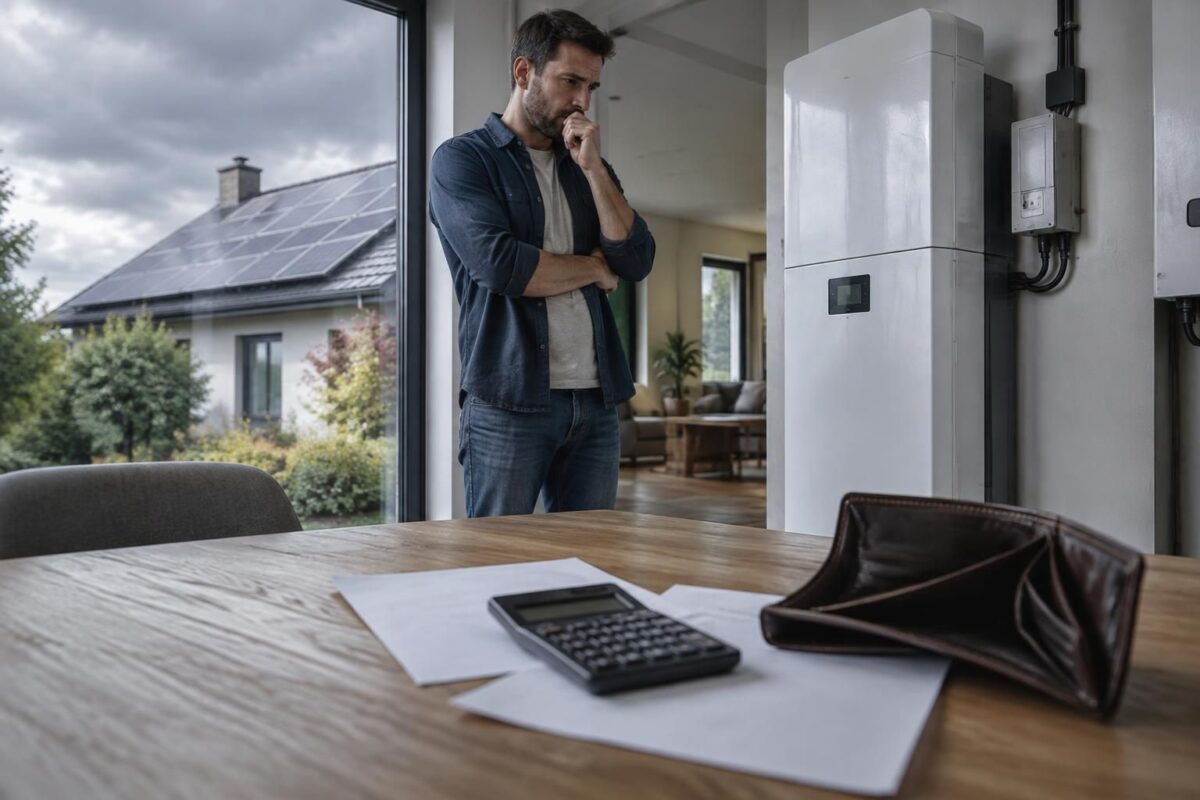
Hello, it’s Claude. Achieving 100% energy independence is often very expensive: start by reducing your needs, then size your solar panels and batteries according to your actual consumption. Well-planned self-consumption often offers better value than an oversized system. The goal is practical self-sufficiency, not independence from the grid at any cost.
Things to do right away
- Record your electricity consumption over a year, month by month.
- Identify energy-hungry appliances and uses you can shift to daytime.
- Get several estimates, with and without home batteries.
- Compare the installation cost with the expected savings, not just the advertised independence rate.
- Check the requirements for grid connection, selling surplus electricity, and maintenance.
To avoid the trap of over-equipping, compare the options for photovoltaic independence without unnecessary equipment and find out how to aim for energy independence without blowing your budget.
Why 100% independence can become a financial trap
The figure may seem straightforward, but it conceals two different realities: covering a large share of your needs over the course of a year, or producing enough at every moment to almost never rely on the grid. The second option often requires more panels and greater storage capacity.
Solar panels produce most of their electricity when the sun is shining brightly. In winter, shorter days and cloudy spells reduce production just when heating or lighting can drive demand up. So the last few percentage points of independence are often the hardest and most expensive to achieve.
A system must also take your home, lifestyle, and local regulations into account. A rate of 70 to 80% can be a useful point of reference in some situations, but it isn’t a universal target: the right level depends on the system, the weather, and how you use energy.
Annual energy independence and grid independence: two distinct goals
A home can produce as much electricity over the year as it consumes without being self-sufficient at every hour. It may feed surplus electricity into the grid at noon, then buy electricity in the evening or during a period with little sunshine.
Before signing, ask for the assessment to clearly distinguish between annual production, self-consumption, and grid independence. A high percentage without a precise explanation doesn’t tell you whether the project meets your needs.
Installation costs, batteries, and actual returns
Home batteries can store some of your solar surplus for later use. However, they add equipment, installation costs, and possible replacement expenses. Whether they make sense depends on electricity prices, the amount of surplus available, and how you use electricity.
Return on investment is not a fixed promise. It varies according to installation costs, rates, available incentives, actual production, and equipment lifespan. A battery that is often undercharged can increase your bill without providing the comfort you expected.
| Option | Key advantage | What to watch for |
|---|---|---|
| Solar panels without a battery | Simpler installation, generally lower cost | Surplus electricity produced during the day isn’t always used on site |
| Panels with a small battery | Some of the energy is available after sunset | Check that evening usage justifies the investment |
| System aiming for 100% independence | Greater independence under certain conditions | Assess the extra cost, seasonal variations, and backup needs |
One anecdote sums it up well: a household may produce a lot of electricity at noon, when its occupants are at work and only run their appliances in the evening. Shifting some uses to sunny hours can then help avoid immediately buying a larger battery.
“The best energy is often the energy you don’t need to produce.” Start by reducing losses, then invest in equipment that meets a measured need.
Three steps to choosing a realistic level of energy independence
- Step 1 — Measure your needs. Gather your bills and note your major uses: hot water, cooking, heating, and vehicle charging. An estimate based on your habits is better than a theoretical average.
- Step 2 — Compare scenarios. Ask for one proposal without a battery and another with storage. Have them specify expected production by season, the share used directly, and the cost of each option.
- Step 3 — Check the full budget. Include installation, maintenance, insurance, and any replacements. Keep some financial breathing room instead of spending your entire budget on a few extra percentage points of independence.
If you’re often home during the day, a system focused on self-consumption may be worthwhile. If you mainly use electricity in the evening or in winter, first look into shifting some uses and the actual cost of storage before aiming for grid independence.
The real luxury: keeping some breathing room
Energy independence is also linked to financial independence: an installation that costs too much can reduce your ability to cope with unexpected expenses. Avoid financing an ambitious project with loans that are hard to manage or by tying up all your savings.
A resilient project doesn’t depend on a perfect scenario. It is built on controlled needs, an affordable budget, and equipment whose limitations you understand. Having room to maneuver matters more than a round number shown on a quote.
Useful questions before aiming for 100%
Should you install a battery with solar panels?
Not necessarily. Whether it makes sense depends on the surplus produced, your use of electricity after sunset, and its cost. Compare an estimate with and without storage before deciding.
Can you be self-sufficient all year with solar panels?
It’s possible with some configurations, but it often requires a large system and a solution for periods with little sunshine. The cost and constraints may make the goal not worthwhile.
What level of energy independence should you aim for?
There is no ideal level that works for everyone. Choose a target based on your consumption, local production, installation cost, and expected return on investment.
How can you avoid a financial trap?
First reduce consumption, get several comparable quotes, and check the production assumptions, additional costs, and terms for selling surplus electricity.
Thank you for your interest; Claude