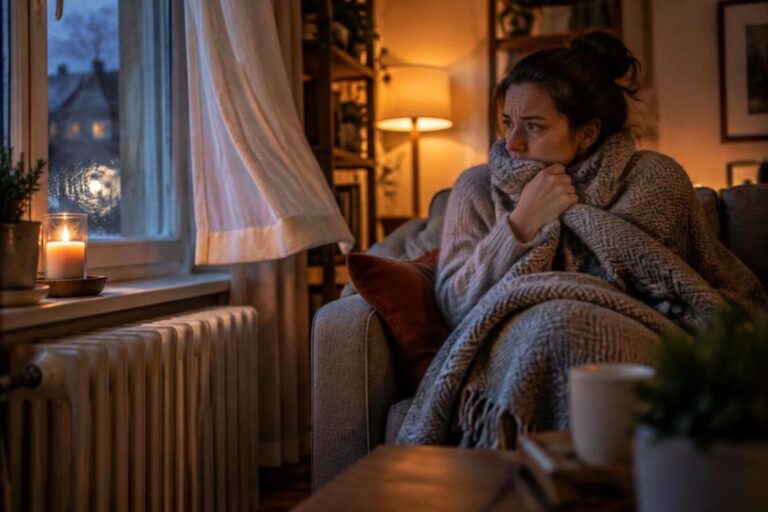

5 Eco-Friendly Ways to Heat Your Home Without Paying More
Hello, it’s Claude.
To heat your home without driving up your bill, set the right temperature, limit heat loss, and maintain your radiators.
A few simple steps can reduce your energy consumption without sacrificing comfort. The most effective approach is to heat rooms according to how they’re used, rather than keeping the whole house at the same temperature.
Things to do right away
- Set the thermostat to 19 °C in occupied living areas, and to 17 °C in bedrooms.
- Lower the temperature in unoccupied rooms to around 16 or 17 °C. If you’ll be away for several days, use frost-protection mode, at around 12 °C.
- Close shutters and curtains in the evening to limit heat loss through windows.
- Keep radiators clear and dust-free so heat can circulate freely.
- Air out your home for 5 to 10 minutes a day with the windows wide open, turning off the heating in that room for this short time.
These guidelines for heating to 19 °C and these tips on turning down the heating without losing comfort can help you choose the right steps for your home. Lowering the temperature by one degree can save around 7% on heating energy, according to ADEME estimates.
Five eco-friendly steps to reduce your heating bill
A comfortable home depends on more than the number shown on the thermostat. Thermal insulation, humidity, and airflow also affect how warm the indoor temperature feels.
| Energy-saving step | When to do it | Intended effect |
|---|---|---|
| Adjust the thermostat | According to how rooms are used | Avoid heating unnecessarily |
| Close shutters and curtains | In the evening and at night | Limit heat loss through windows |
| Keep radiators clear | Throughout the heating season | Help heat circulate evenly |
| Air out your home briefly | Every day, for 5 to 10 minutes | Remove humidity without letting the walls cool down for long |
| Maintain your heating system | Regularly, depending on the equipment | Keep it working properly |
Choose the right temperature instead of heating every room equally
Heating every room to 19 °C, even when it’s empty, uses more energy than necessary. The living room can stay at 19 °C while it’s occupied, while a bedroom generally only needs to be 17 °C at night.
For example, if you’re going out for a few hours, turn the setting down rather than switching the heating off completely. If you’ll be away for several days, frost-protection mode protects your home without keeping it at a comfortable temperature.
Shutters, curtains, and windows: reduce heat loss
Windows are often a weak point, especially in older homes. Closing the shutters at dusk and drawing thick curtains can help keep the heat in, as long as they don’t cover the radiators.
Worn seals or a gap under a door can also create a draft. A door sweep or suitable seals are simple solutions, but never block air vents or ventilation outlets.
Keep radiators clear and maintain your heating system
A sofa pushed up against a radiator or laundry draped over it blocks heat from circulating. Leave space around the unit and dust it regularly to make the room more comfortable.
If you have hot-water radiators, bleeding them may help if they aren’t heating properly or are heating unevenly. Boilers must be serviced annually by a professional; heat pumps must be serviced according to the regulatory schedule that applies to the unit.
A simple three-step method to save energy
- Observe your home. Identify rooms that are overheated, cold windows, and obstructed radiators. Also note when your home is empty.
- Adjust the settings. Program the thermostat if possible, lower the temperature in rooms that are rarely used, and close the shutters in the evening.
- Check the results. After a few days, compare your comfort level and heating habits. If a room stays cold despite the right settings, look for the cause before turning up the temperature everywhere.
These steps can save energy, but they don’t replace renovations when thermal insulation is inadequate. If your home is still difficult to heat, an assessment can help identify heat loss before you consider replacing your heating equipment.
Useful questions about heating without paying more
What temperature should I choose for living areas?
Around 19 °C when the rooms are occupied. Lowering the thermostat by one degree can reduce heating consumption by around 7%, according to ADEME estimates.
Should I turn off the heating when I’m away?
For a short absence, it’s better to turn down the thermostat. If you’re away for several days, use frost-protection mode, at around 12 °C, rather than turning the heating off completely.
Does airing out your home in winter cause a lot of heat loss?
A brief airing of 5 to 10 minutes refreshes the air and removes humidity. Open the windows wide and turn off the heating in the room during this time.
How can I make the area near windows more comfortable?
Close the shutters and curtains in the evening, check the condition of the seals, and install a door sweep if needed. Never block air vents.
I hope you found these tips useful. See you soon! — Claude