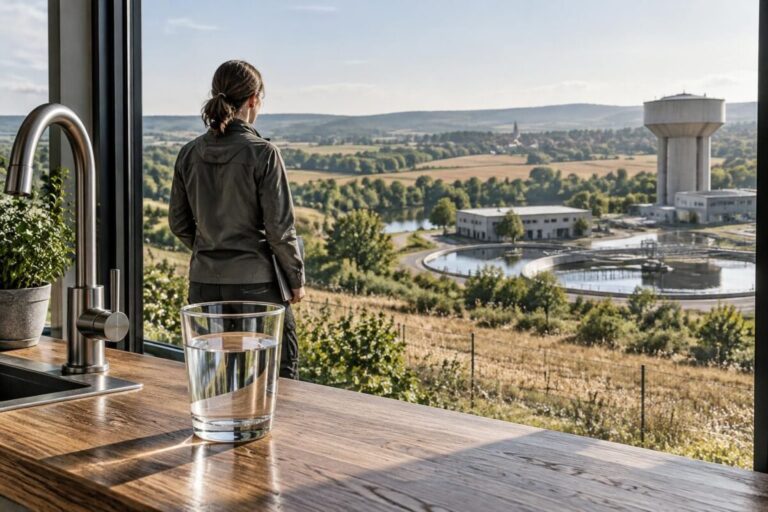

Self-sufficiency: water and energy, where to begin
Hi, this is Claude. To begin your journey towards water and energy self-sufficiency, focus on reducing your consumption and harvesting rainwater before investing in renewable electricity production. This is the foundation for building a more energy-efficient and independent home.
- Install a rainwater harvesting tank for non-potable domestic use.
- Optimize your insulation to limit your heating and hot water needs.
- Monitor your electricity consumption with a simple and accessible tracking system.
- Change your light bulbs to energy-efficient LED models.
- Equip yourself with a low-flow tap to reduce water waste.
With these initial actions, you lay the foundations for a energy autonomy and sustainable water. To learn more, discover more tips in our guides to self-sufficiency or explore how to optimize your consumption with a view to…self-consumption of electricity.
Why start by reducing your water and energy consumption?
Before investing in an electricity generation system or a large water tank, reducing your consumption is the most cost-effective and efficient step. Heating and hot water often account for more than 70% of a home’s energy expenses. By improving your insulation and opting for smart temperature management, you can easily cut these needs in half. Regarding water, installing a simple rainwater harvesting system is sufficient to supply toilets or water the garden, thus reducing your dependence on the mains water supply. This prepares you to install suitable off-grid systems on a solid foundation.
Self-reliance: get back to basics with these simple steps
- Set up a system to monitor your electricity consumption in order to detect waste.
- Install a rainwater harvesting system with basic filtration.
- Improve window sealing and ventilation to retain heat.
- Choose energy-efficient household appliances.
- Use home automation to program heating and lighting according to your actual needs.
How to produce and store your own renewable energy
Producing your own electricity often involves… photovoltaic panelsIn 2026, with a budget between €8,000 and €15,000, you can cover a significant portion of your annual energy consumption. To reduce intermittency, a small wind turbine is useful if you live in a windy area, although it requires a larger investment. Another solution is micro-hydropower if a watercourse is accessible on your property.
| Technology | Estimated cost (€) | Lifespan (years) | Benefits |
|---|---|---|---|
| Photovoltaic panels | 8,000 – 15,000 | twenty-five | Simple installation, minimal maintenance |
| Mini wind turbines | 10,000 – 40,000 | twenty | Product produced in winter; windy area required. |
| Micro hydroelectric power plant | 15,000 – 30,000 | thirty | Stable production, in accordance with site conditions |
For theenergy independenceStorage is essential. Lithium-ion or LiFePO4 batteries allow you to store the energy produced for nighttime use or in bad weather. Combining production and storage, with intelligent management via home automation, maximizes your chances of complete energy independence.
Step by step towards effective energy independence
- Evaluate your actual consumption and target the reduction of the most energy-intensive items.
- Install a renewable electricity production system adapted to your geographical and financial situation.
- Combine high-performance storage and automated management to minimize your network consumption.
Water management: collection, storage and responsible use
Self-sufficient water management aims primarily to reduce your dependence on external sources by combining water harvesting and conservation. A simple system integrates rainwater collection in sufficiently large tanks (10,000 liters is recommended for a family of four). This non-potable water is used for the garden, toilets, and sometimes for household cleaning after filtration.
It is important to apply a energy efficiency This also applies to water usage: reducing tap flow, choosing low-consumption appliances, and avoiding daily waste. A consumption audit often reveals pleasant surprises where simple changes are enough to reduce water consumption by 20 to 30%.
The keys to realistic and sustainable water autonomy
- Install suitable tanks combined with a complete filtration system.
- Ensure potability with certified treatments or connect intelligently to the network.
- Limit consumption via low-flow equipment.
- Monitor and measure regularly to adjust usage.
- Plan a reserve to prepare for dry periods.
Investing in independence: what are the costs and what assistance is available?
Converting a home to an energy-efficient one often costs between 15% and 30% more compared to a conventional home. This is due to the specific equipment required and the optimization of insulation materials. Fortunately, in France, subsidies such as MaPrimeRénov’ and Energy Savings Certificates provide financial support for this process.
The return on investment is often achieved in 5 to 10 years thanks to savings on energy and water bills. With good planning, you can also choose eco-friendly materials like sheep’s wool or hemp, and sustainable solutions that minimize long-term maintenance.
To succeed, avoid these common mistakes.
- Do not start by reducing your consumption before buying equipment.
- Undersizing your storage and production system.
- Ignoring intelligent management that optimizes autonomy.
- Neglecting the quality of insulation and ventilation.
- Forgetting to ask for available assistance.
As Benjamin Franklin already said, “A penny saved is a penny earned.” This principle guides the path towards housing that is both self-sufficient and responsible.
Is it possible to become completely self-sufficient in water in France?
Yes, thanks to rainwater harvesting and treatment, as well as the use of a well. However, this requires a significant investment and proper maintenance of the systems.
What are the first pieces of equipment to install for energy self-sufficiency?
Photovoltaic panels are often the first step, combined with a lithium-ion battery storage system to maximize independence.
How to reduce your energy needs before installing a system?
Are there any financial aids available for this type of work?
Yes, MaPrimeRénov’ and Energy Savings Certificates can cover a significant part of the costs depending on your profile.
Is a professional absolutely necessary to install a standalone system?
The intervention of a professional guarantees safety and compliance, even if some systems can be self-installed after training.
Thank you for your interest; Claude