
Self-sufficiency: heating without electricity, realistic or not
Hello, Claude here.
Yes, heating without electricity is realistic if you choose a truly self-sufficient appliance and limit heat loss; comfort nevertheless depends on the home, the fuel, and safety precautions.
For a power outage, a wood stove with a compliant flue is a reliable option. For supplemental heating, gas or kerosene can help, but their combustion requires strict precautions. In all cases, retaining heat matters as much as producing it.
Good habits for heating without electricity
- Choose the room to prioritize and focus on one living space rather than trying to heat the whole house.
- Block drafts with well-maintained weatherstripping and a draft stopper at the bottom of doors.
- Make the most of the sun by opening the curtains during the day, then closing the shutters and curtains as night falls.
- Choose an appliance designed to operate without power and follow the manufacturer’s instructions exactly.
- Prepare for safety: a battery-powered carbon monoxide detector, clear ventilation openings, and sufficient distance from flammable objects.
To learn more about your home’s building envelope, find out how to reduce heating without trapping moisture in the walls and explore ways to keep the heat in without heating.
Heating without electricity: a different solution for each need
If you want to get through a temporary outage, a well-insulated room, warm clothing, and a suitable supplemental heater may be enough to maintain reasonable comfort. If you are looking for everyday energy independence, you also need to consider the installation, fuel storage, and maintenance.
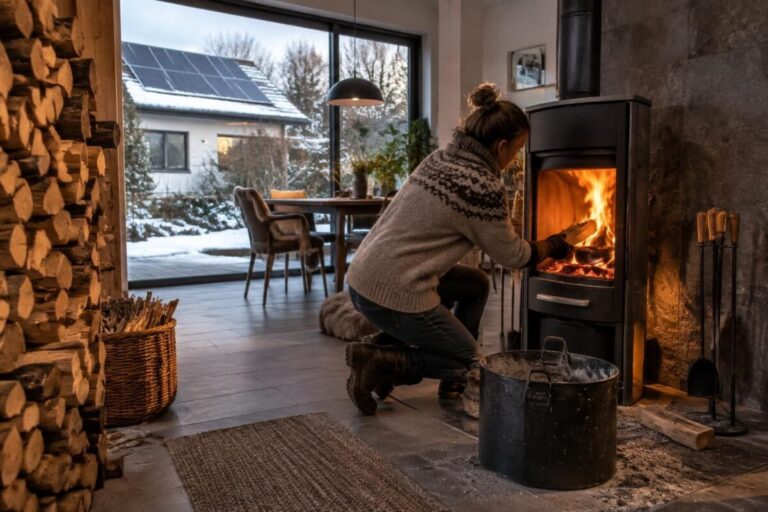
A traditional wood stove operates without an electrical supply, provided its draft and flue are suitable. Some gravity-fed pellet stoves are also self-sufficient, but many common models need electricity for ignition or ventilation: check the manual before buying.
A gas or kerosene heater can provide heat quickly, but not all appliances are designed for use in an occupied room. Leaving a window ajar does not replace the manufacturer’s instructions or compliant ventilation. Suitability therefore depends as much on safety as on the advertised output.
Comparing the main self-sufficient options
| Option | Main advantage | Considerations |
|---|---|---|
| Wood stove | Provides long-lasting heat and operates without mains electricity, depending on the model | Compliant flue, maintenance, and dry storage |
| Self-sufficient pellet stove | Fuel is easy to store and may be gravity-fed | Only certain models operate without electricity |
| Gas heater | Quick heat and often portable | Check suitability for indoor use; a gas cylinder and ventilation are essential, depending on the appliance |
| Kerosene stove | Heats up quickly | Fuel storage and stringent ventilation and operating requirements |
| Solar thermal heating | Can provide a significant amount of heat using sunlight | Expensive installation, variable output, and usually requires supplementary heating |
Thermal insulation and thermal mass: keep the heat in your home
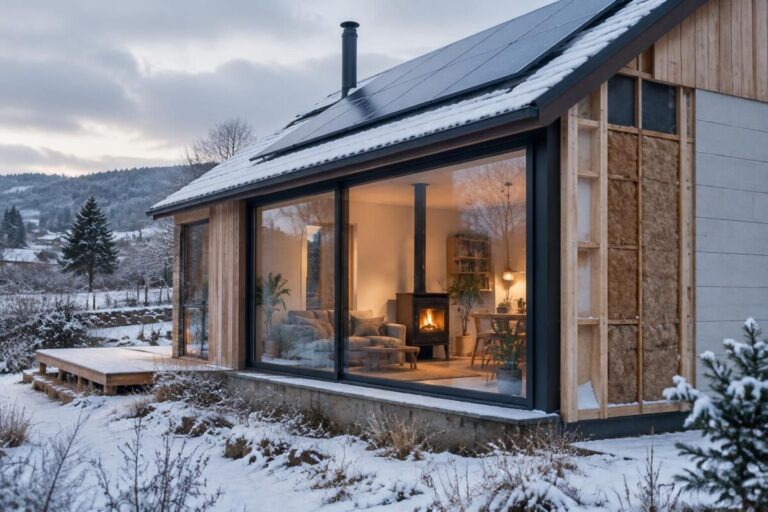
A drafty house quickly loses the benefit of heating. Before increasing the output, check the window seals, the bottoms of doors, and uncontrolled air inlets. Thick curtains, rugs, and closed shutters at night improve comfort, even though they are no substitute for insulating walls or the attic.
Thermal mass also helps: heavy materials store heat and then release it gradually. Conversely, a cold floor or a poorly insulated exterior wall can make a room feel uncomfortable, even if the air seems mild. The priority is therefore to reduce heat loss and limit contact with cold surfaces.
Sunlight provides free heat when it enters through the windows. Open the curtains during sunny hours, then close the shutters and curtains as soon as the light fades. Briefly airing out the home each day is still useful for refreshing the air and managing humidity, without leaving the windows open for long.
A candle under a pot: highly localized heat
A tea light produces about 30 watts of heat, compared with nearly 1,000 watts for a typical radiator. It may warm your hands a little if you are nearby, but it will not heat an entire room. The setup with a terracotta pot does not create any additional energy and presents a risk of burns or fire: never leave it unattended.
Precautions for safer self-sufficient heating
Carbon monoxide is invisible and odorless. A battery-powered detector is a useful safety measure, but it does not make an appliance safe to use outside the conditions specified by its manufacturer. Keep ventilation grilles clear, and never use a barbecue, brazier, or outdoor appliance indoors.
To reduce the risk of fire, keep the appliance away from curtains, furniture, and fabrics, and follow the clearances specified in the manual. Do not operate a combustion heater while you sleep if the manufacturer prohibits it; at night, use a suitable duvet or a securely sealed hot-water bottle instead.
Energy efficiency alone is not enough to determine the best choice: fuel costs, maintenance, installation quality, and emissions also matter. Wood can be a good option when it comes from a responsible source and the appliance is efficient, but burning it produces particulates. Solar thermal systems, meanwhile, depend on sunlight and often require a backup heating solution.
Take action in three steps
- Define your needs: occasional backup or regular heating, the room involved, required operating time, and available fuel.
- Reduce heat loss: address drafts, make use of solar heat, and gather everyone in the room that is easiest to keep comfortable.
- Check the installation and instructions: have the flue and appliance inspected if necessary, prepare the battery-powered detector, and store fuel in accordance with safety rules.
Helpful questions about heating without electricity
Which heaters really work without electricity?
A traditional wood stove can operate without power if it is properly installed. Some self-sufficient pellet stoves can too, but many models require electricity: check the manual.
Is a gas or kerosene heater safe to use indoors?
Only if the appliance is explicitly designed for indoor use and operated according to its manual. Ventilation, maintenance, and a battery-powered carbon monoxide detector are essential; the detector does not replace safety instructions.
Can you heat a room with a candle and a terracotta pot?
No. A tea light produces only a small amount of heat, which is not enough to heat a room. Its effect is localized, and it requires constant supervision because of the fire risk.
What is the first thing to do to feel less cold without heating?
Reduce drafts, close shutters and curtains at night, make the most of the sun during the day, and focus on one room. These steps improve comfort without generating heat themselves.
I hope you found these tips helpful. See you soon! — Claude