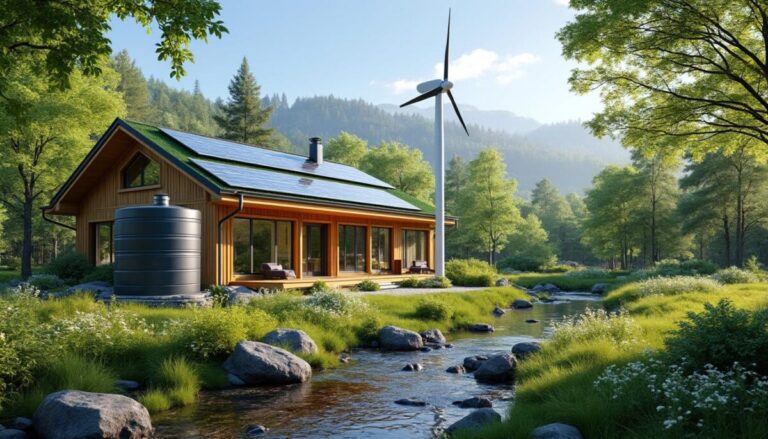

3 priorities: Energy independence before buying solar panels
Hi, it’s Claude.
Before buying solar panels, first check your electricity needs, your roof’s production potential, and the storage capacity you’ll need.
Energy independence starts with your daily routine, not a randomly chosen number of panels. A properly sized system can reduce your dependence on the grid, while aiming for total independence also means managing periods without sunshine.
Good habits to adopt before buying panels
- Track your electricity consumption over the last twelve months, in kWh.
- Identify your main energy uses: heating, hot water, cooking, a swimming pool, or an electric car.
- Check the orientation, tilt, and shading of the roof or planned installation area.
- Decide on your goal: increase self-consumption or aim for complete energy independence.
- Compare the installation budget with the cost of storage, maintenance, and any grid connection.
These checks help you avoid confusing self-consumption with total energy independence: the former means directly using some of the electricity you generate, while the latter means meeting your needs even at night and during periods with little sunshine. To clarify your options, see this guide to energy independence with photovoltaic panels and these guidelines for estimating how many panels you need.
Priority 1: accurately understand your electricity needs
Start with your bills for the last twelve months. They give you an initial picture of your annual consumption, but tracking it by day and by season also reveals when you use electricity.
A home consuming 5,000 kWh a year won’t have the same needs as a home that uses a lot of electricity for heating or a swimming pool. Daily consumption matters too: a family that runs the washing machine and dishwasher during the day can use more of its solar generation directly.
Make a note of energy-hungry appliances and how often you use them. Reducing your needs—for example, by replacing an old appliance or shifting some usage to a different time—can lower the system capacity you need to install and improve its cost-effectiveness.
Priority 2: estimate generation based on sunlight
A panel’s peak power, expressed in watts-peak (Wp), doesn’t mean it is guaranteed to produce a certain amount of electricity all year. Orientation, tilt, shading, and local sunlight levels all have a significant impact on the result.
As a rough guide, a 300 Wp panel can produce around 250 to 450 kWh per year, depending on the location and installation conditions. For a home near Paris consuming 4,000 kWh per year, an estimate of 255 kWh per panel gives about 16 panels based on annual consumption, before accounting for seasonal variation, losses, and actual usage.
This calculation doesn’t guarantee complete energy independence: solar generation is often higher in summer, while some households use more electricity in winter. A qualified installer can model expected generation based on your address, roof, and consumption profile.
A simple guide to comparing different situations
| Example situation | Annual consumption | Estimated generation per panel | Theoretical number |
|---|---|---|---|
| Family home in Brittany | 3,000 kWh | 350 kWh/year | About 9 panels |
| Home near Paris | 4,000 kWh | 255 kWh/year | About 16 panels |
| Villa in Provence with a heated swimming pool | 12,000 kWh | 400 kWh/year | About 30 panels, excluding any extra margin |
These figures help illustrate the rough scale, but they don’t replace a system-sizing assessment. The modules’ capacity, system losses, equipment, and changes in your habits can all affect the final result.
Priority 3: choose between the grid, a battery, and total energy independence
To increase self-consumption, you can first schedule some appliances to run during hours when your system is generating electricity. A physical battery can then store some of the surplus for the evening or night, but its price should be weighed against the amount of energy it can actually deliver.
Battery capacity is calculated based on the uses you want to cover and the number of days of autonomy you’re aiming for. For example, a household using 10 kWh per day and wanting a two-day reserve would need about 20 kWh of usable capacity, taking into account discharge limits and system efficiency.
A virtual battery doesn’t make a home independent of the grid: it relies on accounting-based electricity credits. For true energy independence, you need a physical battery, appropriately sized generation, and managed consumption, especially on cloudy days and in winter.
Three steps to prepare your solar project
- Establish your consumption profile. Gather your annual bills, identify seasonal peaks, and note which appliances run during the day and in the evening.
- Assess the site’s potential. Check the available area, shading, and sunlight levels, then request a generation estimate tailored to your address.
- Compare several complete scenarios. Compare panels, inverter, storage, grid connection, installation budget, and expected savings before signing.
A practical example: a family consuming 3,000 kWh per year in Brittany can get an initial estimate of around nine panels using the assumptions in the table. However, they’ll need to check whether this generation matches the times they use electricity and whether a battery would provide enough benefit.
So the best choice isn’t necessarily the largest system. A better-insulated home, shifting usage to daytime, and appropriately sized storage can bring you closer to energy independence without making the budget skyrocket.
Useful questions before buying solar panels
How many panels does a house need?
The number depends on annual consumption, the capacity of the modules, and local solar generation. Dividing annual consumption by the estimated generation per panel gives you a rough guide, which should be confirmed by a professional system-sizing assessment.
Can you be energy independent all year round with solar panels?
It is technically possible, but it requires a suitably designed system, storage, and carefully managed consumption. Winter and periods with little sunshine make complete energy independence more complex and often more expensive.
Is a battery necessary to increase self-consumption?
No. Scheduling appliances to run during solar generation can already improve self-consumption. A battery is useful if you want to save some of the surplus for the evening or night, after comparing its cost with how much you’ll actually use it.
What is the first figure to check before requesting a quote?
Start with your electricity consumption over the last twelve months, expressed in kWh. Then factor in seasonal variations and planned uses, such as an electric car or electric heating.
Thanks for reading! Feel free to share your thoughts in the comments. — Claude